

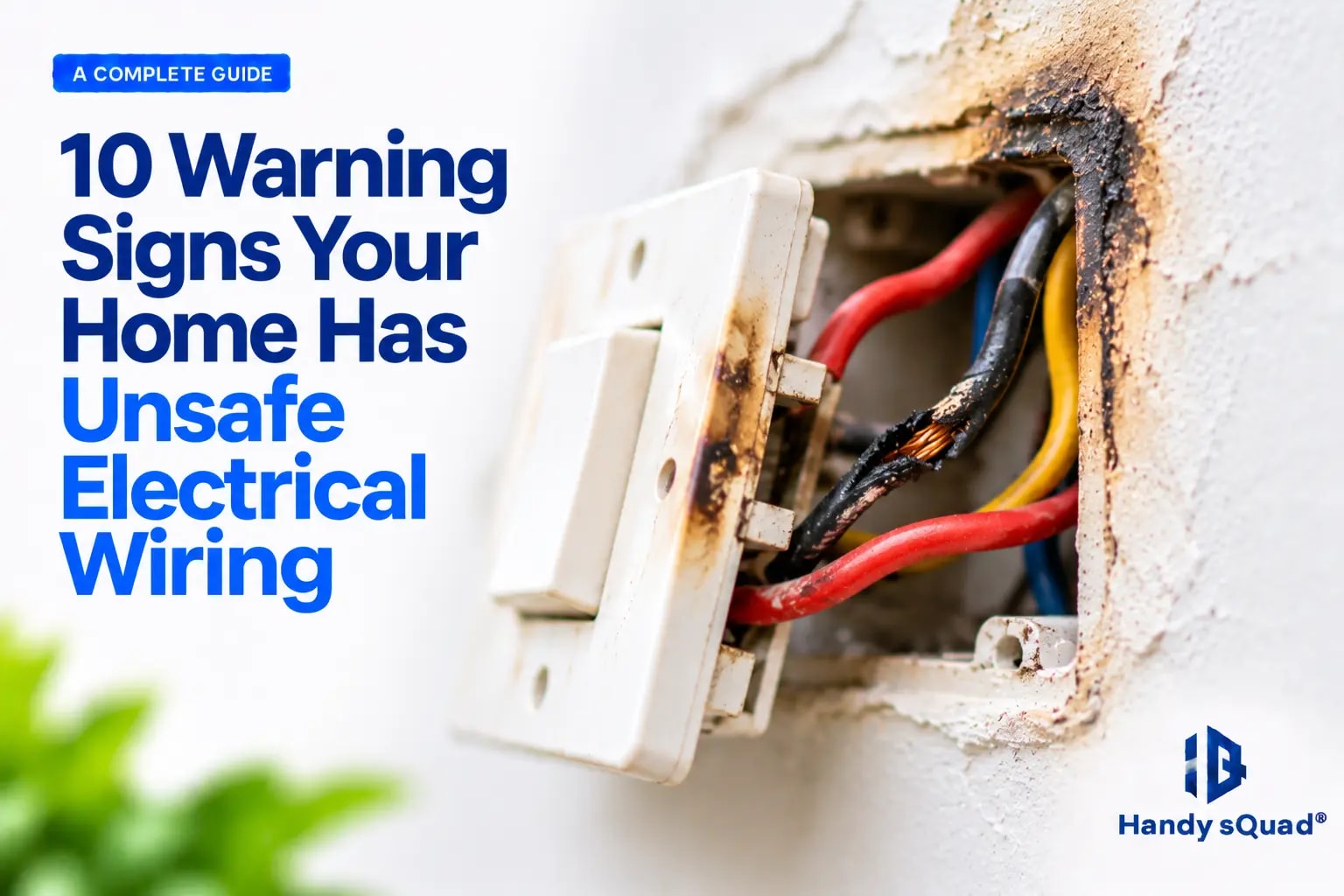
Most household electrical fires begin with a fault that was visible for weeks: a switch that stayed warm, a breaker that kept tripping, a faint burning smell that nobody traced. This guide lists ten warning signs of unsafe electrical wiring, explains what each one usually means, and says how quickly you should act.
Quick Reference: Signs, Causes, and Urgency
# | Warning sign | Common cause | How soon to act |
|---|---|---|---|
1 | MCB trips repeatedly | Overload, short circuit, wrong breaker rating | Within days |
2 | Lights flicker or dim | Loose connection, overloaded circuit | Within days |
3 | Burning smell | Overheating wire or insulation | Immediately |
4 | Warm or discoloured switch or socket | Loose terminal, overloaded point | Immediately |
5 | Buzzing or crackling sound | Arcing, loose contacts | Immediately |
6 | Mild shock from a switch, tap or appliance | Poor or missing earthing, leakage | Immediately |
7 | Sparks when plugging in | Worn socket contacts | Within days |
8 | Cracked, exposed or very old wiring | Aged insulation, rat damage | Within weeks |
9 | Bulbs and appliances fail early | Unstable voltage, bad connections | Within weeks |
10 | Extension boards in every room | Too few sockets and circuits | Within weeks |
Why Wiring Becomes Unsafe Over Time
Wiring is designed for a specific load. A home wired 25 or 30 years ago was planned around fans, tube lights, and a television. The same cables now run air conditioners, geysers, induction cooktops, and washing machines.
Other factors add to the wear. Humid, salty coastal air corrodes switch contacts and joints. Monsoon dampness can reach conduits and junction boxes. Rats chew through insulation. Poor-quality cable or an extension done without proper testing leaves weak points that fail years later.
The 10 Warning Signs in Detail
1. Your MCB Keeps Tripping
An MCB trips when current exceeds its rating. In many homes, lighting circuits use 6A or 10A breakers, power sockets use 16A, and ACs or geysers use 20A to 32A. A 2,000 W geyser draws roughly 9 amps, so plugging it into a 6A lighting circuit will trip the breaker every time.
Occasional tripping from running too many appliances is normal. Tripping several times a week points to an overload, a short circuit, damaged insulation or a breaker that doesn't match the circuit. Resetting it repeatedly doesn't fix any of these.
2. Lights Flicker or Dim
Brief flickering during a storm is usually a supply issue. Flickering in one room, or dimming each time the AC or a motor starts, suggests a loose connection or an overloaded circuit. Loose joints heat up as resistance increases, so the fault gets worse over time.
3. A Burning Smell With No Obvious Source
A plastic or burning smell near a switchboard, socket or distribution board (DB) usually means insulation is overheating, sometimes inside the wall. If the smell is strong, switch off the main supply and call an electrician. Don't open the board yourself.
4. Warm or Discoloured Switches and Sockets
A switch controlling a heavy load such as a geyser may feel slightly warm after long use. A switch or socket that is clearly hot is not normal. Look for yellowed plastic, brown marks or a slightly melted face. These show that overheating has already happened, usually because of a loose terminal or an overloaded point.
5. Buzzing, Crackling, or Sizzling Sounds
Wiring should be silent. A buzz or crackle from a switch, socket or DB usually indicates loose contacts or arcing, where current jumps across a small gap and produces intense local heat. Arcing is one of the common starting points of electrical fires.
6. Mild Shocks From Switches, Taps or Appliances
A tingle from a metal tap, a fridge door or a washing machine body is not static in most cases. It means current is leaking onto a metal surface, usually because of missing or faulty earthing or damaged insulation.
A 30 mA RCCB is designed to trip within milliseconds on such leakage. If you have one, press its test button once a month. If your home has no RCCB, that is a safety gap worth fixing.
7. Sparks When You Plug Something In
A tiny snap when pulling out a high-load plug can happen. Visible sparks while plugging in, or a plug that sits loosely, indicate worn socket contacts. A loose plug heats up, and the heat can damage the wiring behind the board.
8. Old, Exposed, or Damaged Wiring
Look for cracked or brittle insulation, bare copper at joints, wires chewed by rats, two-pin sockets without an earth connection, or old aluminium wiring. Today, copper cables with flame-retardant insulation from ISI-marked brands are the standard choice. As a rough guide, wiring older than 20 to 25 years should be inspected, because most of the damage is hidden inside walls and conduits.
9. Bulbs and Appliances Fail Early
If bulbs in one fixture burn out repeatedly, or a fridge, TV or washing machine fails years before its expected life, check the power reaching it. Voltage swings and loose connections stress motors and electronics. Replacing the appliance without checking the wiring can lead to the same failure again.
10. Extension Boards Everywhere
An extension board in every room usually means the home has too few sockets for its actual load. Common wire sizes are 1.5 sq mm for lights, 2.5 sq mm for sockets and often 4 sq mm for ACs and geysers, depending on load and cable length. Running an AC, a geyser, and an induction cooktop through extension boards overloads sockets and wires that were never sized for them. The correct fix is additional circuits and sockets, not another multi-plug.
What to Do If You Notice a Warning Sign
Switch off the affected circuit at the MCB or the main switch if there is a strong smell or visible heat.
Don't touch scorched or sparking points, and keep children away.
Never use water on an electrical fire. Use a CO₂ or dry powder extinguisher, and call the fire service on 101 if flames appear.
Stop using the socket or appliance involved until it has been checked.
Don't cover the problem with insulation tape. Tape hides the symptom and leaves the fault in place.
Call a qualified electrician to find the cause.
Why Wiring Faults Should Not Be a DIY Job
Changing a plug top or a bulb is fine. Diagnosing wiring is different. A proper inspection includes an insulation resistance test, an earth check, and a look at every joint and terminal in the DB and behind switchboards. It also checks that breaker ratings and cable sizes match the load. Without testing equipment, it is easy to miss a fault or leave your home less safe than before.
Electrical Services in Trivandrum From Handy sQuad
Handy sQuad handles all electrical services for homes in Trivandrum, from small repairs and switchboard fixes to MCB and RCCB upgrades, earthing checks, and complete rewiring.
If you need a dependable electrician in trivandrum to trace a fault instead of only resetting the breaker, Handy sQuad's team inspects the wiring and repairs the actual cause.
If you are looking for an electrician trivandrum homeowners can book for anything from a flickering light to a full rewiring job; Handy sQuad provides it through one team.
Frequently Asked Questions
How do I know if my house wiring is unsafe?
Warning signs include frequent MCB tripping, flickering lights, warm or discoloured switches, burning smells, buzzing sounds and mild shocks. Cracked insulation or wiring older than about 20 to 25 years is also a reason to get an inspection.
What are the signs of faulty wiring in a house?
Common signs are repeated breaker trips, dimming or flickering lights, a burning smell near switchboards, hot or scorched sockets, crackling sounds, sparks, and appliances that fail early. Mild shocks usually indicate an earthing problem.
Why does my MCB keep tripping?
An MCB trips due to overload, a short circuit, damaged insulation, or a rating that is too low for the circuit's load. If it keeps tripping, an electrician should find the cause rather than you resetting it.
Is a burning smell from a switchboard dangerous?
Yes. It usually means wires or insulation are overheating, which can lead to a fire. Switch off the supply to that circuit and call an electrician immediately.
Can faulty wiring cause a fire?
Yes. Overloaded circuits, loose connections, and damaged insulation can produce enough heat to ignite nearby material. Many such fires start from faults that gave earlier warnings.
Why do I get a mild shock from a switch, tap or appliance?
Current is usually leaking onto a metal surface because of poor or missing earthing or damaged insulation. Please treat this as a safety issue and get it checked soon.
How often should house wiring be checked in India?
There is no single legal interval for homes, but wiring older than about 20 to 25 years should be inspected, and any home showing warning signs should be checked promptly. A periodic check every few years is sensible in humid areas like Kerala.
Who can I call for electrical problems in Trivandrum?
Handy sQuad provides electrical services for homes in Trivandrum, including wiring checks, repairs, MCB and RCCB work, earthing, and rewiring.
Final Thoughts
Unsafe wiring usually gives several warnings before it fails. Treat a tripping breaker, a warm socket, or a burning smell as the same underlying problem, and act in line with the urgency shown in the table. A qualified electrician can test and correct the wiring before a small fault becomes a fire.
Thanks for reading