

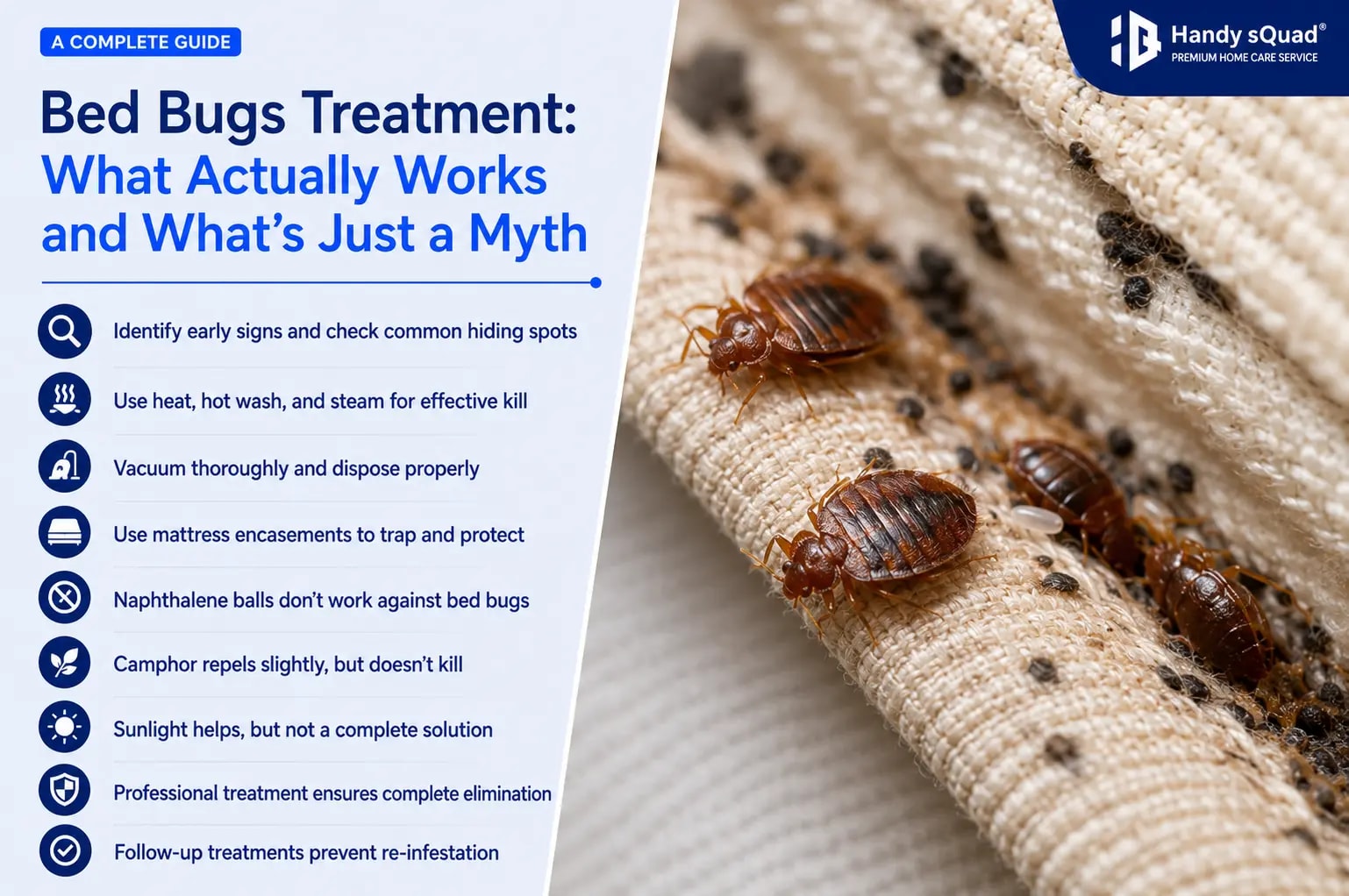
Waking up with itchy red bites lined up in a neat little row, no memory of anything biting you, is usually the first clue. Check your mattress seams or the corners of the bed frame, and if you spot tiny reddish-brown insects or small dark spots that look a bit like ink stains, you're probably dealing with bed bugs. One of the more stubborn pests out there, and no, Indian homes aren't immune, especially in humid regions, whatever people tend to assume.
This one walks through what genuinely works against bedbugs, clears up a few myths along the way—naphthalene balls, camphor, sunlight—and covers when it's actually time to call someone in.
Why Bed Bugs Are So Hard to Get Rid Of
Bed bugs are small, flat, and annoyingly good at tucking themselves into spots you'd never think to check. Mattress seams. Bed frame joints. Behind headboards. Inside electrical outlets, even. Sometimes in the folds of curtains or upholstered furniture near the bed. They come out mostly at night to feed, then disappear back into hiding by morning, which is a big reason people often don't notice them until things have already gotten out of hand.
They breed fast too and can go months without a single meal, which means half a treatment that misses even one hiding spot usually just buys you a few weeks before they're back. This is exactly why bed bugs have earned such a reputation for returning right after people think they've won.
Home Treatment for Bedbugs: What You Can Actually Do Yourself
Catching things early or dealing with a mild case? A few home treatment steps are worth trying before jumping straight to professional help.
Wash everything on high heat first. Bedding, pillowcases, mattress covers, and any clothing that's been anywhere near the affected area—hottest water the fabric can take, then dried on high heat too. Heat genuinely works against bed bugs; they can't handle prolonged exposure to it.
Vacuum, and vacuum often. Go over mattress seams, the bed frame, skirting boards, and any cracks near the bed. Empty the canister or bag straight into a sealed bag afterwards, ideally outside the house. Gets rid of live bugs and eggs both, though on its own it won't clear a full infestation.
Grab a proper mattress encasement. A decent bedbug-rated one zipped around the mattress traps whatever's left inside and keeps new ones out—it cuts off a big chunk of their hiding space while you get the rest under control.
Steam clean wherever you can. Run a steam cleaner carefully along mattress seams, bed frames, and upholstery—the heat kills bedbugs and their eggs on contact; no chemicals needed.
Clear the clutter around your bed too. Bed bugs love clutter; it just gives them more places to disappear into. Less stuff stored under or near the bed means fewer spots to check and treat.
Worth saying plainly: home treatment holds up fine for mild, early infestations. But bed bugs are stubbornly good at surviving half-measures. Still seeing bites after a couple weeks of genuinely consistent effort? That's usually the sign you're past what DIY can reasonably fix.
Do Naphthalene Balls Prevent Bed Bugs?
It comes up a lot, this one, and honestly—no, not in any meaningful way. Naphthalene balls, those strong-smelling white balls people use to keep moths off stored clothes, were never formulated for bed bugs, and there's no real evidence they work against them specifically. The smell might push bed bugs away from a small area for a bit, sure, but it doesn't kill them, doesn't touch the eggs, and goes nowhere near an actual infestation tucked into mattress seams or wall cracks.
There's a downside too, worth knowing about—naphthalene fumes aren't great to be breathing in night after night, especially in a bedroom. Lean on this as your bed bug solution, and you'll likely just end up with a growing infestation and a strong chemical smell, no real upside either way.
Can Camphor Kill Bed Bugs?
Another home remedy that keeps coming up, and again, mostly no. Camphor's got a strong scent some insects find off-putting, and people do use it as a general repellent sometimes, but there's no solid proof it actually kills bed bugs or their eggs. Best case, it makes them temporarily steer clear of a treated spot, much like naphthalene, but they'll just move a few inches over to another hiding place rather than dying off.
If there's an actual infestation going on, relying on camphor alone is really just wasting time while the population keeps growing untouched somewhere you haven't treated.

Do Bed Bugs Die in Sunlight?
This one's got more truth to it, though it gets exaggerated a fair bit too. Bedbugs genuinely don't handle heat well, and direct sunlight—the heat it brings more than the light itself—can kill them if the exposure is strong and goes on long enough. That's why leaving infested items out in direct, intense sun for several hours can actually help, particularly smaller stuff like cushions or bedding.
That said, sunlight on its own isn't a reliable fix for a real infestation. Bugs hiding deep in mattress seams, inside furniture joints, or tucked into wall cracks won't be touched by sunlight unless they're directly exposed to it, and just airing a room out in daylight does very little against anything hiding away out of reach. Useful as a supplementary step for specific items — not something to lean on as your whole solution.
When to Call in Professional Bed Bug Treatment
Given how well they hide and how fast they reproduce, a real infestation usually needs more than home remedies to fully clear out. Professional treatment generally combines heat treatment, targeted chemical work in the spots you genuinely can't reach yourself, and a follow-up visit to mop up whatever the first round missed—bedbug eggs can take a couple of weeks to hatch even after the initial treatments are done.
If home treatment hasn't made a dent after a couple of weeks, or the infestation feels like it's spreading rather than shrinking, it's worth bringing in a professional team instead of losing more sleep over it, quite literally. A reliable bed bug treatment trivandrum provider can figure out how far things have spread and treat exactly the spots a vacuum or spray bottle can't reach. And for infestations that keep coming back no matter what you try, thorough bed bug control services trivandrum with a proper follow-up plan tends to be what finally ends it.
Final Thoughts
Bed bugs are genuinely one of the more frustrating pests around, mostly because they hide so well and bounce back from half-hearted treatment so easily. Naphthalene and camphor don't hold up against a real infestation, and while sunlight does something, it's not a complete answer by itself. Heat, thorough vacuuming, and a good encasement—all of that helps with mild cases. A serious infestation, though, usually needs a proper, targeted treatment plan behind it.
The bedbug specialists at Handy sQuad know exactly where these pests hide in Indian homes and treat every stage of the infestation, eggs included, not just whichever bugs happen to be visible. Get it handled the first time properly, and you can finally sleep through the night without wondering what's crawling around under you.
Frequently asked Questions
1. Can naphthalene balls kill bed bugs?
No. Naphthalene balls are not a reliable or recommended method for killing bed bugs. They may have a strong odour, but they do not effectively eliminate bedbugs or their eggs.
2. Do naphthalene balls prevent or repel bed bugs?
Naphthalene balls should not be relied on to prevent or repel bed bugs. Bed bugs can remain hidden in mattresses, bed frames, cracks, and other areas despite their presence.
3. Will naphthalene balls keep bed bugs away?
No. While the smell may temporarily discourage some insects, naphthalene balls are not an effective solution for keeping bed bugs away or controlling an infestation.
4. Does camphor or kapoor kill bed bugs?
Camphor (kapoor) is not a proven treatment for eliminating bed bugs. It may produce a strong smell, but it should not be considered a substitute for professional bed bug treatment.
5. Can camphor kill bed bugs?
Camphor is not a dependable method for killing bed bugs, particularly because bedbugs often hide deep inside mattresses, furniture joints, cracks, and crevices where the substance cannot reach them effectively.
6. Are naphthalene balls good for bedbugs?
No. Naphthalene balls are not an effective bed bug control method. A proper treatment should target both visible bed bugs and their hiding places and eggs to help prevent the infestation from returning.
Thanks for reading