

Ask any laundromat owner what keeps them up at night, and somewhere near the top of the list is "what if a machine dies on a Saturday?" It happens more often than you'd think. Commercial washing machines aren't like the one in your utility room that runs three loads a week—these things can be working 10, 12, even 16 hours a day without a break. That kind of workload wears parts down fast, and if you're only calling someone when something actually breaks, you're already behind.
So the real question isn't just "how often should I service it?" it's "how often can I afford not to?"
How Often Commercial Machines Actually Need Servicing
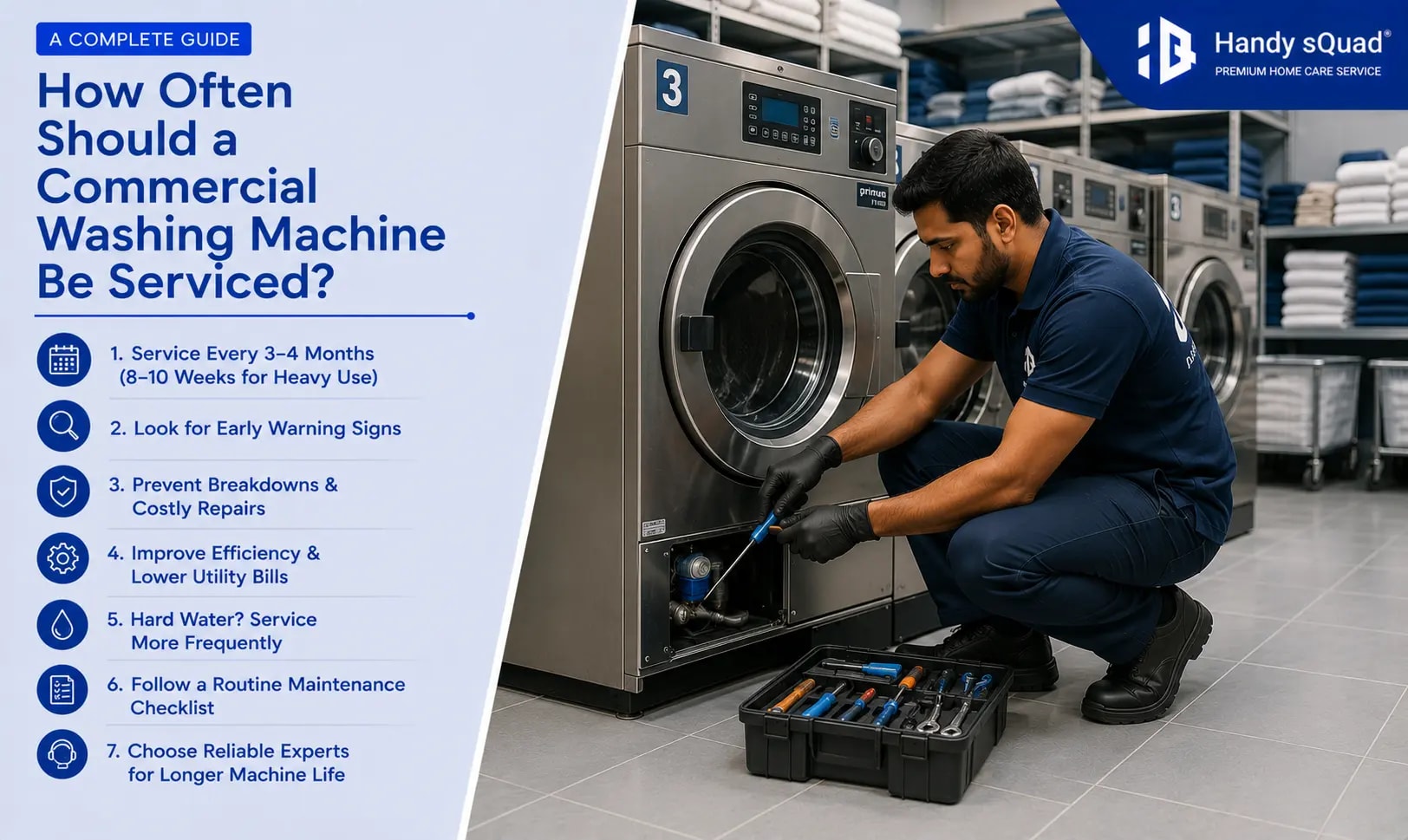
For most commercial machines, a professional service every 3 to 4 months is a reasonable baseline. On top of that, someone should be doing basic checks monthly — filters, hoses, that sort of thing. But honestly, this number moves depending on how hard you're running the machine, what your water is like, and how old the unit is. There's no single rule that fits a boutique hotel and a 24-hour laundromat equally well.
Servicing Frequency by Business Type
A few rough bands, based on what we typically see:
Laundromats, hotels, hospitals, commercial laundries running machines almost non-stop—every 8 to 10 weeks.
Gyms, salons, guesthouses, restaurants with regular but not constant loads — every 3 to 4 months.
Small offices or shops doing the occasional load, every 6 months, is usually fine.
If your machines are barely getting a break, stretching servicing to twice a year is asking for trouble. Bearings don't wait politely for your calendar—they wear, seals dry out and crack, and mineral buildup piles up quietly until one day the machine stops.
Warning Signs Your Washing Machine Needs Attention Sooner
Even with a solid schedule in place, machines tend to drop hints before they fail outright. Worth paying attention to:
A grinding, banging, or squealing sound during spin—often worn bearings or a motor on its way out.
Water pooling near the door, hoses, or base—a seal or fitting has probably given up.
Cycles that suddenly take much longer than usual—could be the heating element, or could be a clogged drain.
A musty or sour smell from the drum, which is usually mold or old detergent residue.
A vibration that seems worse than normal, sometimes a sign that the drum's out of balance or the suspension is worn.
Error codes, or the cycle just stops partway through.
None of these mean "wait until the next scheduled visit." If you notice any of them, get a technician out sooner. Catching it early is nearly always the cheaper option — waiting rarely pays off.
What's Included in a Proper Commercial Service
A real commercial service isn't someone wiping down the exterior and calling it a day. A thorough visit usually involves:
Clearing out the filter and drain pump, where lint, coins, and general debris tend to collect and quietly choke performance.
Checking hoses and seals for cracks or wear before they turn into a flooding problem.
Looking over the bearings and belts, since these take the brunt of the mechanical stress in a commercial machine.
Running diagnostics on the motor and control panel to catch electrical faults before they cause a shutdown.
Testing the water inlet valve for proper fill levels and pressure.
Descaling — particularly important if you're in an area with hard water, since mineral buildup on heating elements and drums adds up fast.
Recalibrating load sensing, water levels, and spin settings so the machine's actually running the way it's supposed to.
This is roughly what our technicians go through on every visit — not a quick once-over, but an actual inspection of the parts that tend to fail first.
The Real Cost of Skipping Maintenance
It's tempting to push maintenance back a few months to save on the bill. But in practice, that rarely works out in your favor. Machines that get neglected tend to run less efficiently, which shows up as higher water and power bills. They also don't last as long — a machine that could've run for years with regular care ends up needing early replacement instead. And unplanned downtime, especially for a business like a hotel or laundromat, means lost bookings and annoyed customers, which is its own kind of expensive.
Add it all up, and routine servicing is almost always cheaper than the alternative — whether that's an emergency callout or buying a new machine ahead of schedule.
How Water Quality Affects Servicing Needs
If you're dealing with hard water, your servicing needs are probably higher than average. Mineral deposits settle inside the drum, on heating elements, and along the pipework, gradually reducing efficiency until something fails. It's worth getting a technician to check your water hardness and suggest an interval — and possibly a softening solution — that actually fits your setup, rather than guessing.
Building a Maintenance Routine That Actually Holds Up
The businesses that get the most out of their machines usually do two things well. First, they handle the small stuff in-house — staff wiping down door seals, clearing lint filters, leaving the door open between loads so mold doesn't set in, and flagging anything odd right away. Second, they bring in a professional every 3 to 4 months (more often for heavier use) because that's when the issues you can't see—early leaks, worn bearings, and calibration drift—actually get caught.
When You Need Someone Reliable
Commercial laundry equipment isn't cheap to replace, and downtime isn't cheap either. Handy sQuad's technicians handle both routine washing machine servicing and emergency repairs, and we build the schedule around how your business actually uses the machine — not a generic template.
And if you're typing washing machine service near me into Google after hearing a strange noise from the laundry room, that's a good sign to get in touch with our team sooner rather than later. Handy sQuad offers quick, reliable servicing to keep your machines running the way your business needs them to—load after load.
Book your commercial washing machine service with Handy sQuad and keep things running without the surprises.