Standing in a hardware showroom trying to pick a bathroom door is more confusing than it should be. On paper, it's just a door. In practice, bathrooms are brutal on materials—steam and splash water; humidity that never really goes away; temperature swings between a hot shower and a cold tile floor; and a door that gets slammed shut a dozen times a day by someone in a hurry. Get the material wrong, and within a year or two, you're looking at a door that's swollen at the bottom, won't sit flush in its frame anymore, or has started peeling at the edges.
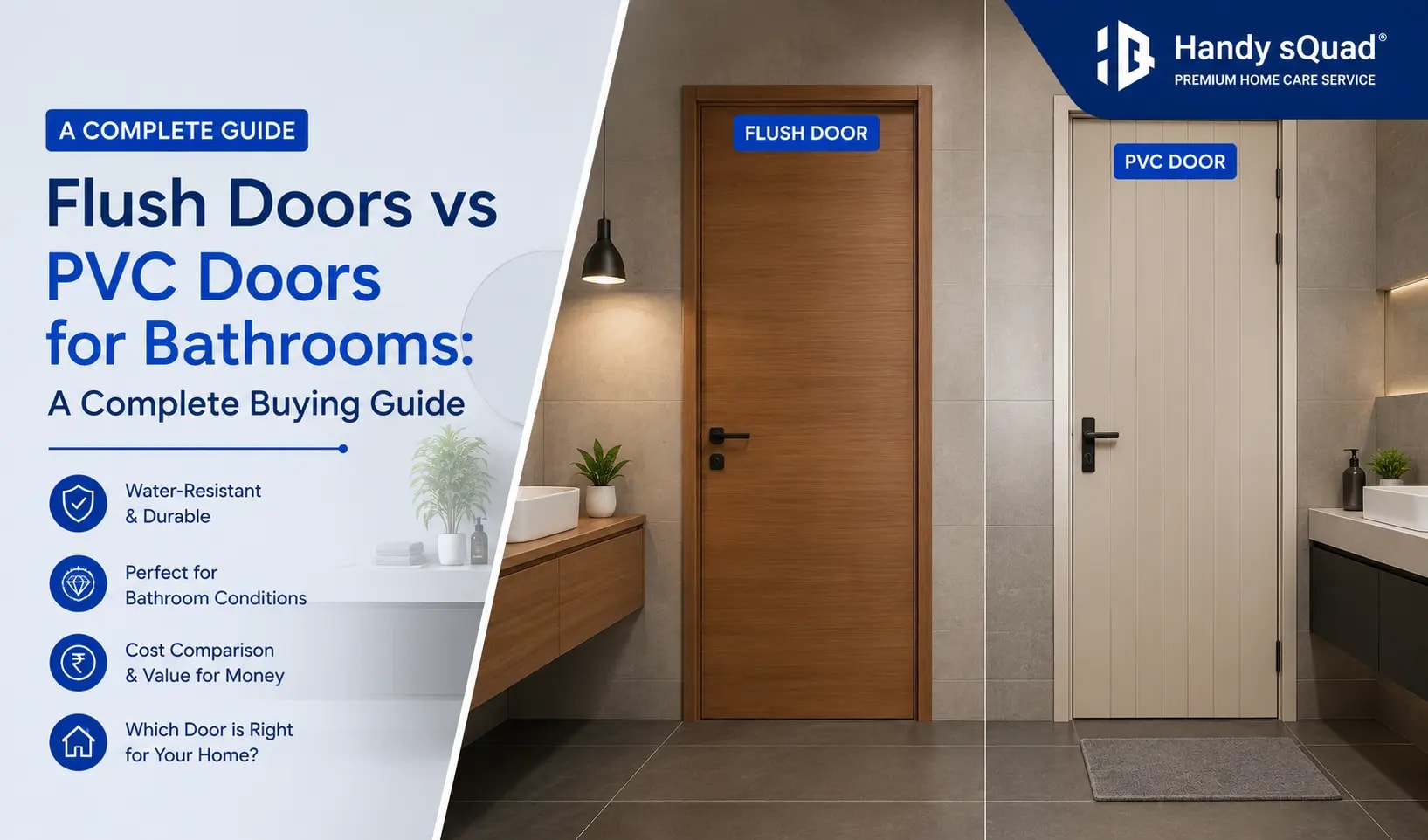
Two options come up again and again when people ask about this: flush doors and PVC doors. Both can handle moisture. Both have their fans. But they're built completely differently, they wear differently over the years, and honestly, they suit different kinds of bathrooms and budgets. Below is what we've learned covering this topic properly — including the stuff most articles gloss over, like actual cost differences, how much harder (or easier) each one is to install, and what they look like after five or ten years of real use.
What is a flush door?
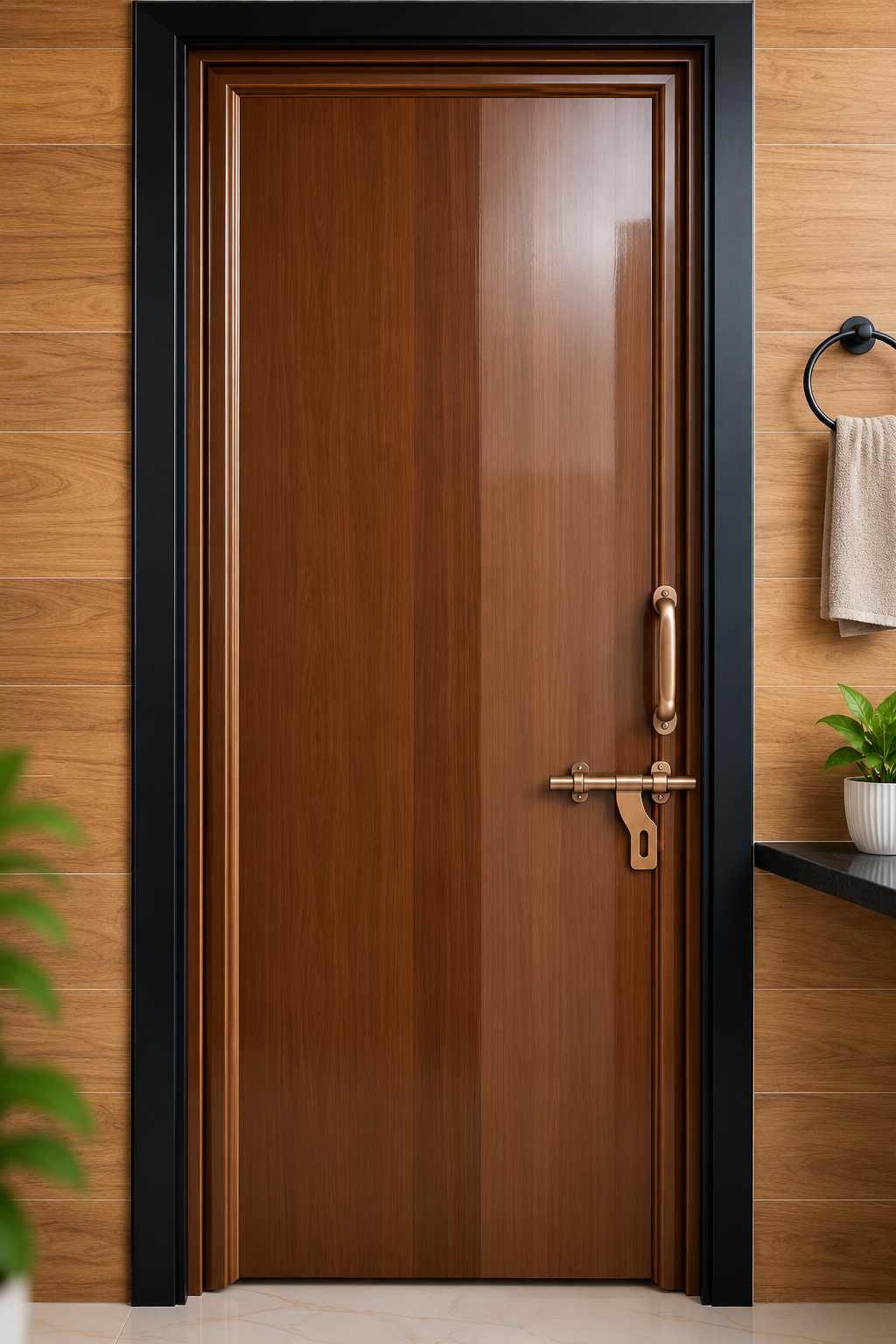
Picture a completely flat, smooth door—no panels, no grooves, no fancy mouldings. Just a clean surface, front and back. That simplicity is the whole point. What you don't see is the core underneath, and that's really where the quality lives:
Solid core – dense engineered wood, heavy, sturdy, and does a decent job blocking sound and heat
Semi-solid core – block board mixed with engineered material, a step lighter than solid core
Hollow core – basically a honeycomb or frame skeleton inside, the lightest and cheapest of the three
Here's the part a lot of buyers miss: the core matters more than the surface finish. If a flush door is made with BWP-grade plywood (that's "Boiling Water Proof," a genuinely water-resistant grade) and assembled with waterproof adhesive, it can shrug off bathroom humidity for years. A cheap, standard-grade flush door won't. The laminate, veneer, or paint on top is really just the last layer of protection, and it's what decides how the door actually looks in the room.
What is a PVC door?
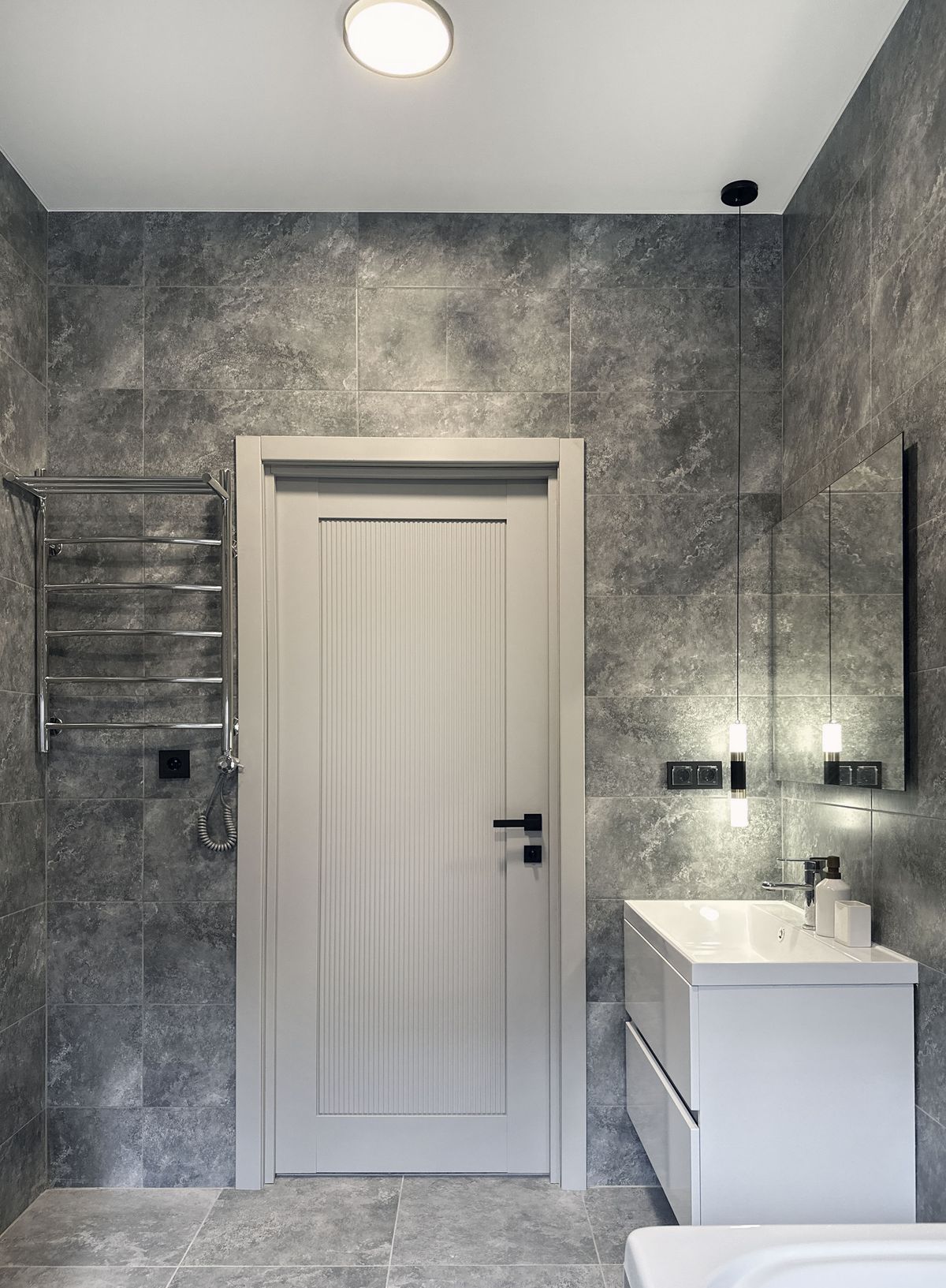
PVC stands for polyvinyl chloride — basically rigid plastic — and these doors are usually built with a foam or hollow core wrapped in a PVC shell. Plastic doesn't soak up water the way wood fibres do, so PVC doors handle moisture naturally, without needing any special treatment. They're also light, which makes them easy to carry, cut, and fit.
The catch is strength. PVC just isn't as rigid as engineered wood. Over time, especially with daily use, these doors can flex, dent, or sag a little at the hinges. Nothing dramatic, but noticeable if you're comparing a two-year-old PVC door to a two-year-old flush door side by side.
How they actually compare
Moisture resistance
This is the one everyone assumes PVC wins automatically, and it's not that simple. A properly made flush door—BWP core, sealed edges, decent finish—holds up to moisture just as well as PVC, sometimes better, because the waterproofing is baked into the core rather than sitting only on the surface. But a poor-quality flush door will fail fast. So really, the deciding factor isn't "flush vs PVC" at all. It's the grade of material and how carefully the door was made.
Strength and durability
Here, flush doors, especially solid- or semi-solid-core ones, pull ahead. They take daily slamming and accidental knocks without much fuss. PVC's lightness is convenient for handling, but it's also its weakness — repeated stress can cause warping, and hinges can start to sag after a few years of heavy use.
Looks
Flush doors give you far more room to play with. Laminate, veneer, or paint in almost any colour or wood-grain pattern you want—they'll match your bathroom tiles or the rest of your house with little trouble. PVC doors come in a narrower set of factory finishes, and they tend to read as functional rather than premium. Fine for a utility bathroom, less so if you're going for a designed look.
Cost
PVC wins on sticker price, which is exactly why it shows up in budget builds and rental properties so often. Flush doors — particularly the waterproof-grade ones — cost more upfront. But because they generally last longer, the cost-per-year often ends up closer than the initial price tag suggests. It's less a "cheap vs expensive" question and more a "pay now vs pay later" one.
Weight and installation
Lighter material, easier install — that's PVC's whole pitch. It needs less structural backup from the frame and goes in faster. Flush doors, being heavier, need sturdier hinges and a properly built frame, which adds a bit of time and labour cost. That extra weight, though, is part of why they feel sturdier once they're hung.
Maintenance
PVC is close to zero-maintenance — wipe it down occasionally, and that's about it. Flush doors ask a little more of you: check the edges once in a while for moisture creeping in, especially if the bathroom runs humid, and repaint or reseal every few years once the finish starts looking tired.
Lifespan
A flush door made well, with a genuine waterproof core, can realistically go 10–15 years in a bathroom. PVC tends to top out around 7–10 years before sagging, discolouration, or cracking starts showing up—sunlight and heat make this worse.
Quick comparison
Factor | Flush Door | PVC Door |
Moisture resistance | Excellent (if BWP grade) | Excellent |
Strength | High | Moderate |
Design options | Wide range | Limited |
Upfront cost | Higher | Lower |
Weight | Heavier | Lighter |
Maintenance | Occasional | Minimal |
Typical lifespan | 10–15 years | 7–10 years |
Which one should you actually pick?
If you want something that'll last, look good, and hold up structurally, go with a flush door—it's worth the extra spend, especially for a main or master bathroom, or if you live somewhere humid and coastal where materials get tested harder than usual.
If you're working with a tighter budget, need something in quickly, or it's for a bathroom that doesn't see much traffic—a guest toilet or a utility washroom—PVC does the job perfectly well.
One thing worth remembering, either way: the quality of the material and the quality of the installation matter roughly equally. A great flush door hung badly, with gaps at the frame, will fail faster than a decent PVC door fitted properly. Don't spend all your attention on the material and none on the fitting.
Getting it installed properly
This is where a lot of bathroom doors actually go wrong—not the material, but the installation. Gaps at the edges, a frame that's slightly out of alignment, hinges that aren't seated right — these are usually what let moisture creep in over time, not some flaw in the door itself. If you'd rather not gamble on a DIY job in a room that's wet most days, it's worth having it measured and fitted by someone who does this regularly. Our Handy sQuad carpenters in trivandrum can help you pick the right door for your bathroom's conditions and get it installed and sealed correctly so you actually get the lifespan you're paying for.
Frequently asked Questions
Can I just put a regular flush door in my bathroom without extra waterproofing?
Not really recommended. Unless it's specifically BWP or marine-grade, a standard flush door will soak up moisture over time and start to swell or warp.
Do PVC doors go yellow eventually?
Cheaper ones can, especially with a lot of sun or moisture exposure. Better PVC doors are UV-stabilised, which slows this down considerably.
Is a flush door noticeably heavier than a same-size PVC door?
Yes, usually by a fair margin. It means a bit more installation effort, but that weight also helps with stability and sound insulation.
Which one's better for the environment?
Flush doors made from responsibly sourced wood or plywood are generally considered the more sustainable choice — they're biodegradable and often recyclable, unlike PVC, which is a petroleum-based plastic.
Where can I get a bathroom door installed professionally in Trivandrum?
If you're in Trivandrum, Handy sQuad's carpentry service handles the whole process—helping you pick the right door for your bathroom's humidity levels, measuring it accurately, and fitting and sealing it so moisture doesn't creep in around the edges. Local expertise matters here, since coastal humidity in Trivandrum can be tougher on doors than in drier regions.
Conclusion
There isn't really a single "winner" here—it comes down to how humid your bathroom gets, what you're willing to spend, and how long you want the door to last before dealing with it again. Want strength, a wider choice of looks, and a door that'll outlast most renovations? Go flush, ideally waterproof grade. Need something quick and budget-friendly? PVC will serve you fine. Whatever you land on, get it measured and fitted properly — that one decision affects the lifespan of the door more than the material choice itself.
Thanks for reading