

You hear something at night. Inside the wall, or maybe under the floor—you're not entirely sure.
You wait a moment. Nothing. So, you go back to sleep and half-forget about it.
A few days later, droppings near the kitchen shelf. Or bites you didn't have when you went to bed. Now it's not easy to ignore.
You start searching around for options. Long list of names. Half look like they cover every city in India, which usually means they cover none of them well. And now you have no idea who to actually call.
This blog is just a plain breakdown: what to expect, who to trust, and what to avoid when picking a pest control company.
Why Pest Infestations Are Such a Persistent Problem in Trivandrum
Trivandrum's heat and humidity basically never let up. There's no real off-season for pests here. The monsoon moves them around, sure—mostly pushes them further indoors.
Old neighbourhoods have it harder. Homes in Pattom, Vattiyoorkavu, Kazhakkoottam, and Kesavadasapuram—many built decades ago—carry tiny gaps near pipe fittings, gaps under door frames, and spaces behind ageing tiles. Not dramatic flaws. Just enough for pests.
Newer construction isn't automatically safer. A minor waterproofing gap during the build gives termites everything they need. They'll work inside your walls quietly for years — you usually won't know until something sounds hollow when you knock on it.
Waiting until you actually see a problem is, most of the time, waiting too long.
Common Household Pests in Trivandrum
Cockroaches— The Most common complaint, by far. German cockroaches pack into warm gaps behind the fridge and inside cabinet hinges. American cockroaches come up through drains and scatter when disturbed, which just spreads them wider. Both carry bacteria across surfaces they walk on, not just where you see them.
Termites (White Ants)—The ones that quietly cause the most expensive damage. They eat through wooden furniture, door frames, and floorboards from the inside. By the time you hear a hollow sound when you tap something or spot mud tubes on a wall, they've been at it for years. Early termite inspection and treatment saves a lot of money later.
Rodents— Chew through wiring, contaminate food, and nest in spots you'd rather not think about. Property damage aside, leptospirosis is a real concern in Kerala — especially when monsoon flooding pushes rodents into homes.
Mosquitoes—Dengue and chikungunya happen to regular families on regular streets in Trivandrum. Mosquito control here is a health decision, not just a comfort one.
Bed Bugs— More common than people admit out loud. Nobody advertises it. They travel through luggage, second-hand furniture, and stored fabric. Small, spreads fast, nearly impossible to clear without professional treatment.
Ants and Silverfish— Easy to dismiss. Ants get into pantry goods; silverfish go after stored documents and fabric over time. Not emergencies, but worth dealing with before they become one.
What Does Actual Professional Pest Management Look Like?
Not the version where someone shows up, sprays the kitchen edges, and leaves in fifteen minutes. That happens. It's just not effective. A professional approach identifies the root cause, eliminates the infestation, and prevents it from coming back.
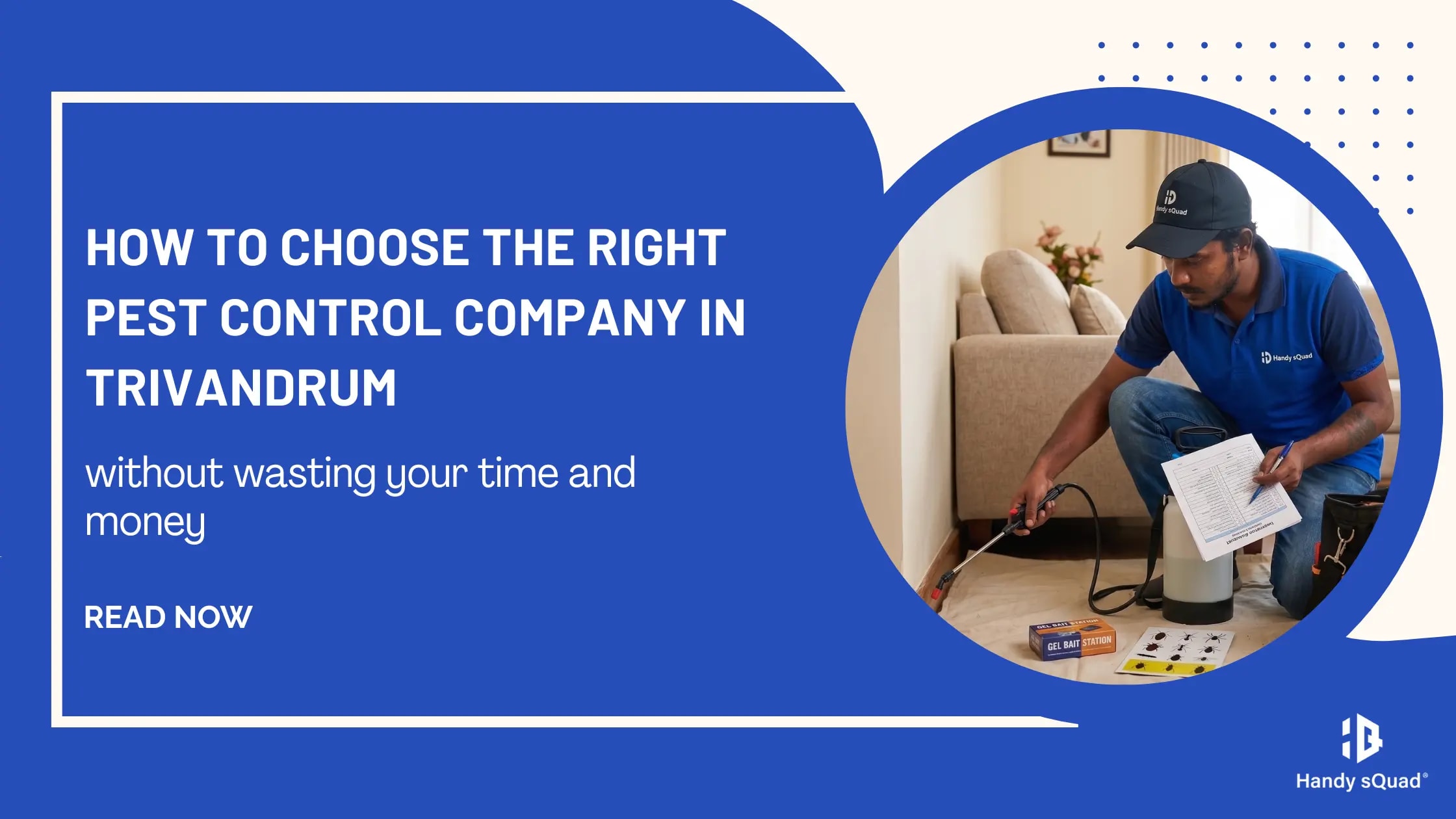
Inspection before anything else. A proper technician goes through the whole property—kitchen, bathrooms, roof void if accessible, and garden perimeter. Not just to find where pests are visible, but to figure out why: which gaps they're entering through, where moisture is collecting, and where nesting might be happening behind surfaces. That part is what separates a treatment that lasts from one that wears off in two weeks.
Treatment matched to the actual problem. Cockroach gel baiting is a completely different process from termite proofing. Mosquito fogging has nothing to do with rodent control. After inspection, the technician should be able to explain clearly what they found and why they're recommending what they are — not just start spraying.
Also worth knowing: a trustworthy company won't load you up with treatments you don't need. More chemicals aren't more thorough. Targeted treatment is better for the household and gets better results.
Follow-up is usually part of it. For anything established—termites, bed bugs, heavy rodent activity—one session is rarely the full story. Eggs survive. Colony remnants regroup. Proper pest management accounts for this with follow-up visits. This is exactly what most DIY attempts skip, which is why the problem keeps returning.
Why DIY Pest Control Usually Doesn't Hold Up
Grabbing a can from the supermarket first is understandable. Cheap, immediate, right there. But here's what actually happens.
Consumer sprays are contact killers — they take out what they touch directly. The nest behind the wall, egg clusters inside cabinet gaps, and colony activity under the floor are completely untouched. Visible problems settle for a few days, then come back, sometimes from a different spot, sometimes worse because survivors are scattered.
There's also a safety angle that doesn't get discussed enough. Pesticides applied in the wrong dilution, near food surfaces, or in poorly ventilated rooms cause real harm, especially for children and elderly people. DIY pest control isn't just less effective — it carries genuine risk when products are misused, even accidentally.
How to Choose a Pest Control Company You Can Actually Trust
Licensed and certified technicians— Just ask them directly. Anyone handling regulated pesticides should have proper certification — not as a formality, but because the training genuinely changes how the job gets done. You'll notice the difference.
Transparent pricing after inspection — Nobody can quote accurately without seeing the property first. If a number comes at you over the phone, that's just a guess dressed up as a price. And suspiciously low quotes? Something's getting cut somewhere — usually the follow-up, or the product quality, or the time spent on the job.
Eco-friendly options— Worth asking about, particularly if you have kids crawling around, elderly parents at home, or pets. Lower-toxicity treatments exist, and good companies offer them.
A warranty on the treatment— Companies that offer to come back and re-treat at no cost within a set period are putting their money where their mouth is. That matters.
Real reviews from Trivandrum residents— Not star counts. Actual written feedback from people in your city, talking about what happened after the technician left. That's worth ten generic five-star ratings from unknown locations.
What Handy sQuad Handles in Trivandrum
We work with homes and businesses across the city. Most people tell us they wish they'd called before it got as bad as it did—before an infestation got established or before termite damage became a costly repair.
Cockroach control — Gel baiting and residual spray
Termite treatment (anti-termite proofing) — Pre and post-construction
Rodent control — Trapping, bait stations, entry-point sealing
Mosquito control and fogging — Larvicidal treatment, misting, indoor and outdoor fogging
Bed bug treatment— Steam and chemical treatment
Every job goes through trained, uniformed technicians—ISI-marked equipment, government-approved formulations, and no shortcuts.
How Often Does Pest Control Actually Need to Happen?
Depends on the property, and anyone giving you a flat answer without knowing your situation is guessing.
Homes with a past infestation or sitting in a high-moisture zone usually do better with quarterly visits—catching things while they're still manageable. For newer homes with no history of trouble, once a year is fine, mostly just to stay ahead of it. One-time treatments suit specific situations: a sudden cockroach spike, bedbugs after you've travelled, or a sanitisation before shifting into a new place.
Commercial spaces are a different story. Restaurants, clinics, hotels, food storage — monthly or bi-monthly isn't a preference; it's what hygiene compliance actually requires.
Frequently Asked Questions
How much does pest control cost in Trivandrum?
Cost depends on property size, the pest involved, and treatment type. Termite proofing generally costs more than a one-time cockroach gel treatment. Ask for a quote after an on-site inspection rather than a phone estimate.
Is pest control treatment safe for kids and pets?
Reputable companies offer low-toxicity or eco-friendly formulations and will guide you on re-entry times for treated rooms. Always confirm this before treatment day if you have young children, elderly family members, or pets at home.
How long does it take to see results after treatment?
Cockroach gel baiting often shows a visible reduction within a week. Termite and bed bug treatments typically need follow-up visits over several weeks to fully clear a colony, since eggs and remnants survive the first round.
Can I just use store-bought spray instead of hiring someone?
For a single stray insect, sure. For an established infestation, store-bought sprays only kill on contact and rarely reach nests behind walls or under floors, so the problem usually returns.
Book a Pest Control Consultation in Trivandrum
Pest problems don't wait around. Left alone, they spread — adjacent rooms, inside walls, and into the ceiling—and the longer it goes, the more expensive the fix. That's why getting a professional inspection early can save both money and stress later on.
Handy sQuad covers Trivandrum and the surrounding areas—Kowdiar, Peroorkada, Ulloor, Technopark, Sreekaryam, and Nemom—homes and businesses, scheduled around what works for you.
If you'd like to book a professional pest control consultation, call us at 97786 29770. And the sooner the better—genuinely.
Thanks for reading