

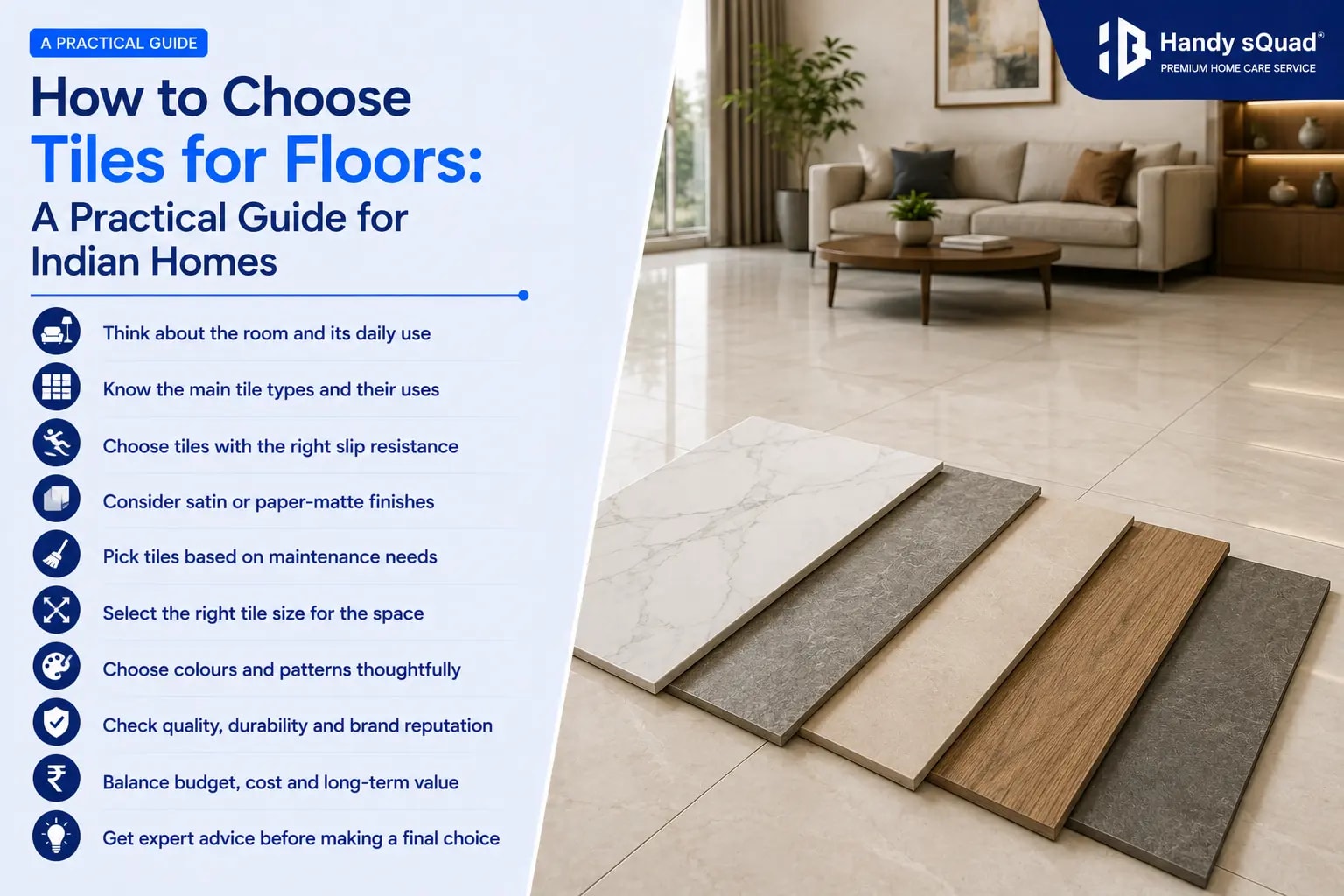
Step into any tile showroom in India, and the problem hits you immediately. Marble-look porcelain over here, matte finishes there, glossy ceramics, and wood-effect vitrified down the next aisle. Gorgeous, every bit of it, yet somehow none of it makes picking one any easier. Tiles cost real money too, and once they're down, changing your mind means tearing up the floor and starting from scratch. Better to actually understand what you're choosing between than grab whatever catches your eye under those flattering showroom lights.
What genuinely matters when picking floor tiles, then, is room by room.
Think About the Room First
Before browsing anything, think about which room you're tiling and what it deals with day to day. The living room, mostly foot traffic, stays dry. The bathroom, wet basically all the time, needs real grip underfoot. Kitchen: spills, oil, and the occasional dropped pan. Balcony? Sun, rain, and temperature swings most indoor tiles weren't built for.
Pick something gorgeous but wrong for the room, and that's one of the more common regrets people run into. A glossy tile in the bathroom becomes a slipping hazard fast. An indoor tile on the balcony cracks within a year from weather beating on it.
Getting Your Head Around the Main Tile Types
Ceramic is the budget option, widely available, and made from clay fired at lower temperatures. Fine for walls and moderate-traffic spots, but it won't hold up like vitrified or porcelain on a heavy-use floor, and it's more porous too—soaks up moisture more readily than you'd want.
Vitrified comes from fusing silica and clay at high heat, and what you end up with is a tile that's far less porous, sturdier, and genuinely built for high-traffic floors. This is the go-to for most Indian homes right now. Makes sense too—good balance of cost, durability, and looks across pretty much every room.
Porcelain's really just a denser, more refined cousin of vitrified ware. Costs more, sure, but the durability and finish are noticeably better. Full-body porcelain, especially where the color runs clean through the tile instead of just sitting on top, holds up well since a chip or scratch doesn't suddenly reveal some totally different colour underneath.
Then there's natural stone—marble, granite, and sandstone. Genuinely one of a kind, since no two tiles come out looking the same. The trade-off is real maintenance, periodic sealing, and a heavier price both to buy and to install. Marble in particular looks incredible in photos but stains and scratches a lot easier than people expect. Something to know before you commit your whole living room to it. Kota stone, or the blue stone that comes out of Andhra Pradesh, is worth a mention too—less flashy than marble, but genuinely tough, and plenty of older Indian homes still have their original Kota stone flooring looking perfectly fine decades later.
Slip Resistance Isn't Optional
People underrate this until somebody actually slips. Tiles carry a slip resistance rating, sometimes shown as an R-value, sometimes as a coefficient of friction, and honestly, this should drive your choice as much as looks do.
Bathrooms, anything that stays wet regularly, need higher slip resistance—matte or textured over high-gloss, even when the glossy one's the prettier option on the shelf. Kitchens want decent grip too, given how often something spills there. Living rooms, bedrooms—you've got more room to play since they stay dry most of the time, so go glossy if that's your taste.
The Middle Ground: Satin or Paper-Matte Finish
Here's something most tile guides never mention. Full gloss feels risky, full matte feels like a cleaning chore—there's actually a middle option worth knowing about. Satin matte, sometimes called paper matte. Soft, low-sheen, it gives you a touch of shine without the slip risk and without the deep texture where dirt hides the way anti-skid mats often do.
Plenty of people who've genuinely lived with both extremes end up here eventually. Full gloss can start looking fake over time, like it's trying a bit too hard to pass for marble, while satin or paper matte just holds up better and looks more understated as the years pass. Most major brands stock this finish now, so ask for it by name at the showroom rather than defaulting to whatever's obviously glossy or obviously matte on the display wall.
Maintenance: Be Honest With Yourself Here
How much upkeep can you actually see yourself doing? That's really the question here. Light, glossy tiles show every speck of dust, every footprint, and every water spot way more than matte or textured ones do—which just means you're cleaning more often to keep them looking sharp. Textured tiles grip well, no argument there, but dirt works its way into the texture itself, so cleaning them properly takes more effort than a smooth surface would.
Natural stone needs sealing every so often to keep staining away, a job ceramic or vitrified tiles simply never demand of you. Kids in the house, a pet, or just a household stretched too thin for extra upkeep? Better to admit that now than get frustrated about it six months in.
Does Tile Size Actually Matter?
More than you'd guess, yes. Larger formats, 600x600mm and up, have really taken off recently, and they genuinely make small rooms feel roomier, since fewer grout lines interrupt the floor visually. Less grout overall too, which happens to be a maintenance win, since grout's notoriously harder to keep clean than the tile surface itself.
But bigger tiles demand a genuinely flat, well-prepped subfloor, since any unevenness becomes far more obvious at larger sizes. Smaller tiles buy you more flexibility for awkward layouts, curves, and tight corners—a compact bathroom crowded with fixtures, say.
Colour, Finish, and What Actually Suits an Indian Home
Lighter tiles make a room feel bigger and brighter, genuinely useful in smaller Indian flats where a room or two barely sees direct sun. Darker tiles forgive stains and daily grime more easily, but they show dust and scratches faster, so weigh this against how your household actually lives on an ordinary Tuesday, not some ideal scenario.
Be careful with pure white specifically, tempting as it seems as the obvious safe pick. Plenty of people who've gone all-white find the space ends up feeling cold, a bit clinical even, rather than warm and lived-in, especially once you factor in typical Indian furniture and wood tones sitting on top of it.
Warm or cool is really the bigger call here, and it ripples out beyond just the floor. Cool tones, greys, silvers, and very pale whites can start feeling closer to a hospital corridor than a living room, depending on the lighting. Warm tones, beiges, browns, and warmer grays pair more naturally with the wood furniture found in most Indian homes and just read as cosier generally. Whichever way you lean, stay consistent with it across furniture, paint, and decor too—a warm floor under cool walls, or the reverse, throws the whole room off even when each piece looks fine standing alone.
Given how much of the year runs hot across most of India, plenty of homeowners still lean cooler: greys, whites, light beiges, mostly for that psychological sense of a cooler room, even if the real temperature difference turns out fairly minor.
What About the Staircase?
Got a staircase? Treat it separately rather than just extending whatever tile you picked downstairs. Textured, wood-look tiles, teak-style especially, tend to work well here—grip on each step, plus they hide scuffs and everyday wear far better than something smooth or glossy would. A staircase takes a beating compared to flat flooring, so durability and grip should win out over matching aesthetics.
Mixing Tiles Across Different Floors
Multi-story home? It's perfectly fine to run different finishes on different levels, glossier downstairs and matte upstairs, say, rather than feeling stuck using one tile throughout. What actually matters more than matching finish is keeping the tone consistent floor to floor—staying broadly warm or broadly cool throughout, rather than flipping palettes entirely between levels, which can leave a home feeling disjointed even when each floor looks perfectly fine on its own.
Don't Forget Installation Costs
Tile prices swing wildly, from budget ceramic at one end to premium imported porcelain or natural stone at the other. But installation, labour, adhesive, grout, and whatever subfloor prep it needs add up meaningfully beyond just the per-square-foot tile price. A cheap tile put down badly, with uneven grout and hollow spots underneath, usually looks and performs worse than a mid-range tile installed properly by people who actually know the job.
Get a Sample Before You Commit
Don't skip this. Tile colour and finish genuinely look different under your home's actual light compared to a showroom, which, fair warning, is lit specifically to flatter every tile on display. Lay a sample piece in the room itself, if you can, at different times of day—morning versus evening light shifts a tile's colour more than most people expect.
Installation Quality Matters as Much as the Tile
Even the perfect tile can look rough with sloppy installation behind it. Uneven levels, patchy grout, hollow spots that crack later on under the slightest pressure. Not really a corner worth cutting — fixing a badly laid floor down the line costs a lot more than doing it properly the first time.
Planning a flooring project? Bring in an experienced flooring service in trivandrum provider early, ideally before your tile choice is even locked in. You get honest, practical advice based on your actual space and how you'll use it, not a sales pitch for whatever happens to be sitting in stock. For floor tiles work trivandrum homeowners can genuinely rely on, subfloor prep and precise installation count for just as much as the tile itself.
Final Thoughts
Picking the right floor tile, in the end, is about matching it to what the room actually goes through, not chasing whatever looks best under bright showroom lighting. Slip resistance where things get wet, real honesty about upkeep, tile size that fits your space, and a budget that covers installation and not just the sticker price. Nail this, and your floor holds up beautifully for years. Miss it, and you're staring at an expensive redo sooner than anyone wants.
HandySquad can handle all types of flooring work trivandrum homeowners need, from helping pick the right tile to proper subfloor prep and installation, so the whole job gets done right the first time, no guesswork involved.