

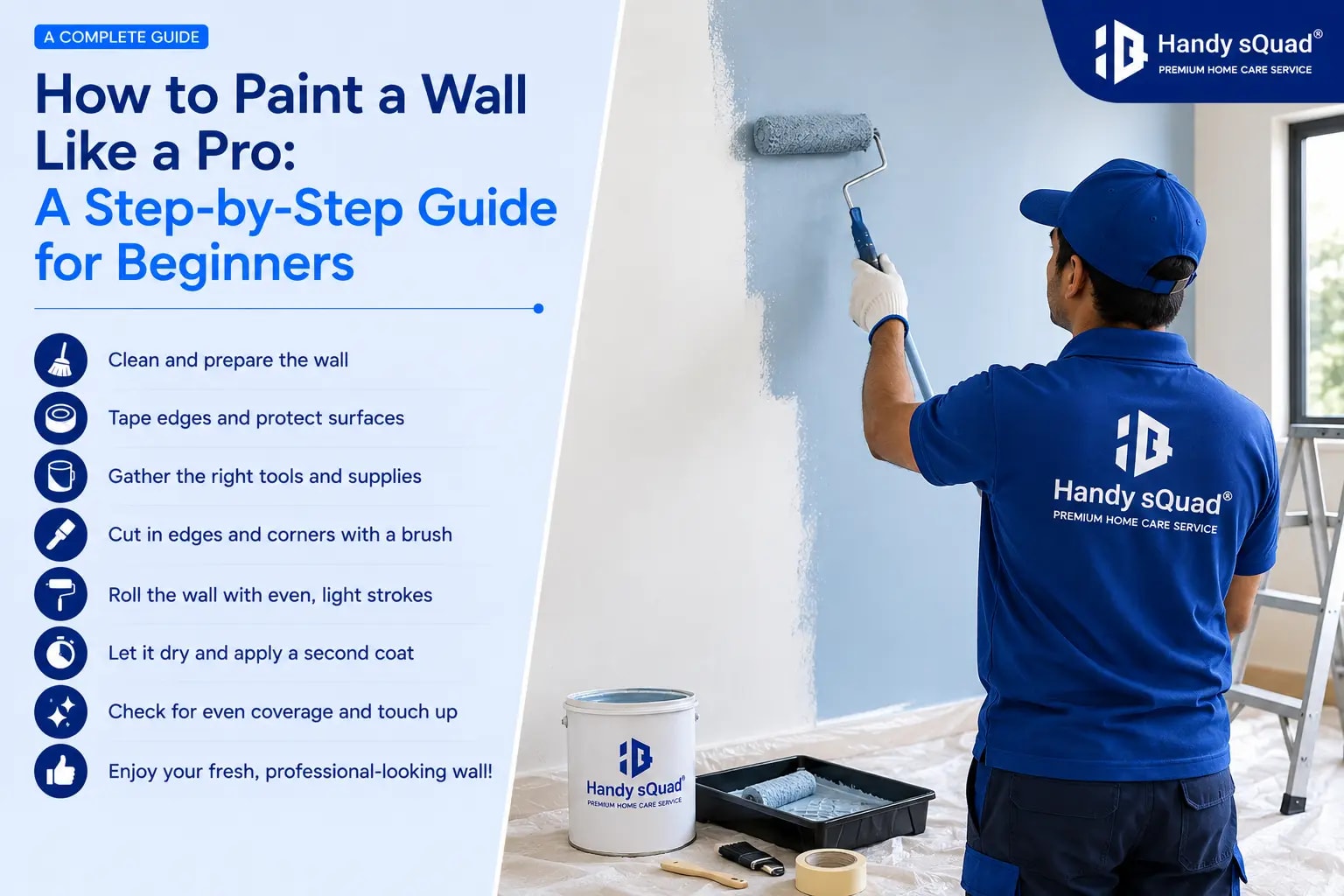
Ask five people how to paint a wall, and you'll get five different opinions. Some swear by the "W" or "M" pattern. Others insist straight up-and-down strokes are the only real way. A few will shrug and say it barely matters as long as the paint's decent. If you're standing in front of a bare wall for the first time, trying to figure out who's actually right, here's the honest version: most of these methods work fine. A handful of small details matter a lot more than which pattern you pick.
This one walks through the whole thing—prepping the wall properly, cutting in edges, actually getting the roller moving, and the bits that make the difference between a wall that looks done and one that looks rushed.
Wall Preparation Before Painting: Cleaning, Taping, and Priming
Painting well genuinely starts before the tin's even open. Skip this bit, and no amount of technique later saves the finish.
Clear the room as best you can, or at least push furniture to the middle and cover it properly. Get a drop cloth or old newspapers down along the base of the wall—paint drips more than you'd expect once you're rolling at any real pace. Tape off the edges too: skirting board, ceiling line, switchboards, window frames, anywhere you don't want a stray line of colour showing up later.
Here's a small trick that's easy to miss—once the tape's up, run a thin coat of paint right along the taped edge before you start the real job. Feels backwards, but it seals the tape down and stops paint bleeding underneath once you get going properly.
Give the wall itself a look over too. Wipe off dust and fill any small cracks or holes; let that dry completely before touching it with paint. A clean, smooth surface honestly does more for the final look than most people give it credit for.
Essential Painting Tools and Supplies for a Smooth Finish
Nothing fancy here, but a few things do matter. A decent angled brush, somewhere around 2 to 3 inches, for cutting in along edges and corners. A roller with the right nap—3/4 inch works fine for most standard walls, though texture calls for something thicker. A paint tray and an extension pole if you're doing a full-height wall, mostly so you're not climbing up and down every five minutes.
Spend a little more on the paint itself if you can. Cheap paint needs more coats, dries unevenly, and doesn't hold up nearly as well over time. You end up using less of the good stuff to get full coverage anyway, so the price gap shrinks by the time you're done.
How to Cut In Edges and Corners With a Paint Brush
Grab the brush before the roller and cut in a neat line along the ceiling, corners, and edges the roller simply can't reach cleanly. Take your time with this part since it frames the whole wall. A steady hand and a properly angled brush make it far less painful than rushing through.
Once that's done, it's roller time.
Roller Painting Technique: W Pattern vs Straight Strokes Explained
Here's where most people get genuinely stuck, going by how often it comes up in painting threads online. The practical answer's simpler than the debate makes it sound.
Loading the roller in a W or M shape is just a way to spread paint across a section before you smooth it out—it's a loading step, not the finish itself. Once that paint's on, go back over the same patch with light, straight strokes, top to bottom or bottom to top, letting the roller do the work instead of pressing hard. This is what actually shapes how the wall looks once it's dry.
A few things matter more than which letter you loaded it in.
Keep your strokes light. Pressing hard into the wall doesn't add coverage; it just creates uneven texture and roller marks that show up once the paint dries—especially with anything mid-tone or dark. A loaded roller with a gentle touch spreads paint far more evenly than a dry one shoved hard against the wall.
Work in sections roughly three-quarters of a roller's width, finishing each with a light final pass before moving on. Catches roller marks and blends edges while everything's still wet, rather than finding them the next morning.
Try to keep one consistent direction for your final pass across the whole wall. Switching directions between sections is usually what causes those faint patchy patterns people complain about once it's fully dry.
Honestly, don't overthink the exact shape. What matters is an even coat with consistent pressure, section by section — not which letter you drew with the roller.
How Long to Wait Between Paint Coats for a Clean Finish
Most walls need at least two coats for a clean finish, and rushing the second one is a mistake people make constantly. Check the tin for the recommended drying time—this shifts depending on the brand and on humidity, and Indian weather, monsoon season especially, can slow things down more than you'd expect. Paint over a coat that's not properly dry yet, and you'll just drag wet paint around, leaving a patchy, uneven mess.
Painting Tips for an Even, Streak-Free Wall Finish
Work with decent lighting so you can spot missed patches or roller marks while the paint's still wet and fixable, not after it's dried and it's too late. Try to keep a wet edge as you go—don't let one section dry fully before starting the next, since that's usually what causes visible lines where two dry patches meet. And clean your tools properly between coats, or once you're done. Dried paint on a brush or roller ruins the next job before it even starts.
DIY Wall Painting vs Hiring Professional House Painters
DIY works fine for a single wall or a small room, especially if you're not in a hurry and don't mind a bit of a learning curve. But for a whole house, high ceilings, tricky surfaces, or just wanting a genuinely even, long-lasting finish without burning your entire weekend on it, professional painters bring the equipment and experience to get it done faster and cleaner than most first attempts.
If you're planning to repaint your home, a reliable House painting service trivandrum provider can take care of everything from surface prep to the final coat, skipping the trial and error that usually comes with a first go at it. And if it's just a room or two that need freshening up, a trusted home painting trivandrum team can get it done neatly without you having to figure out roller technique on your own.
The painting professionals at Handy sQuad handle everything from wall prep to the final coat, so you get a clean, even result without the guesswork—whether it's one wall or the whole house.
Thanks for reading