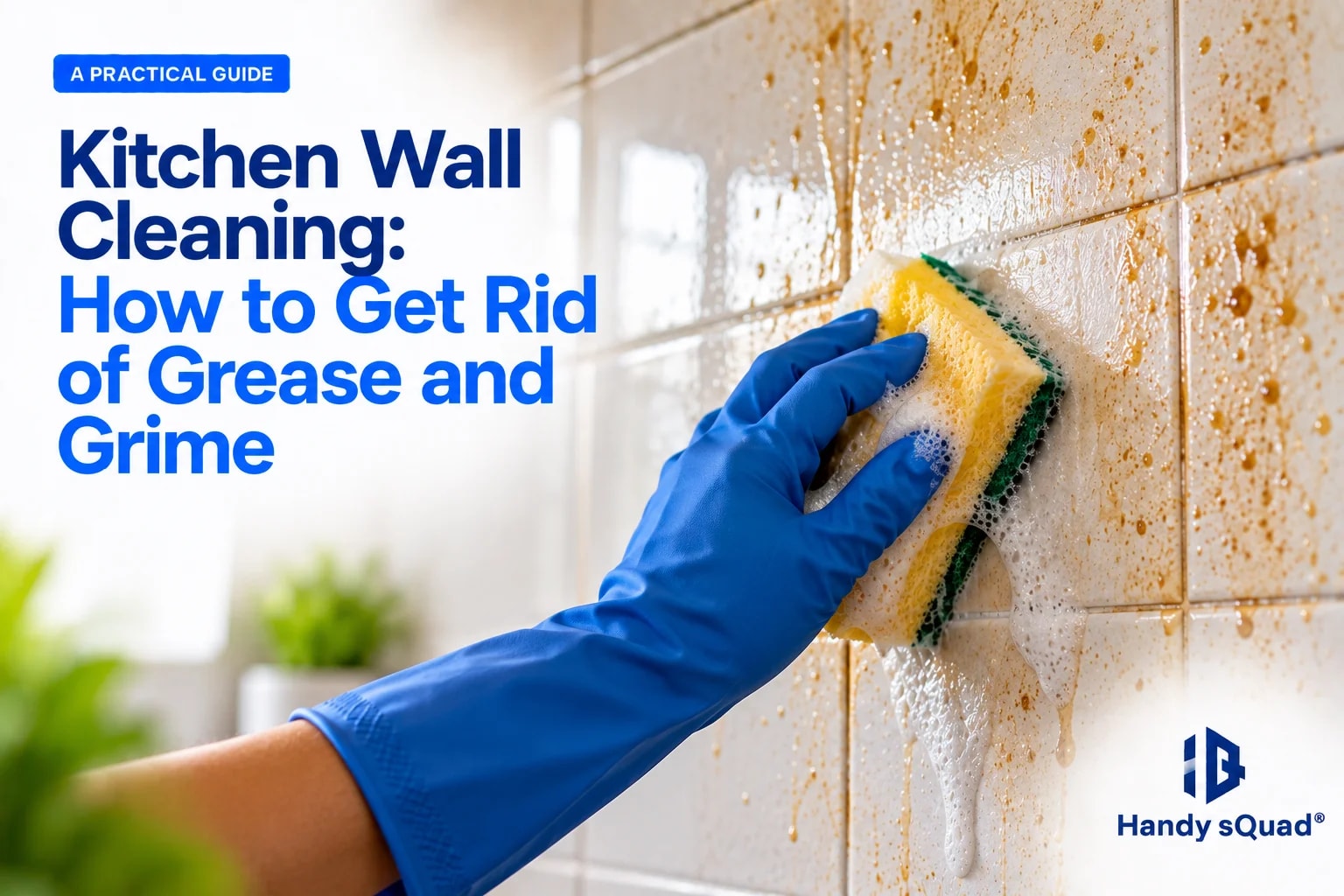
No wall in a house bears the brunt of a beating like a kitchen wall does. Fry something, have a pot of water boil over, stand near the stove while steam rises, and a thin film of oil quietly settles on whatever's closest. After a few weeks, that thin film of oil turns into something sticky and dull, something resistant to a general wipe down.
Why Kitchen Walls Get Greasy So Fast
Cooking does more than put scent in the air; oil, steam, and smoke each carry fine grease droplets that settle on whatever surface is nearby, most affected being the wall behind or beside the stove. Indian cooking also adds to the list frequently, as does tempering with oil and high-heat frying.
Grease on its own would be bad enough, but it also acts as a glue for dust, so an oily film turns into an oil-and-dust combo quickly, and one that's stickier and harder to shift than either one by themselves. Left long enough, it can discolour the paint, find its way into grout, and even attract pests who are interested in the residue.
How Often to Clean Kitchen Walls
The patch of the wall surrounding the stove should see a weekly wipe to keep the most affected parts in check. A proper wall clean, covering the whole wall and not just the patchy area around the stove, is due monthly to residents who regularly cook, or every two to three months for those who use their kitchen less frequently. Left to go any longer, it's generally dealing with hardier, older grease deposits that prove to be more difficult to remove.
How to Clean Kitchen Wall Tiles
Tiled walls are common in Indian kitchens, and fortunately, easier to deal with than their painted counterparts, as they don't soak up grease the way paint does.
Start simple, with warm water and a few drops of dish soap—the same that cuts oil off of plates works just fine here. Dip a soft sponge in, and wipe the tiles in sections, rather than the whole wall at once. Greasy deposits that have had some time to settle and refuse to be shifted by the dish soap should be treated to a paste of baking soda and water, which is spread over the greasy patches and left to sit for ten to fifteen minutes before being scrubbed gently with a soft brush and rinsed clean.
Lines of grout between the tiles deserve special attention, as they often hold more grease than the tiles themselves, thanks to the rough texture of the grout, which holds onto residue. An old toothbrush, dabbed in the baking soda paste, works well at getting at the grout lines without damaging the grout.
Wipe the tiles clean with a clean, damp cloth, and dry with another cloth to avoid water marks.
How to Clean Greasy Kitchen Walls (Painted Walls)
Painted walls require a more careful touch, as excessive scrubbing can cause damage or remove the paint altogether. For grease removal, warm water and gentle dish soap work well on most everyday grease, using a soft cloth made from microfiber. Work in small circles rather than using a back-and-forth motion.
Grease that has become embedded can often be removed with equal parts of white vinegar and water, which is less harsh on most paints than many other methods. Dab or spray on, and let it work for a few minutes before wiping clean with a clean soft cloth. Avoid using abrasive scrubbers on the walls, as they can damage the paint, or use scouring pads—particularly on matte and emulsion paints.
If a wall has taken on years of embedded grease that refuses to be shifted no matter what attempts are made, that generally indicates that the paint has also absorbed oil over the years, and repainting is the preferred method.
How to Clean Grease Off Kitchen Walls Without Damaging the Surface
Several rules apply to both tiled and painted walls when it comes to cleaning. Test any cleaning solution on a small patch or hidden portion of the wall first before using it on a wider area, particularly for those using vinegar and baking soda, as not all paints and tile finishes are compatible. Avoid soaking the wall in liquid, particularly near switches or sockets, which are commonly found on kitchen walls. Finally, work top to bottom to allow any grease to run down onto cleaned and uncleaned areas rather than back up onto something that has been cleaned.
Natural or Chemical? Which is Better to Use?
Baking soda, vinegar, and dish soap are all capable of dealing with most day-to-day grease, and are safer for regular use in a home where food is prepared. For embedded grease, a market degreasing cleaner can save time and effort but should be used in a well-ventilated area and rinsed off thoroughly, to avoid any chemical residue near food preparation areas.
Things to Avoid
Using the wrong cleaner on a surface can prove more troublesome than anything else, particularly abrasive powders or steel wool on painted walls, leaving behind scratches that can be difficult to hide or repair. Leaving grease to build up in the grout for too long can allow it to embed itself for easier removal. Leaving cleaning to occasional deep cleans rather than smaller weekly ones also allows grease to build up. Finally, do not soak walls near switchboards or sockets, as it is a serious safety hazard. Stick to a damp cloth, not dripping water, particularly near switches and sockets.
When Cleaning DIY Isn't Enough
Regular cleaning and the above methods are excellent for day-to-day kitchen wall maintenance, but if the walls haven't been deep cleaned in a while or greasy deposits have spread outwards onto tiles, grout, and surrounding surfaces, exhaust fans, and cabinets, a professional deep cleaning of the kitchen does a much more thorough job than any weekend DIY can manage.
A proper deep cleaning of the kitchen will generally include walls, tiles, grout, exhaust fans, chimney exteriors, cabinets, and countertops, as grease does not typically stay confined to one area of the kitchen alone. The whole-kitchen approach is necessary for a proper deep cleaning rather than focusing on the one annoyance, particularly in a home that has had months or years of regular cooking.
Looking for professional cleaning for kitchen walls that goes beyond just everyday cleaning? Handy sQuad's teams are trained to tackle greasy walls, tiles, and grout as part of a whole-kitchen deep cleaning.
Get Professional Deep Cleaning in Trivandrum and Kochi
Handy sQuad provides thorough deep cleaning for homes across Trivandrum and Kochi, kitchens included, where grease and grime have settled onto walls, tiles, and grout in ways that regular cleaning can't entirely remove.
In Trivandrum, have kitchen walls that need more than just a quick tidy? Handy sQuad's deep cleaning services in Trivandrum can get walls, tiles, and grout really clean.
In Kochi, Handy sQuad's deep cleaning services Kochi provide a similar approach to greasy walls, tiles, and grout as part of a whole-kitchen deep cleaning.
Frequently Asked Questions
How do I clean kitchen wall tiles?
Warm water with a few drops of dish soap should be enough to wipe the tiles clean with a soft sponge. Sections of the wall should be cleaned rather than the whole wall at once. Greasy deposits that resist the solution should be treated to a paste of baking soda and water, left for ten to fifteen minutes, and scrubbed clean with a soft brush and rinsed. The lines of grout between the tiles can be cleaned individually using an old toothbrush.
How do I clean kitchen walls without damaging the paint?
Warm water and mild dish soap should be enough to clean most day-to-day grease, using a soft microfiber cloth. Grease that has become embedded in the paint can be tackled with a diluted white vinegar solution. Avoid using abrasive scrubbers or scouring pads to prevent damaging the paint or removing it.
How do I clean grease off kitchen walls effectively?
A baking soda paste or diluted white vinegar solution is both effective at breaking down grease without resorting to harsh chemical cleaners. Apply one of the two to the affected area, leave for a few minutes, and then wipe or scrub clean with a soft cloth or brush. Always test on a small, hidden part of the wall and then rinse thoroughly.
How do I clean greasy kitchen walls that haven't been cleaned in a long time?
Heavy deposits of grease may need more than one pass to be fully cleared or the help of a market degreasing cleaner. A baking soda paste left for longer, repeated applications, or a degreasing cleaner may be necessary. If the deposits have worked their way into the paint or grout, a professional kitchen deep cleaning service may be more effective at clearing them, particularly if the walls, tiles, and grout all need attention.
What's the best way to clean kitchen wall tiles without scrubbing too hard?
Let the cleaning solution do most of the work before attacking the wall with a brush. Apply a baking soda paste or degreasing cleaner and leave it for ten to fifteen minutes, allowing the solution to work on breaking down the grease. Light pressure should be enough and only be applied where necessary, to protect the tile and grout from abrasion.
Why do kitchen walls keep getting greasy even after cleaning?
Mainly due to continued cooking. Frequent frying or high-heat cooking can lead to fine grease droplets suspended in the air settling on the nearest surface, most commonly walls. One clean is all it takes for things to be back to normal, unless a weekly wipe of the walls surrounding the stove is performed, particularly in an Indian kitchen where cooking is a daily affair.
How often should kitchen walls be cleaned?
The area surrounding the stove can be wiped weekly. A full deep cleaning of the walls is recommended monthly for those who use their kitchen frequently and every two to three months for less frequent use. Leaving it any longer than that, and it's generally embedded, with harder grease deposits that prove more difficult to remove.
Final Thoughts
Greasy kitchen walls creep up slowly, a greater amount of residue every time someone cooks, until the wall has gone from being a clean, even surface to something dull or sticky without a single dramatic incident causing it. Weekly cleaning of the area surrounding the stove and monthly deep cleaning of the walls themselves will keep most of it at bay, though. For walls, tiles, and grout that have gone beyond a basic clean and require a more thorough approach, a professional deep cleaning service can restore things to proper order. Handle it yourself with the above methods, or hand it over to Handy sQuad for homes in Trivandrum or Kochi, but keeping kitchen walls clean is one of the easiest wins for a kitchen that's fresh and clean.
Thanks for reading