

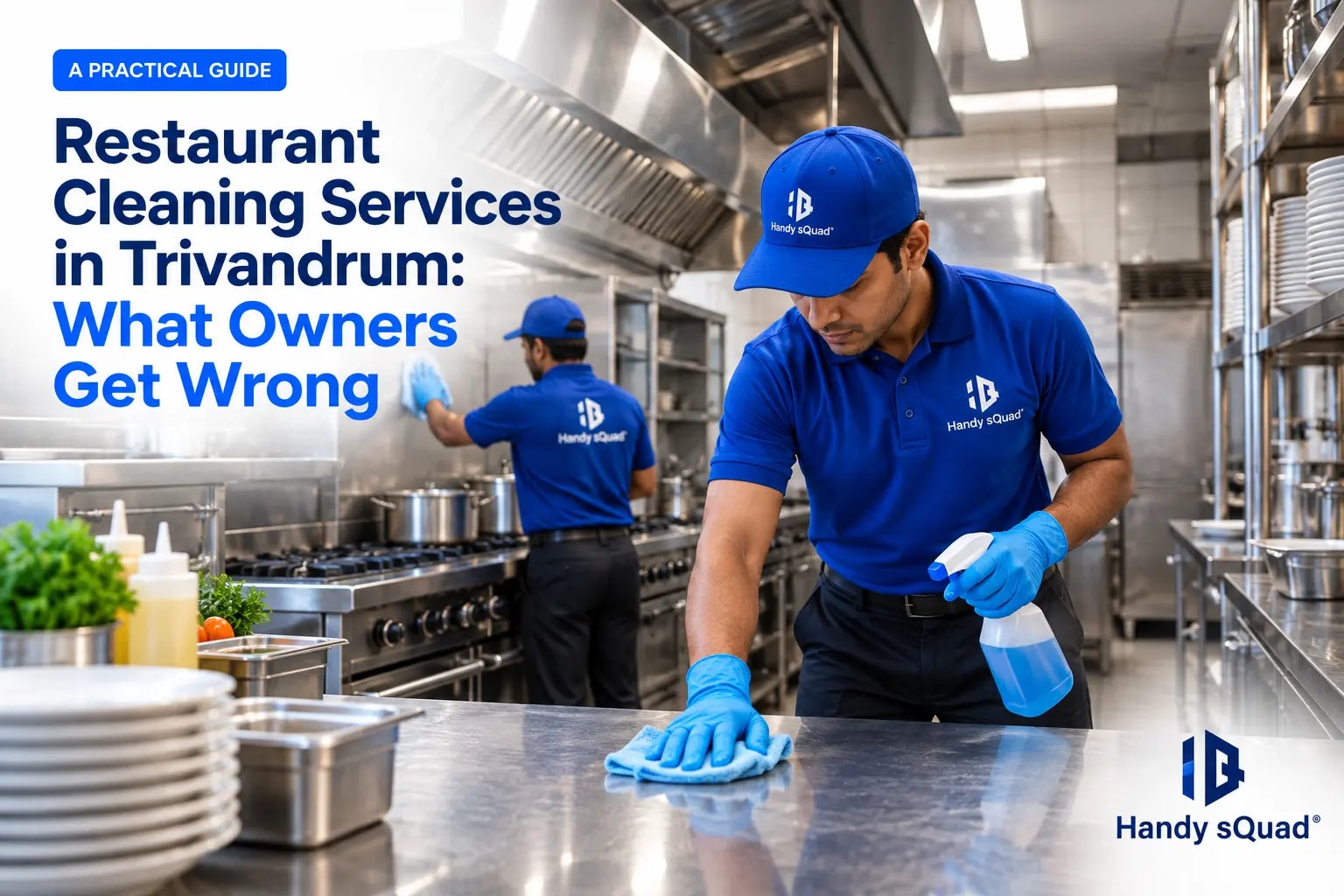
If you run a restaurant, you already know the job never really stops. Menu changes, staff rosters, supply chains, keeping customers happy — and somewhere underneath all of that, cleaning usually gets handled the way most fires get put out: reactively, when something's already visibly wrong. That's a gamble most owners don't realize they're taking. A restaurant kitchen and dining floor take more daily punishment than almost any other kind of commercial space, and there's very little room for error—not just for the sake of appearances, but because food safety regulators don't grade on a curve.
So here's a practical look at what actually matters when you're hiring restaurant cleaning services, what a decent provider should do, and the questions worth asking before any contract is signed.
Restaurant Cleaning Isn't Office Cleaning With Extra Steps
A lot of owners shop for cleaning services the same way they'd shop for someone to vacuum an office — and that's usually where things go sideways. A kitchen means grease, raw food residue, constant humidity from cooking, and equipment that has to be handled a certain way. Exhaust hoods. Deep fryers. Cold storage. None of that behaves anything like a desk or a meeting room.
The dining side has its own headaches too. More foot traffic than a typical office sees in a week. Spills that need attention now, not at closing time. Upholstery that quietly soaks up odours and stains over months. And washrooms — which, fairly or not, customers use to judge your entire place. A cleaning crew that treats your restaurant like just another office contract is going to miss what actually matters here.
Where FSSAI Comes Into It
Every restaurant in India has to answer to FSSAI — the Food Safety and Standards Authority of India — when it comes to hygiene and food handling. Their guidelines touch on surface sanitisation, pest control, how waste gets disposed of, and cleanliness standards specifically for food prep zones. Fail an inspection over hygiene and you're not just looking at a fine — you could be looking at a shutdown, and the kind of reputational hit that's genuinely hard to walk back in a city where news about a bad restaurant spreads fast.
This is why it's worth asking any provider of restaurant cleaning services point blank: are your protocols actually built around food safety compliance, or are we just running your standard office checklist and calling it a restaurant package? The answer tells you a lot.
What a Proper Restaurant Clean Should Actually Cover
Kitchen and food prep. This is ground zero. Exhaust hoods and chimney systems need real deep cleaning on a schedule — grease buildup here isn't just unhygienic, it's a fire risk. Prep surfaces need actual sanitisation, not a quick wipe with whatever's on hand — the products need to be safe for anything touching food. Cold storage and fridges need regular attention to stop mould and bacteria before they start, and don't forget floor drains — they trap grease and debris that mopping alone never really clears.
Dining areas. Tables and booth seating need more than a wipe between customers, especially upholstered seats, which hold onto smells and stains longer than people expect. Grout lines and corners in high-traffic zones need real attention. If you've got glass partitions or big windows, keep them clean — smudges are the first thing a waiting customer notices.
Washrooms. These shape how people feel about your whole restaurant, sometimes more than the food does, which feels unfair but is true. That means grout, fixtures, exhaust fans, and sanitisation checked throughout the day — not just once during a weekly deep clean.
Waste areas. Bin storage and disposal zones are where pests and odour problems start if you let them. In Trivandrum's heat and humidity especially, these issues show up faster than they would somewhere drier.
What to Look For When Hiring Restaurant Cleaning Services
Restaurant-specific experience, not just general commercial cleaning. Kitchen equipment and food-safe products call for a different skill set than cleaning a showroom floor.
Staff who understand food safety basics, not just a checklist. There's a real difference between a team that knows why a protocol exists and one that's just following steps — it shows up in consistency, especially on the things that matter for compliance.
Scheduling that works around you. Restaurants often need cleaning before opening, late after closing, or in short windows between service. If a provider expects you to rearrange your business around their calendar, that's a red flag.
Products safe for food-contact surfaces. This isn't a nice-to-have. The wrong chemical near a prep area is a safety issue, not a quality one.
Mistakes Owners Keep Making
Treating cleaning like a one-off deep clean instead of an ongoing system is probably the most common trap. You need daily cleaning, weekly deeper work, and periodic full deep cleans that cover exhaust systems and cold storage — not just a phone call whenever something starts to look bad.
Going with the cheapest quote is another one. Cutting corners here isn't just a cosmetic issue — it touches food safety, pest control, and your standing with regulators, and those aren't places to save a few thousand rupees.
And a surprisingly common one: not nailing down exactly what's included before signing. Exhaust cleaning, cold storage maintenance, washroom deep cleans — these sometimes get quietly treated as extras rather than standard scope. Get it in writing before you sign anything.
Why Handy sQuad's Restaurant Cleaning Services Are a Strong Fit
Handy sQuad runs on a company-owned model rather than farming work out to independent contractors, which means their teams are trained in-house, uniformed, and held to documented standards on every job — restaurant kitchens included. In food service, that kind of consistency isn't a bonus feature, it's the actual requirement.
Their crews use the right tools and products for different surfaces, including the food-contact areas that need extra care, and they build their schedule around your restaurant's actual hours instead of asking you to work around theirs.
If you're running a restaurant in Trivandrum and need this handled properly — exhaust systems, prep surfaces, dining areas, washrooms, all of it — Handy sQuad's restaurant cleaning service is built for exactly this, rather than a generic office package stretched to fit.
Beyond restaurants, they offer commercial cleaning services for offices, showrooms, and other business spaces around the city, so if you're managing more than one property, there's one provider that can cover all of it under the same standard.
Questions Worth Asking Before You Sign
Do you have real experience with restaurant kitchens specifically? Are your products safe around food? Can you actually work within our operating hours? What's your process for exhaust hood and kitchen deep cleaning? And what happens if something gets missed, or an inspection flags a problem?
How confidently a provider answers these usually tells you whether they understand the restaurant business — or whether they're treating it as just another line item.
Final Thoughts
Cleaning isn't something to squeeze in as an afterthought between everything else running a restaurant demands. It affects food safety compliance, how customers perceive the place, and ultimately your reputation in a city where word of mouth still counts for a lot. A provider that actually understands what a commercial kitchen needs — rather than one applying office-cleaning logic to a completely different environment — makes a real, measurable difference to how your restaurant runs day to day.
Ask the right questions, get the scope in writing, and pick restaurant cleaning services built for food service — not general commercial work stretched to fit. Your kitchen, your customers, and your compliance record will all be better for it.