

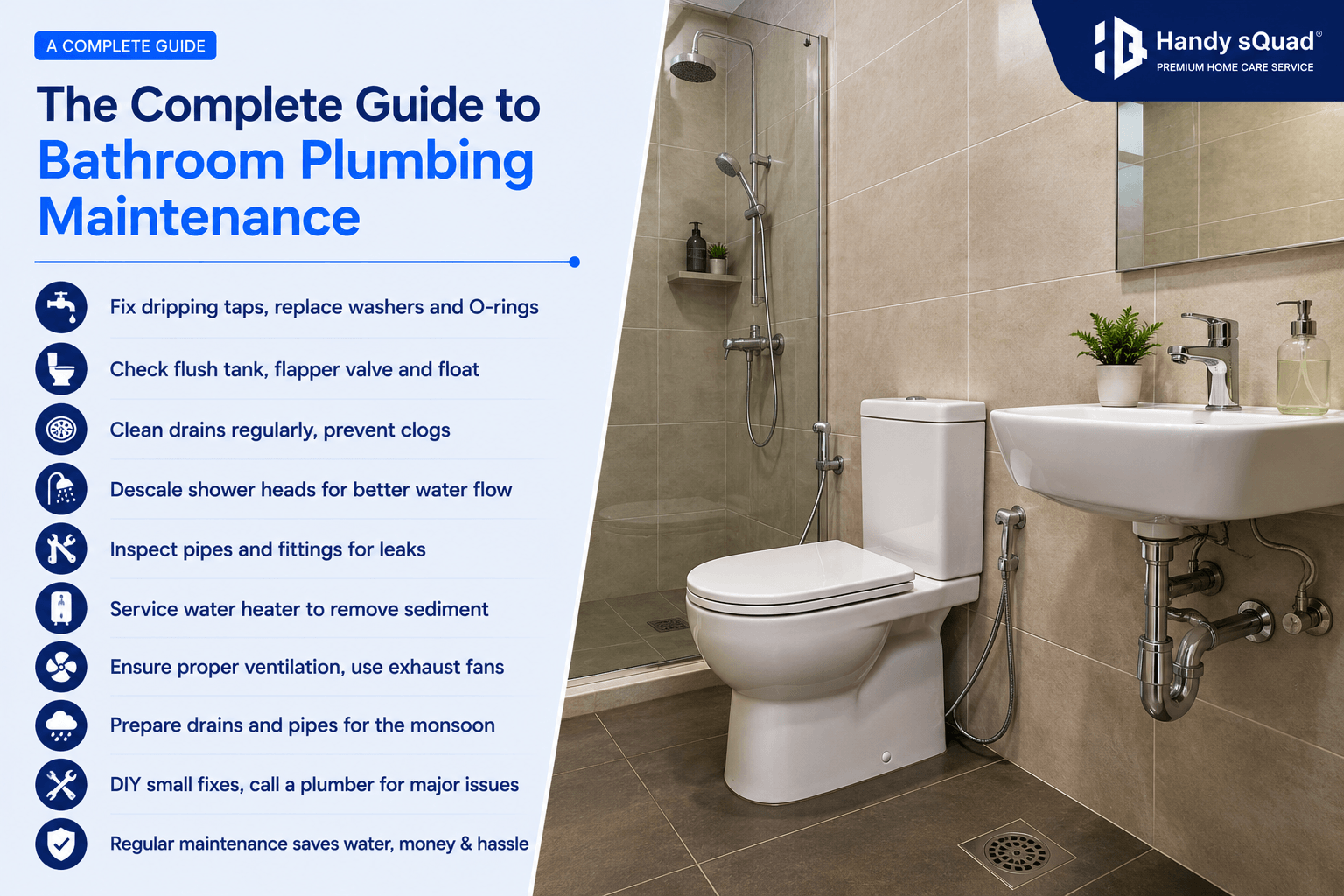
Nobody thinks about bathroom plumbing until it's gone wrong. Tap that won't stop dripping at 2am. A flush that suddenly needs three tries. Water just sitting near the drain no matter how long you wait. None of this tends to show up out of nowhere, really — it's usually small stuff nobody bothered with for months, sometimes years, quietly turning into an actual repair job.
So here's a proper look at what your bathroom plumbing genuinely needs, how often, and what you can handle yourself versus what's worth calling someone in for.
Why This Actually Needs Regular Attention
Your bathroom probably sees more water traffic than any other room in the house. Taps, showers, flush tanks, drains — a lot's happening every single day, and all of it wears steadily on pipes, seals, fittings over time. Throw hard water into the mix, common enough across Indian cities, and you get mineral deposits building up inside pipes and fixtures faster than you'd think.
Ignore the small stuff and it rarely stays small. A drip you've been meaning to fix wastes way more water over a year than people assume. A drain that's a bit slow today is often fully blocked in a few months. Catch these early, instead of waiting for the whole thing to give out, and you save both money and the hassle of an actual plumbing emergency.
Taps and Faucets: Small Stuff, Adds Up Fast
Start with the taps — usually the first place wear shows. A dripping tap nearly always comes down to a worn washer or O-ring inside, and honestly, it's one of the easier fixes around. New washer costs almost nothing, though take the old one with you when buying a replacement so you get the right fit.
Stiffness is worth checking too. Tap suddenly hard to turn? Mineral buildup inside the mechanism, most likely, especially with hard water around. Soak the tap head in mild vinegar for a bit and it'll dissolve a fair chunk of that buildup — though a badly scaled one might just need replacing eventually.
Keep an eye on the base of each tap as well, right where it meets the wall or basin. Water pooling there, even without an obvious leak, usually means the sealant's worn off and needs redoing before it starts seeping into the wall or floor behind.
Flush Tanks and Toilets
Flush tanks are one of those things nobody looks at until they've stopped behaving. A flush that keeps running after use, or needs multiple presses to actually work, usually points to a worn flapper valve or a badly set float. Both easy enough to check — lift the tank lid, watch what happens during a flush. Water still trickling into the bowl long after? That's your flapper valve, and it generally just needs swapping out.
Worth a glance every few months for hairline cracks in the tank or bowl too, especially in older bathrooms. Looks minor now, sure, but it can widen gradually into a proper leak later — sometimes one you don't spot until there's water damage on the floor below.
Drains: Prevention Really Does Beat Cure Here
Hair, soap scum, general grime, every single day — that combination is basically what causes slow drains over time. One habit that genuinely helps: a drain cover or hair catcher, cleaned out regularly rather than letting everything just wash straight down.
Once a month or so, hot water down the drain clears minor buildup before it turns into a proper clog. Noticing the water draining a bit slower than usual? Deal with it now rather than waiting around for a full blockage — a slow drain's just so much easier to fix than one that's completely stuck.
Skip chemical drain cleaners as a routine thing, tempting as they seem. Regular use is hard on pipes, older ones especially, and they're really built for occasional use, not a monthly habit.
Showers and Shower Heads
Shower heads pick up mineral deposits faster than most people expect, hard water especially, and it shows up as weaker or uneven pressure over time. Unscrew it, soak it in vinegar for a couple hours, scrub the nozzles gently after — usually brings most of the flow right back. Do this every couple of months and you avoid the point where the whole head just needs replacing.
Check the sealant around the shower area too, particularly where the unit meets the wall, and around any glass partition if you've got one. Worn sealant here is a genuinely common cause of water creeping into walls, causing damage you won't notice until it's already gone fairly far.
Pipes and Water Heaters
Visible pipes, under the sink or near the water heater, deserve a quick look every few months. Any dampness, discolouration, a faint musty smell — early signs of a slow leak that hasn't quite announced itself yet.
Got a geyser? Periodic servicing matters more than people think, particularly with hard water where sediment settles inside the tank over time. That buildup means the heater's working harder just to heat the same amount of water, which shows up as a bigger electricity bill and a shorter life for the unit overall.
Getting Ready for the Monsoon
Ground-floor bathrooms especially, or anything with external drainage, take extra strain once monsoon hits. Worth checking every drain's clear before the rains start — a blocked drain that's manageable in dry weather can cause real water accumulation the moment heavy rain shows up. Exhaust fans too, since bathrooms need proper ventilation through the humid months to keep mould off the walls and ceiling.
DIY or Call a Plumber?
Plenty of routine bathroom plumbing is genuinely something you can handle — cleaning shower heads, checking sealant, clearing hair from drains, swapping a tap washer. No special tools needed, just a bit of regular attention.
Some things, though, are better left to a professional. Anything touching the main water supply line, pipe replacement, a persistent leak you just can't trace, or something off inside the flush tank's mechanism that isn't obvious from a quick look — get a trained plumber on it. Try these yourself without knowing what you're doing, and a small issue can turn into a much bigger, pricier one fast.
Dealing with recurring plumbing issues in your bathroom, or just want a proper inspection before something gets worse? Worth reaching out to a reliable plumbing service trivandrum provider rather than waiting around for a full breakdown. Catching small stuff early is nearly always cheaper, and a lot less disruptive, than an emergency repair later.
Final Thoughts
Bathroom plumbing rarely fails all at once. It's usually a slow build-up — a dripping tap here, a slightly sluggish drain there — that eventually snowballs into something bigger. A bit of regular attention, checking taps, clearing drains, keeping an eye on sealant, keeps most of this from ever getting that far.
The HandySquad team are in-house trained, not outsourced, and background verified, so you know exactly who's walking into your home. Routine maintenance or something that's already spiralled a bit, the team handles bathroom plumbing properly from start to finish, so it's actually fixed right the first time round.
Thanks for reading