

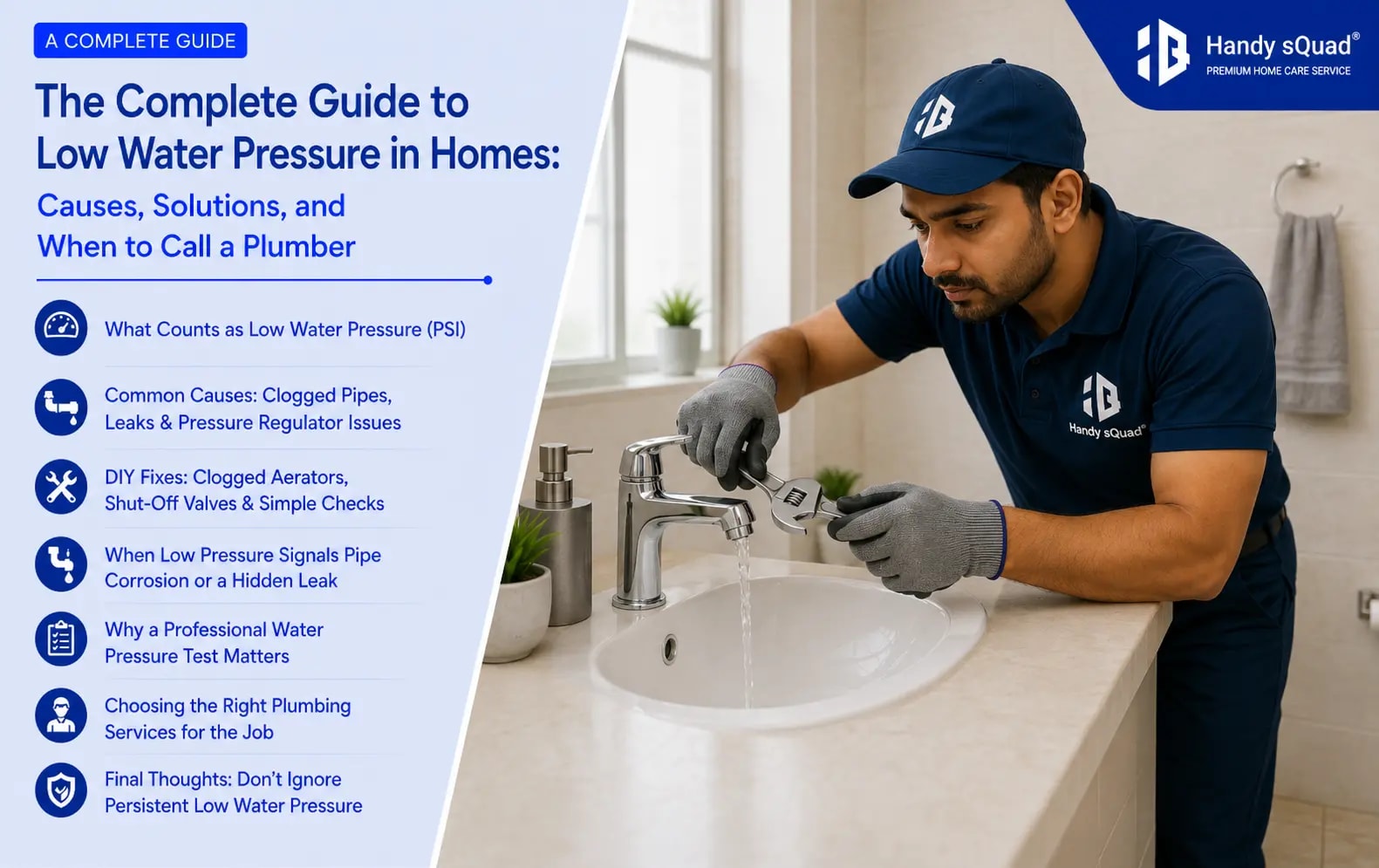
You step into the shower expecting that strong stream and instead get a trickle. Barely enough to rinse the shampoo out. Sounds small. But it's one of the most common complaints homeowners bring up, and most people just shrug it off as "one of those things." It's usually not. Low water pressure is often your plumbing trying to tell you something's wrong behind the walls or underground, where you can't see it.
So here's what actually causes it, what you can check yourself before spending a rupee, and when you genuinely need to stop guessing and call someone.
What Counts as Low Water Pressure (PSI Explained)
PSI, pounds per square inch—that's the measurement. Healthy homes usually sit between 40 and 60. Drop below that, and you'll notice weak showers, a dishwasher that seems to take forever, and a washing machine filling in slow motion. Sometimes it's the whole house.
Here's the part that trips people up, though: sometimes it's just one tap. Low water pressure in taps in the kitchen, say, while the bathroom shower runs fine. That distinction matters a lot, because whole-house problems and single-fixture problems rarely share the same cause.
Common Causes: Clogged Pipes, Leaks, and Pressure Regulator Issues
Sediment buildup and clogged pipes. This is the usual culprit, honestly. Rust, minerals, and general grime it collects along the inside of the pipe over the years and slowly narrow the path water has to squeeze through. Older homes with galvanised steel pipes get hit hardest, especially where the water runs hard. It's not sudden. One day, you just notice the shower isn't what it used to be.
Hidden plumbing leaks. A leak does the same thing from a different angle; water escapes before it even reaches your tap, so naturally, there's less of it by the time it does. Leaks like underground supply lines, inside walls, and loose joints. And pressure is honestly the smallest problem a leak causes; mold and water damage and bills that make no sense are usually what actually get people's attention.
A failing pressure regulator (PRV). This valve controls how much pressure comes in from the main line. When it starts going bad, it throttles way more than it should, and the whole house feels weak at once.
Pipe corrosion and old plumbing. Galvanised steel and older copper pipes rust from the inside, shrinking the diameter and roughening up the interior, both of which slow water down even when the pipe looks completely normal from the outside.
Clogged aerators and showerheads. The one nobody thinks of first. Just gunk sitting in the mesh screen of your faucet or built up in the tiny holes of the showerhead. This is genuinely the single most common reason behind low water pressure in taps specifically. It's also, thankfully, the easiest thing on this list to fix.
Municipal water supply issues. Sometimes it's not your house at all. Utility maintenance, a demand spike in the area, repair work happening down the street—any of that can knock your pressure down temporarily while your own plumbing does nothing wrong.
A partially closed shut-off valve. And sometimes it's embarrassingly simple, a valve that never got turned fully open after a repair or renovation. Halfway open still lets water through. Just not enough of it.
DIY Fixes: Clogged Aerators, Shut-Off Valves, and Simple Checks
A lot of these fixes themselves once you know where to look. Unscrew the aerators and showerheads, soak them in vinegar for a couple of hours to break up the mineral buildup, rinse, and put them back. Ten minutes, and it solves the problem more often than people expect.
Check the main shut-off valve while you're at it, make sure it's all the way open. If there's an adjustable pressure regulator, see if it's been turned down (renovations are usually to blame; someone bumps it and nobody notices for weeks).
Test a few different taps. Everywhere, or just one spot? That single answer narrows things down fast. Still stuck, ask a neighbour. The same issue on their end usually means it's the supply line, not your house.
When Low Pressure Signals Pipe Corrosion or a Hidden Leak
Gone through all that, and pressure's still low, especially house-wide? That's usually corrosion, a leak you haven't found, or a regulator on its way out. None of that improves on its own. Left alone, it turns into real water damage, climbing bills, and sometimes structural trouble.
This is where a licensed plumber earns their fee. Pressure gauges, leak detection equipment, pipe cameras, and tools that actually find the source instead of guessing at it. They fix what's actually wrong, not just whatever symptom happened to be visible that day.
Why a Professional Water Pressure Test Matters
You can try chasing a leak yourself or replacing a corroded section of pipe. Without the right training, it usually goes sideways, though, with new water damage where there wasn't any or a joint that seemed fine and starts leaking again three months later.
A decent plumber runs a full pressure test, tracks down leaks with proper equipment instead of tearing into walls on a hunch, tells you honestly whether a pipe needs replacing or just repairing, recalibrates or swaps a failing regulator, and keeps the work up to code, which matters more than people think when it's time to sell the house.
If you're in Trivandrum, it's worth finding plumbers in Trivandrum who actually diagnose pressure problems properly instead of patching the visible symptom and leaving. A good plumber in Trivandrum checks the pipework, the valves, the supply line, wherever the real issue is actually hiding, not just the tap you called about.
Choosing the Right Plumbing Services for the Job
Typing "plumbers near me" into Google because your shower's useless and you've had enough? Look for upfront pricing, actual licensing and insurance, and a track record of fixing problems rather than doing quick patch jobs. Ask if they use modern leak-detection equipment too; it saves your walls, saves your floors, and usually gets the job done faster.
Final Thoughts: Don't Ignore Persistent Low Water Pressure
Low water pressure is rarely something you should just live with. Sometimes it's a ten-minute fix with vinegar and a clogged aerator. Sometimes it's a hidden leak, corroded pipes, or a regulator that's failing and genuinely needs attention. Either way, catching it early costs a lot less than waiting.
Already tried the DIY route and nothing's changed? Book trusted plumbers in Trivandrum for a proper inspection and a fix that actually holds. One-time repair or ongoing maintenance, either way, an experienced plumber in Trivandrum gets it right the first time. And next time you're searching for plumbers ncollectear me, pick a team that treats a low-pressure complaint as a chance to actually fix your plumbing, not just patch it and leave.
Thanks for reading