Kerala's climate is gorgeous, right up until it starts working against your wiring. Humidity, monsoon rain, salty coastal air—if you're near the backwaters or the coast, it all quietly wears down a home's electrical system in ways homeowners in drier states just never have to deal with. And most people only think about their wiring after something trips, sparks, or dies completely.
Which is backwards, if you think about it. A little regular maintenance catches the small stuff before it turns into a burnt panel or something genuinely dangerous. So here's a real walkthrough, what to check, roughly when to check it, and what's actually worth losing sleep over if you own a home anywhere in Kerala.
Why Kerala Needs a Different Maintenance Approach
Most electrical maintenance guides online are written with dry winters and mild summers in mind. That's not this state. Between June and September, humidity sits at levels that corrode wiring, loosen connections, and basically set the stage for short circuits without you noticing until it's a problem. Add salt air into the mix for coastal homes, and you're fighting two separate threats at once.
That's really the whole reason seasonal checks matter more here than most places. An inspection that works fine once a year elsewhere probably needs to happen twice here, once before the rains hit, once after.
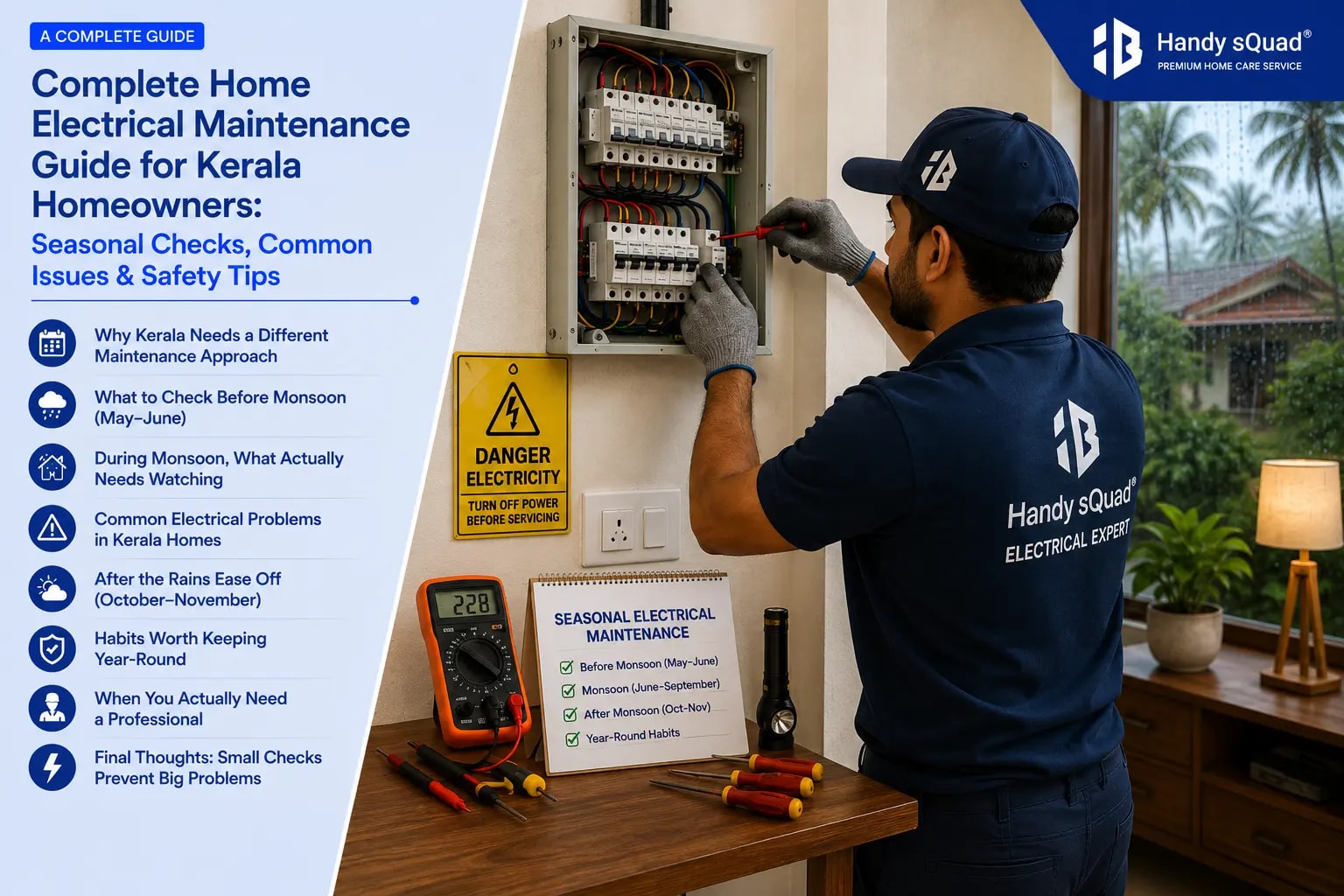
What to Check Before Monsoon (May–June)
This is your window, before the rain actually starts, to catch anything before humidity turns it into a real problem.
Earthing comes first. It's what protects you from shocks when something goes wrong, and it's one of the first things to degrade in Kerala's wet soil. If nobody's tested your earth resistance in a couple of years, monsoon is exactly the wrong time to find out it's failed.
Outdoor wiring and meter boxes need a look too, cracked casing, exposed wires, rust on the fittings. Meter boxes especially take a beating if they're not sealed properly.
Test the MCBs and RCCBs while you're at it. These are your circuit breakers, the reason a fault trips a switch instead of starting a fire. There's usually a test button clearly marked on the RCCB; press it, and it should trip right away. If it doesn't, don't put that off.
And check exposed wiring anywhere near water, bathrooms, kitchens, and outdoor points. Cracked insulation in these spots becomes a much bigger deal once the humidity really sets in.
During Monsoon, What Actually Needs Watching
Once the rain's actually falling, the job shifts from prevention to just paying attention.
Flickering lights or appliances tripping more than they used to—those are early signs, not something to shrug off. Moisture creeping into a connection is usually behind it, and it only gets worse the longer nobody looks at it.
Water in a switchboard or socket? Don't touch it; don't try fixing it yourself. Cut power at the main breaker if that's safe to do, then call an electrician. This one's genuinely not a DIY situation, not worth the risk.
If you've got an inverter and battery setup, which a lot of Kerala homes do, given how often the power still goes out in some areas, keep an eye on it too. Poor ventilation plus monsoon humidity is a rough combination for battery life.
The Problems That Show Up Again and Again
A handful of issues seem to hit Kerala households, no matter the neighborhood or how old the house is.
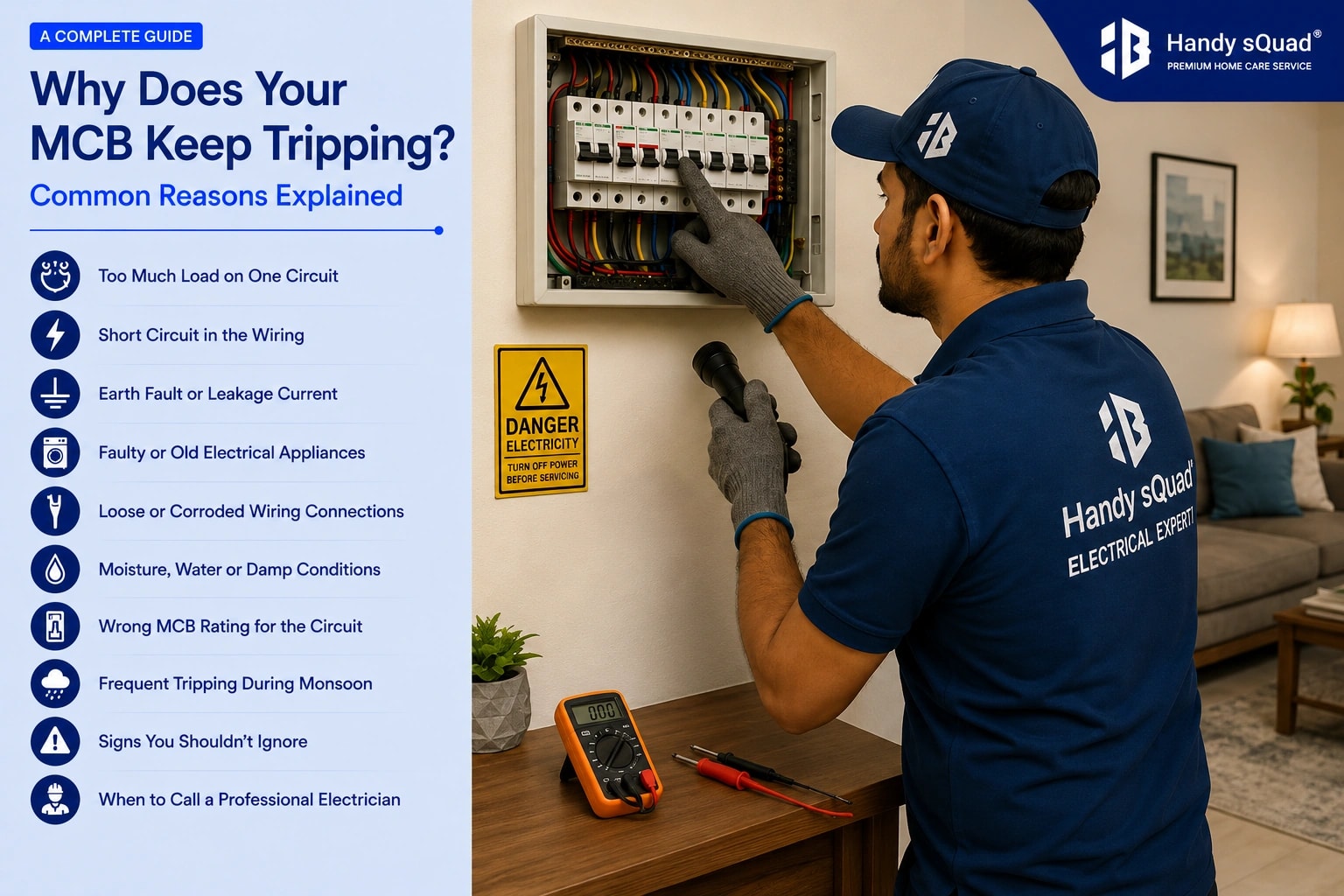
MCBs tripping constantly usually means an overloaded circuit, one appliance pulling too much current, or a fault hiding somewhere in the wiring. Worth actually looking into rather than just resetting the switch every single time.
Old wiring is a bigger deal than most people assume. Plenty of homes built more than 20 years ago still run on aluminum wiring or insulation that's simply worn thin from decades of humidity. None of it's visible from outside, which is exactly why it's risky.
Loose or corroded connections build up slowly in humid conditions and end up being one of the more common causes of sparking sockets or switches that feel warm when you touch them. Warm switches are nothing, by the way.
And weak earthing shows up a lot in older homes where the system hasn't been touched in years. Combine that with Kerala's wet soil, and it stops being a maintenance nitpick; it becomes a real safety issue.
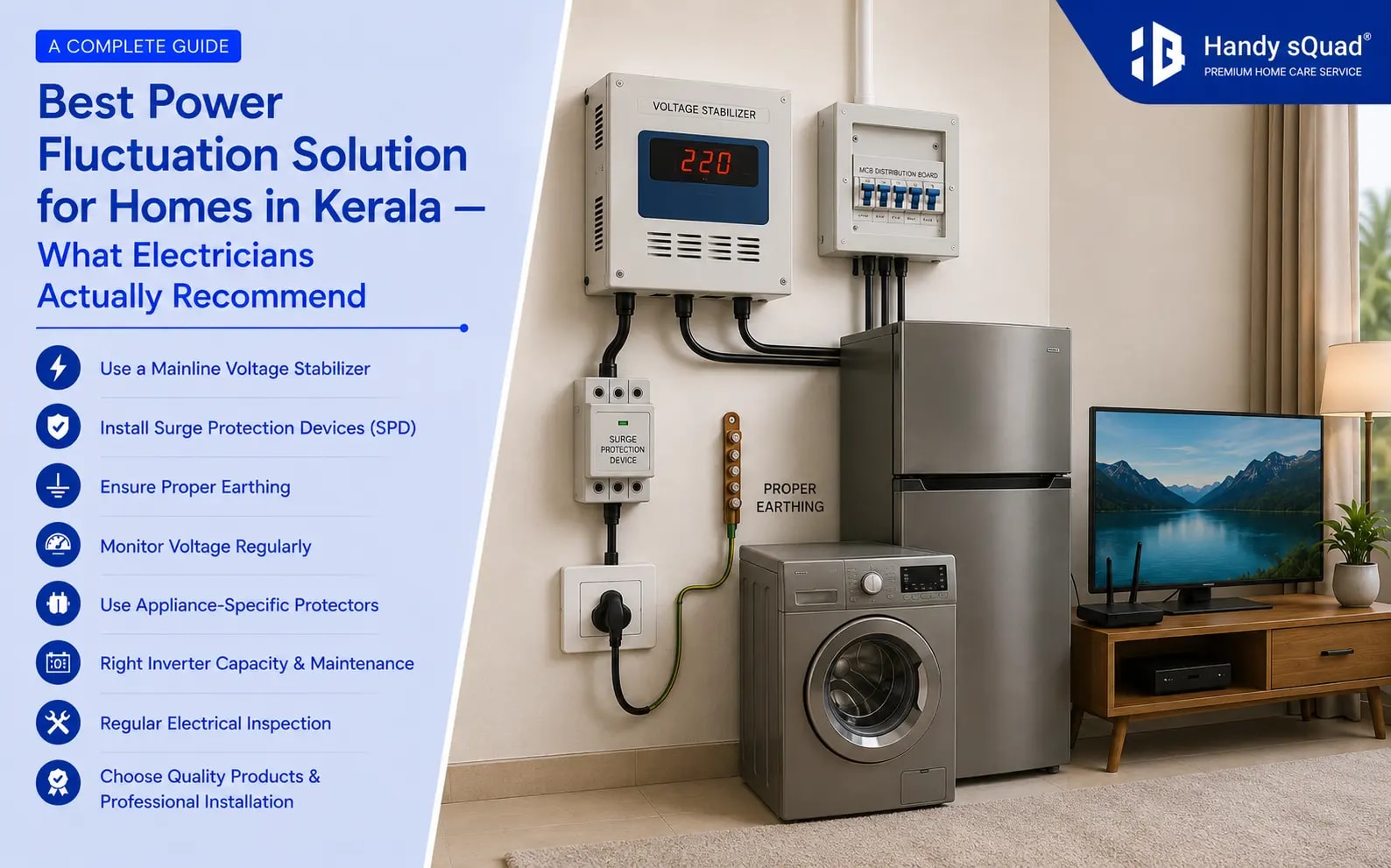
Frequent voltage fluctuations are one of the biggest reasons refrigerators, air conditioners, TVs, and washing machines fail prematurely in Kerala. If you're experiencing dimming lights, appliances restarting unexpectedly, or repeated electrical issues, read our detailed guide on Best Power Fluctuation Solution for Homes in Kerala — What Electricians Actually Recommend to understand the causes, recommended protection devices, and long-term solutions.
After the Rains Ease Off (October–November)
Once monsoon winds down, it's worth doing a second round, mainly to catch whatever quietly went wrong during those wet months without you noticing.
Check for water staining or mildew near switchboards and junction boxes. Even a small amount of moisture getting in during monsoon leaves signs, and finding it now beats finding it later as a bigger problem.
Re-test the RCCB and MCBs again too. Something that tested fine back in May doesn't always behave the same after months of humidity.
And take a look at outdoor lighting and any exposed wiring. Monsoon wind and rain are hard on outdoor fittings, and this is usually when the damage actually becomes visible.
Habits Worth Keeping Year-Round
A few small habits genuinely make a difference, monsoon or not. Don't overload a single socket with a bunch of high-wattage appliances. Extension boards are convenient, but they're also a leading cause of house fires. Keep panels and switchboards dry and ventilated where you can. Replace wiring older than 20 to 25 years instead of waiting for it to fail on its own. And get a full safety inspection done at least once a year, ideally right before monsoon season kicks off.
When You Actually Need a Professional
Some of this is genuinely fine to handle yourself, testing an RCCB and a visual check of your switchboards. But anything involving real wiring work, earthing systems, or panel upgrades needs a licensed professional; there's no way around that. Working with experienced electricians in Trivandrum gets you an actual assessment instead of a guess, which matters a lot given how much Kerala's climate specifically works against home wiring.
Noticing frequent trips, warm switches, or has it just been a while since anyone looked at your setup? Don't wait around for it to become a bigger issue. A good electrician in Trivandrum can catch the warning signs long before they turn genuinely dangerous.
Final Thoughts
Electrical maintenance isn't exactly a thrilling item on anyone's to-do list, but in a state where humidity and monsoon rain actively work against your wiring every single year, it's one of the ones that actually matters. A bit of seasonal attention goes a long way toward avoiding the kind of electrical emergency that's expensive, disruptive, and genuinely dangerous.
If it's been a while since your home's wiring had a proper look, now's as good a time as any. Search for electricians near me and get a full inspection booked before the next monsoon catches you off guard. It's a small cost now for something that protects your home, your appliances, and honestly your family for years.
Thanks for reading