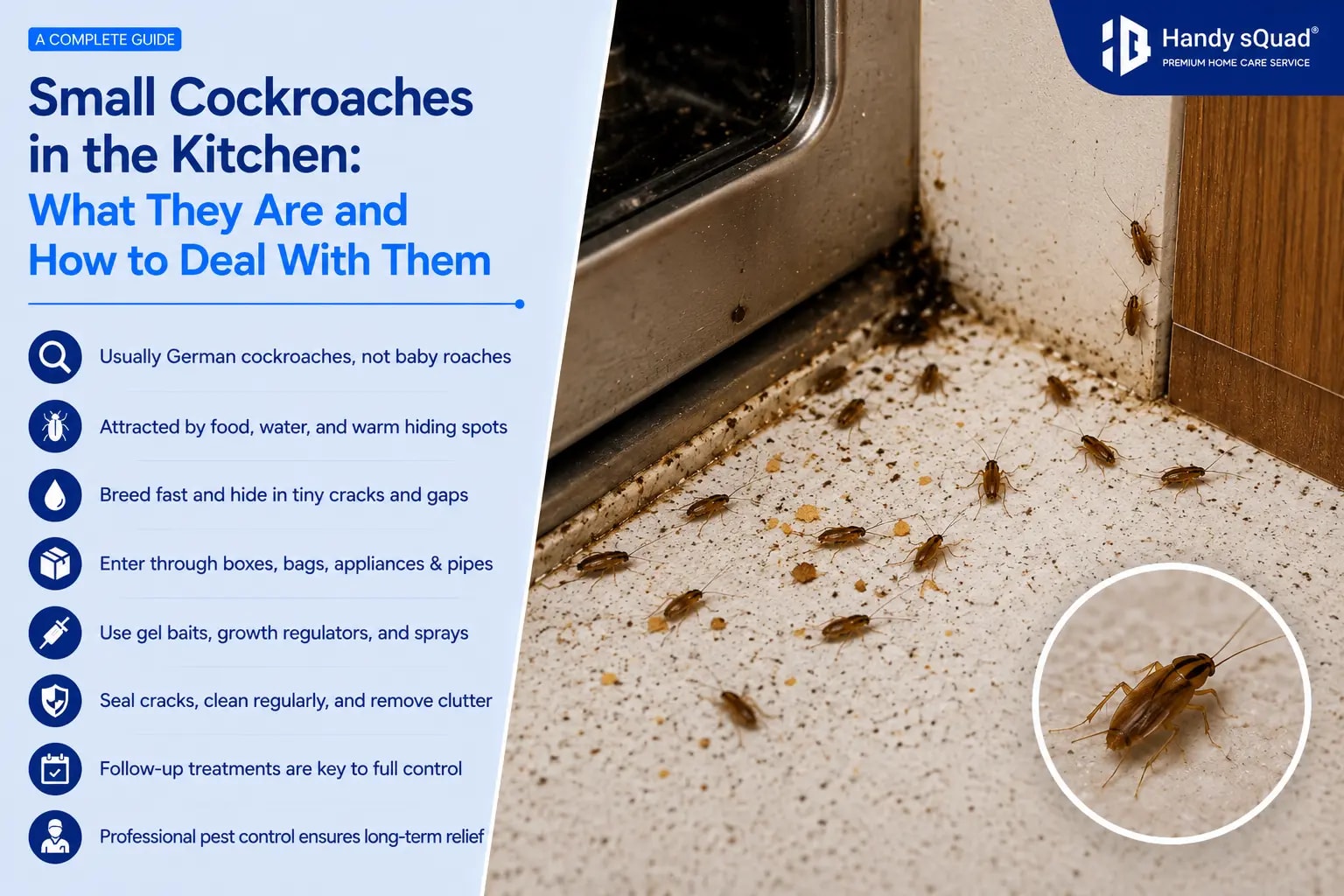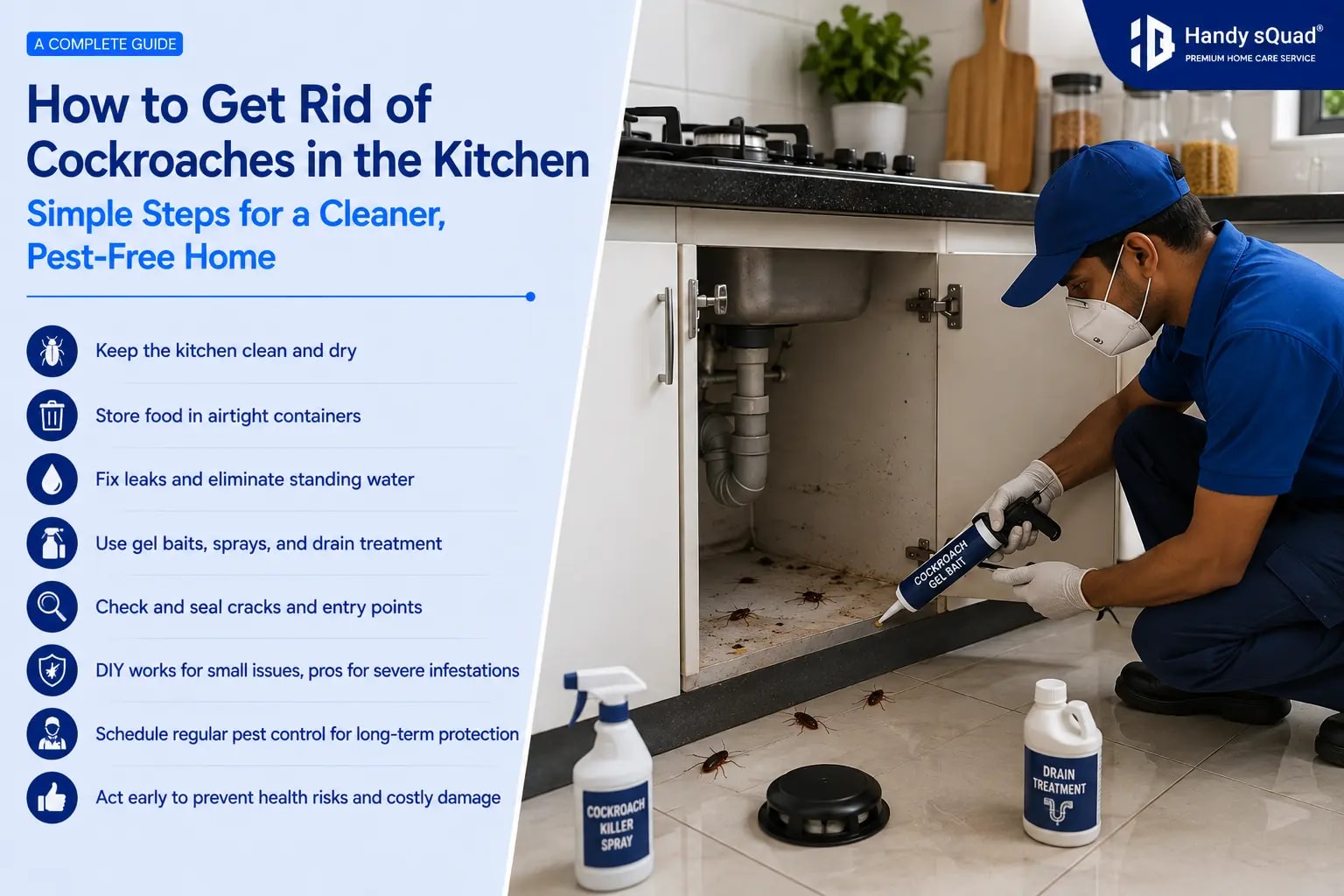
Open a cabinet under your sink. Flip the kitchen light on at night. Pull the stove out to clean behind it. And there they are, scattering in every direction. Cockroaches have this knack for showing up exactly where you least want them, and once a kitchen's properly infested, it can genuinely feel like they're breeding faster than you can spray. If this is where you're at right now, you're not alone—it's one of the most common pest complaints in Indian homes, especially kitchens with cabinets, gaps behind appliances, and that warm, humid air roaches can't get enough of.
So let's actually get into it—why they show up, what works to clear them out, and what keeps them from just coming right back a month later.
What Attracts Cockroaches to Kitchens: Food, Water, and Shelter
Cockroaches need three things, really — food, water, and somewhere dark and undisturbed to hide. Most kitchens hand over all three without even trying. Crumbs left on the counter. Dishes sitting in the sink overnight. A tap that drips just enough, or a bit of standing water near the stove. Warm, tight spaces under cabinets or behind the fridge. It's more or less perfect, from a cockroach's point of view.
They're also stubbornly hard to get rid of on your own, mostly because they never live alone. You see a few roaches, and there's usually a much larger population you're not seeing—tucked into wall cavities, behind appliances, and deep in cabinet joints you can't reach with a hand. And they're tough. Some species go a surprisingly long time without food, longer still if nobody's disturbing where they're hiding.

Health Risks of Cockroach Infestation: Allergies, Asthma, and Contamination
Beyond the sheer ick factor, yes, cockroaches are a genuine health concern, not just something gross to look at. They pick up bacteria as they move between drains, garbage, and your countertop, and that can end up on your food or your prep surfaces without you ever knowing. If anyone in the house has asthma or allergies, roach droppings and shed skin are a known trigger. There's also a link to digestive issues in some cases. So while a couple of sightings might feel like nothing much, a proper infestation is worth taking seriously rather than just living around.
Kitchen Hygiene Tips to Eliminate Cockroach Food Sources
No treatment, however strong, works particularly well if the kitchen's still handing out free food and water. This bit matters more than most people give it credit for—spray all you like, but leave crumbs and standing water around and the roaches simply won't leave.
So, the basics. No dirty dishes sitting overnight. Wipe down counters and the stovetop after cooking — even a bit of leftover oil is enough to pull them in. Keep grains, spices, and dry food in airtight containers, not loosely tied bags or open packets. Fix any leaking taps or pipes; roaches can go a while without food but need water fairly regularly, and cutting that off alone can push a fair few of them elsewhere.
It's worth keeping your bin out of the kitchen if you can manage it, or at least make sure the lid actually seals and it gets emptied often. Got a kitchen trolley or a cabinet that pulls out? Drag it out occasionally and clean underneath—this spot gets missed constantly during normal cleaning, and it's a favorite hiding place.

Effective Cockroach Treatment Methods: Gel Baits, Sprays, and Drain Treatment
Once the basics are sorted, it's time to go after what's already living in your kitchen. A few approaches work reasonably well, depending on how bad things have gotten.
Gel baits tend to be the most effective option for a moderate infestation. Applied as small dots in cracks, corners, or wherever roaches travel—not sprayed openly. They eat it and carry it back to wherever they're hiding, and it spreads through the colony from there, catching even roaches that never touched the bait directly. Works well precisely because it's hitting the hidden population, not just whichever ones you happened to spot.
Sprays still have their place, mainly for roaches you can see directly or for treating cracks where they might be entering. It's worth knowing sprays only work on contact—spraying an empty counter where nothing's currently sitting doesn't achieve much, since the chemical actually has to touch them.
If roaches seem to be coming up through your kitchen or bathroom drains — fairly common in a lot of Indian apartments — a diluted insecticide poured down the drain can help. Just avoid using that drain for a bit afterwards so it has time to work.
Some people prefer herbal or more natural options, especially if heavier chemicals in a food prep space make them uneasy. These work more slowly and usually need repeat applications, but they're a reasonable choice for smaller problems or as maintenance between proper treatments.
Why DIY Pest Control Often Fails Against Severe Cockroach Infestations
Here's the honest bit. For a serious infestation, DIY on its own often isn't quite enough. Plenty of people end up stuck in the same spray-and-wait loop for weeks, watching roaches come right back within days because the treatment never actually reached the nest—which could be sitting deep in a wall cavity or behind an appliance nobody's moved in years.
This is really where professional pest control earns its keep. A trained team's got access to stronger, more targeted treatments; knows where to actually look for hidden nests; and can get into spaces you simply can't reach on your own—inside cabinet joints, behind fixed appliances, and deep crevices near the plumbing.
Most proper treatments come with a follow-up or warranty period too, since one round rarely wipes out every hidden colony in one go. A second visit a few weeks later usually mops up whatever the first round missed. For a serious kitchen infestation, this combination — solid initial treatment plus a follow-up — beats repeated DIY attempts by a fair margin.
Cockroach Prevention Tips for a Long-Term Pest-Free Kitchen
Once things are under control, a bit of ongoing upkeep is what keeps it that way. Same habits as before — clean counters, no dishes left overnight, food sealed properly, no standing water anywhere. Check now and then for cracks near pipes, under sinks, and around window frames and seal them up, since these are common entry points, particularly in apartments where roaches can wander between units.
Regular preventive treatment, spaced out every few months rather than only when things get bad again, helps a lot too. A lot of people who've been through a serious infestation find that sticking to a fixed schedule, instead of waiting until roaches show up again, is what actually keeps a kitchen roach-free long term rather than cycling through the same problem every few months.
When to Hire Professional Cockroach Pest Control Services
If roaches keep coming back no matter what you try, or the situation just feels bigger than cleaning and a couple of sprays can fix, it's worth calling in a professional team rather than repeating the same cycle. A reliable cockroach control trivandrum provider can properly assess how bad things are, treat the spots you simply can't reach yourself, and set up a follow-up so it actually stays gone. And for a particularly stubborn kitchen infestation, a thorough cockroach pest control trivandrum service is usually what separates a fix that lasts a week from one that actually holds.
Conclusion
Clearing cockroaches out of a kitchen really comes down to two things working together—cutting off whatever's attracting them and treating the spots you can't easily see yourself. DIY can genuinely handle a smaller problem well enough. A serious infestation, though, is usually better left to professionals who can reach what a spray bottle simply can't.
The cockroach control specialists at Handy sQuad know exactly where roaches tend to hole up in Indian kitchens and use treatments strong enough to deal with the whole colony, not just whatever's scurrying around in plain sight. Get it treated properly once, keep up the basics afterwards, and you shouldn't be back here again in a few weeks.