Something small scurries near the stove, quicker than you'd expect, definitely tinier than the roaches you'd normally picture. Blink, and it's gone behind the cabinet. Sound familiar? You're not imagining it, and — despite what a lot of people assume—you're probably not looking at baby roaches either. Odds are you've got a different species entirely on your hands, and one with a bit of a reputation.
Here's the breakdown: what these small kitchen roaches actually are, why they show up, and what genuinely clears them out.
What Are Small Cockroaches? German Cockroach Identification and Species Facts
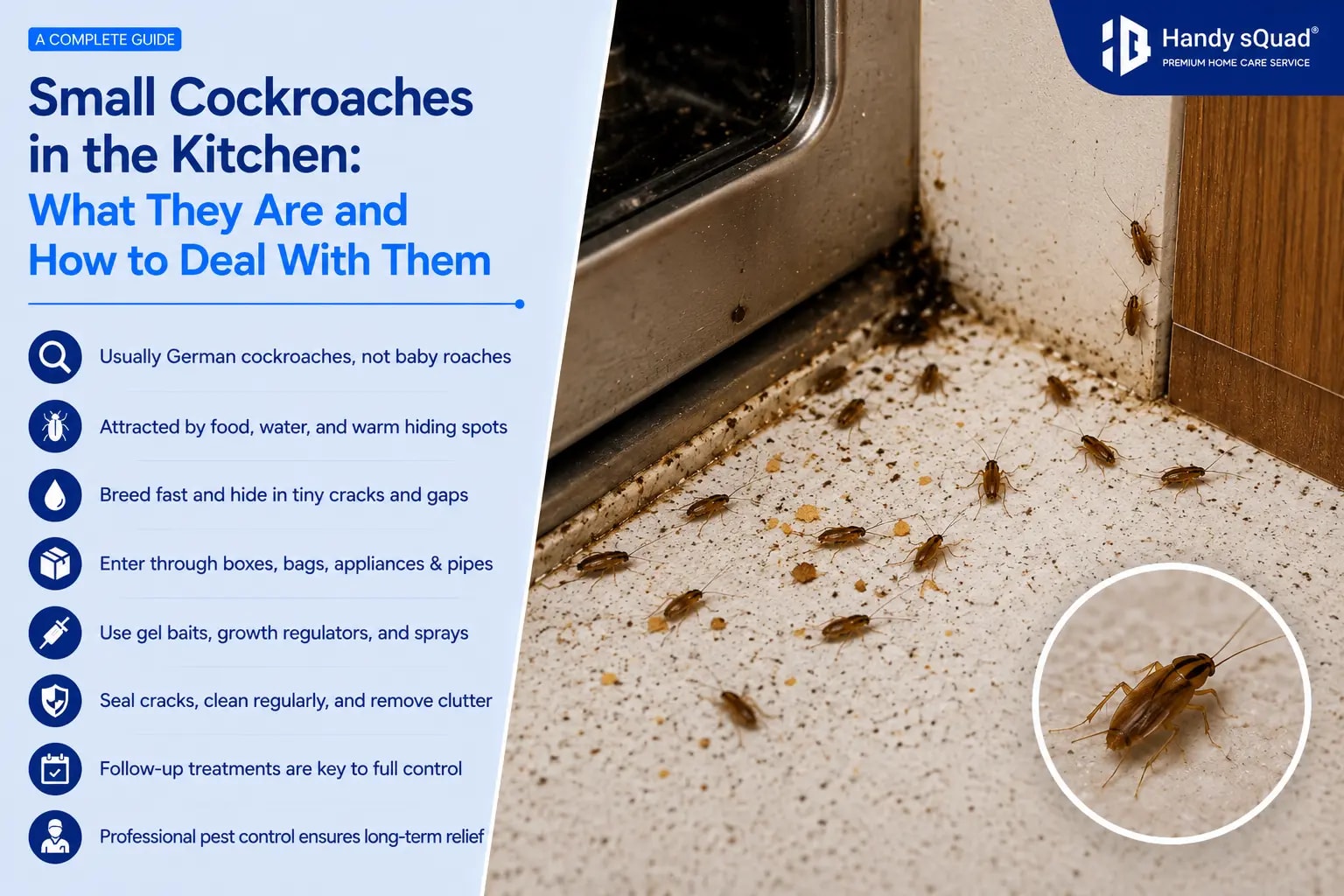
The small, light brown roaches showing up in Indian kitchens — usually somewhere between half an inch and just under an inch, with two dark stripes right behind the head — are almost always German cockroaches. Not a smaller variant. Not an earlier stage of the bigger, reddish-brown roaches you'd normally find near drains or bathrooms (those are usually American cockroaches). A completely separate species.
Here's the misconception people keep running into: small roaches must be baby versions of the big ones. Not really true. Baby cockroaches—nymphs, technically—are far tinier still, barely a few millimetres, lighter in colour, and have no wings yet, and yes, they do eventually grow into whatever species they belong to. But a fully grown German cockroach stays small its whole life. Different species, different habits, and different breeding patterns. And frankly, a much bigger headache to get rid of.
Why German Cockroaches Infest Kitchens: Breeding Habits and Behaviour
German cockroaches love warm, humid spots with food and water close by. Basically an average kitchen. Stoves, fridges, dishwashers—they cluster near all of it, mostly because these appliances throw off a bit of warmth and sit right next to where food and moisture tend to pool.
The real pain, compared to other roaches, is the sheer breeding speed. One female has several hundred offspring across her lifetime—and unlike a lot of other roach species, she carries the egg case right up until it's nearly ready to hatch, keeping the eggs protected for most of their development. A handful of sightings today can turn into a full-blown infestation within weeks if nobody does anything about it.
They're also stupidly good at squeezing into places you wouldn't think possible. Cracks in cabinet joints, gaps behind the trolley, the space under appliances, and occasionally even inside switchboards near the kitchen. Small size is exactly the advantage that lets them into spots bigger roaches simply can't reach.
Where Small Cockroaches Actually Come From
Cardboard boxes and grocery bags cause a lot of this. Anything that's come from a warehouse, a storage unit, or somewhere that already had roaches—German cockroaches and their egg cases tuck into the folds of cardboard without anyone noticing, right up until it's already unpacked in your kitchen.
Shared plumbing in apartment buildings is another route worth knowing about — roaches travel between units through pipes fairly easily, especially in older buildings where the gaps around plumbing fixtures haven't been sealed properly.
Secondhand appliances can carry them too. A fridge, a microwave, anything that's been sitting in storage or came from another home can bring roaches or egg cases along without a single obvious sign, right up until they've already settled in.
And in apartment complexes specifically—if a neighbour's dealing with an infestation, it's genuinely common for roaches to migrate through shared walls, ducts, or plumbing gaps straight into the kitchen next door. Doesn't matter how clean you've kept your own place.
How to Kill Small Cockroaches: Gel Baits, Growth Regulators, and Treatment Tips
German cockroaches breed fast and hide well, so dealing with them properly takes a bit more than what works for the odd larger roach that wanders in from a drain.
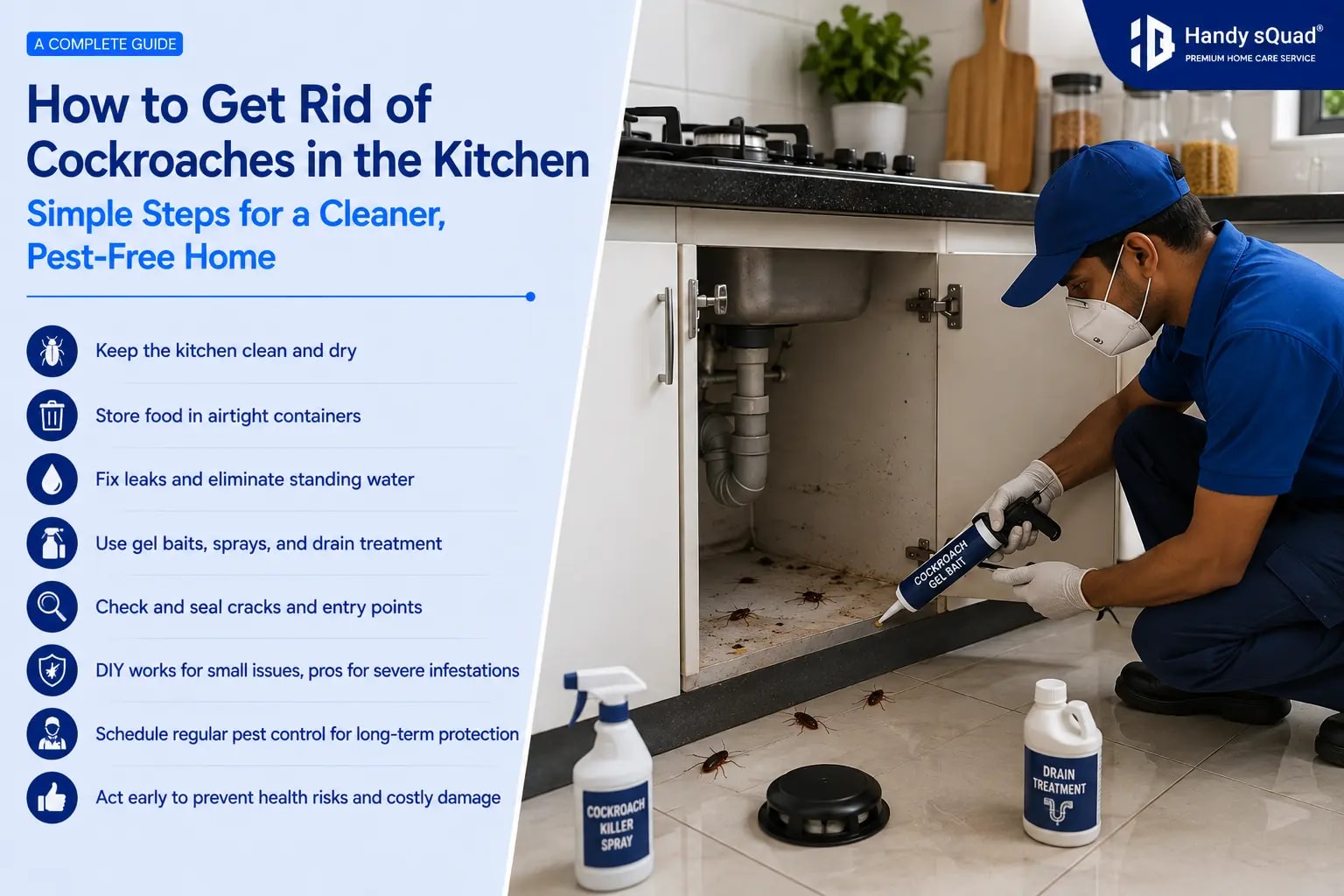
Gel bait stations tend to be one of the most effective tools here specifically. Small dots placed along cabinet edges, behind appliances, or near cracks—roaches eat it and carry residue back to wherever the colony's hiding, including the egg-bearing females, and it spreads from there. Because German cockroaches live packed together in tight clusters, this reaches far more of the hidden population than any spray realistically could.
Insect growth regulators take a different route. Instead of killing roaches on contact, they mess with how nymphs develop so they never actually grow into breeding adults. Good pairing with gel baits—slows down the exact reproduction cycle causing all this trouble to begin with.
Sealing entry points matters more here than with most pests, purely because these roaches barely need a gap to squeeze through. Cracks around pipes, gaps behind skirting boards, spaces around switchboards — all worth a proper look.
Cleaning still matters, same as always. No food is left out, dishes are done promptly, and behind the appliances is actually cleared and wiped down every so often, since that's prime territory for this species.
One round of treatment usually isn't enough. Given the breeding speed, a first treatment might take out the visible adults while eggs already laid keep hatching over the following weeks regardless. A follow-up a few weeks out is what actually catches that next wave before it settles in.
Why Professional Pest Control Is Often Needed for German Cockroaches
Given the breeding speed and how well they hide, a serious German cockroach problem is genuinely tough to fully solve alone. DIY sprays knock down what's visible, sure, but if eggs are still hatching somewhere behind an appliance or deep in a cabinet joint, the population just bounces right back within weeks. Feels like nothing worked at all.
Professional teams know where this species tends to hide and breed. Usually a mix of targeted gel treatment, growth regulators, and a scheduled follow-up — and that combination genuinely outperforms repeated DIY rounds against this particular species.
Noticing small roaches multiplying despite regular cleaning? A reliable cockroach control trivandrum provider can pin down exactly what you're dealing with and treat it at the source, not just the surface. And if the problem keeps returning no matter what you try, a proper cockroach pest control trivandrum service with a structured follow-up plan is usually what finally puts a stop to it.
Final Thoughts on Small Cockroach Control and Prevention
Small cockroaches in the kitchen aren't baby versions of whatever else you've spotted around the house — they're a separate, faster-breeding species that needs its own approach. Between how quickly they multiply and how well they tuck into tiny gaps, catching this early and treating it properly matters a lot.
The cockroach control specialists at Handy sQuad know exactly how German cockroaches behave and where they tend to nest in Indian kitchens, and they use treatment built specifically to break the breeding cycle, not just clear whatever's currently in sight. Get it sorted the first time properly, and you won't be back here again in a few weeks.
Thanks for reading