BLDC fans have been everywhere the last few years, marketed hard on electricity savings, and plenty of Indian households have switched over, expecting a clean, straightforward upgrade from their old fan. For the most part, fair enough, the savings claims genuinely check out. But like most things, BLDC fans come with trade-offs that rarely make it into the sales pitch, and it's worth knowing about these before you swap out every fan in the house.
This isn't an argument against BLDC fans. They're a solid pick for plenty of homes. Just a fair, honest look at where they actually fall short, so you're making the call with real information rather than just a marketing line.
What Actually Makes BLDC Fans Different
Quick bit of context first. BLDC stands for Brushless Direct Current — that's the type of motor inside. Unlike a traditional induction motor fan, which runs straight off AC power and wastes a fair chunk of energy as heat, a BLDC fan uses a motor that's simply more efficient, converting AC to DC internally and using electronic control to manage speed. That's genuinely why they pull so much less electricity, often 60 to 70 per cent less than a standard fan running at a similar speed.
That efficiency's real, and it's the whole reason these fans took off the way they did. But the same design that makes them efficient also brings a few genuine downsides along with it.
Higher Upfront Cost
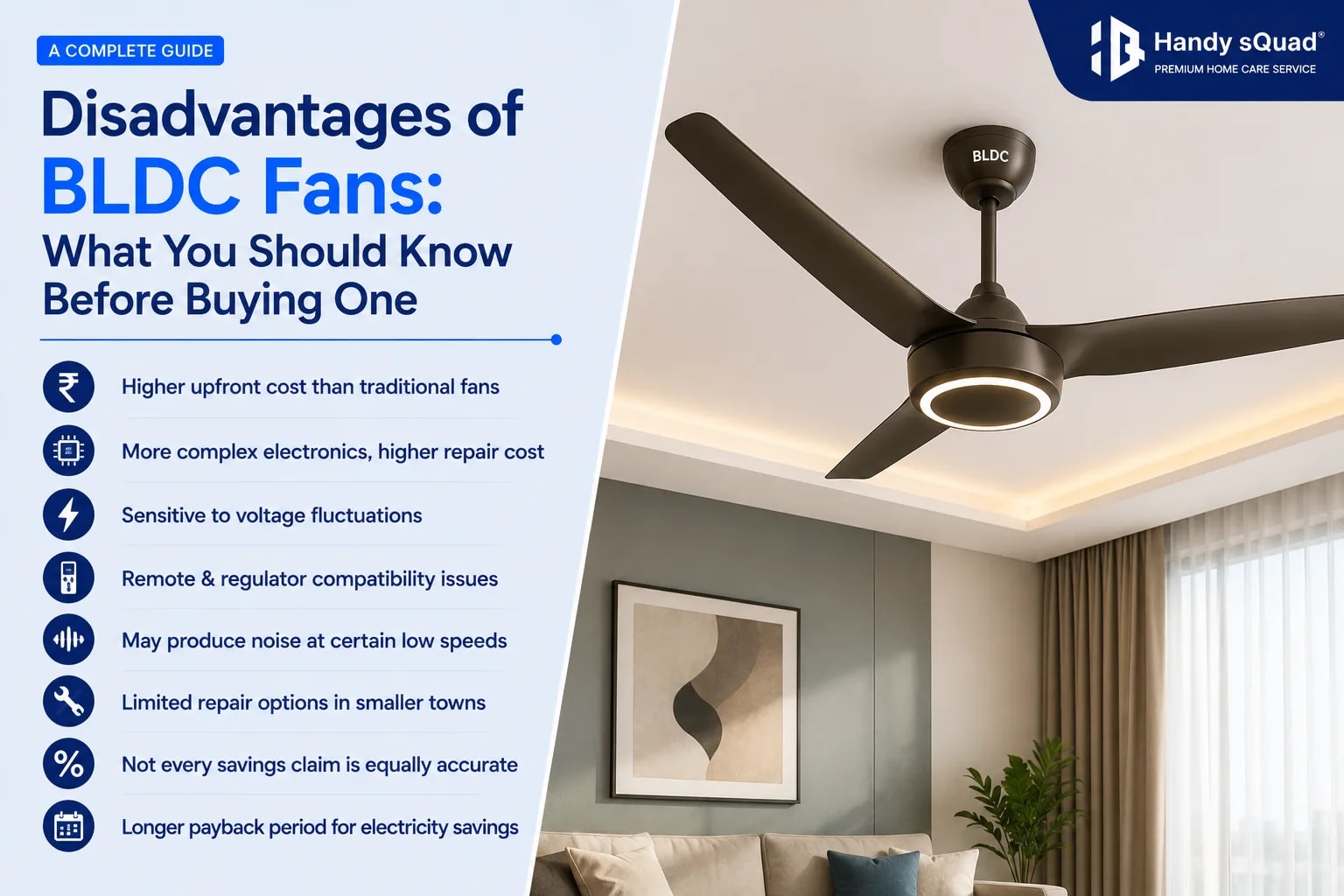
Usually the first thing people notice, and it's a legitimate concern. BLDC fans cost noticeably more than standard induction fans, sometimes two to three times as much for a comparable size and brand. One fan, maybe it doesn't matter much. But replace every fan across a multi-bedroom home, and that total adds up fast, genuinely worth thinking about for anyone watching the budget.
Electricity savings do offset this eventually, sure, but it takes time. Often a couple of years of regular use before the fan has actually paid for itself through lower bills. Looking for the cheapest option right now? It's worth being honest about this rather than assuming long-term savings just erase the higher price tag.
More Complex Internal Electronics
BLDC fans lean on an internal electronic control system to run the motor, and that's exactly what enables the efficiency and remote features in the first place. But it also means there's simply more that can go wrong, compared to a basic induction fan, which is mechanically about as simple as it gets.
Electronic control module fails? It happens sometimes, particularly with cheaper or less established brands, and repairing it isn't as simple as a standard fan repair. Usually needs a specific replacement part rather than the basic rewind or motor service a local electrician could handle on a traditional fan. Higher repair costs, sometimes longer waits too, if that specific part isn't sitting on a shelf nearby.
Sensitivity to Voltage Fluctuations
Plenty of Indian homes, particularly outside the bigger cities, deal with voltage fluctuations from the grid pretty regularly. Traditional fans generally shrug this off, just running a touch slower or faster depending on what's coming through. BLDC fans, with their more sensitive electronics, feel these swings a bit more, and in areas with genuinely unstable power, this occasionally shows up as flickering, odd noise, or the fan just underperforming until things stabilise.
A stabilizer helps here, but that's an extra cost, and one more thing to think about that simply doesn't come up with a basic fan.
Remote and Regulator Compatibility Issues
A lot of BLDC fans ship with their own dedicated remote or wall regulator, and it's not always a drop-in swap with whatever older regulator you've already got installed. Replacing just one fan in a room with an existing dimmer-style regulator? You might end up needing to replace or rewire that too, which is an extra cost and installation hassle that doesn't show up when you're just comparing fan prices on a shelf.
Some BLDC fans lean on the remote for full functionality too and lose it or let the batteries die, and using the fan without one can actually feel less convenient than a traditional fan with a plain wall regulator you can always fall back on.
Noise at Certain Speeds
BLDC fans are generally quieter overall than older, worn-out traditional ones, sure. But some models put out a faint electronic hum or whirring, particularly at lower speeds, that a few people genuinely notice, especially trying to sleep in a quiet bedroom. It varies a lot by brand and model, though; it's not a universal problem, so it's worth actually testing one in person or checking recent reviews rather than assuming every BLDC fan is silent just because it's marketed as the fancier option.
Limited Repair Options Outside the Big Cities
In smaller towns and less urban areas, finding someone genuinely comfortable fixing BLDC electronics can be trickier than finding someone for a traditional fan, which honestly almost any local electrician can handle. Something goes wrong with the electronics specifically, and you might be stuck relying on brand-specific service centres, not always conveniently located, instead of the electrician down the road.
Getting better as BLDC fans become more common, sure, but still a real consideration if you're not near an authorised service centre for your particular brand.
Not Every Savings Claim Holds Up Equally
Worth being a little skeptical of marketing here too. Genuine BLDC fans do deliver real efficiency gains, but actual savings depend on your usage, how many hours a day it's running, and the specific model's real efficiency rating, not just the "BLDC" label slapped on the box. Some cheaper or lesser-known brands call themselves BLDC without actually matching the efficiency of established, well-tested models, so it's worth checking star ratings and independent reviews rather than assuming every BLDC fan performs identically.
Should You Still Get One?
Despite all this, BLDC fans remain a genuinely solid choice for most households, particularly if you're running fans long hours daily, since the savings do add up meaningfully in that case. The higher upfront cost and slightly fussier electronics are reasonable trade-offs for a lot of people, especially with stable power and decent access to service if something does eventually go wrong.
Dealing with frequent voltage issues, don't run fans that many hours, or working with a tight budget? A good traditional fan might genuinely suit you better, and there's no shame in going that route based on your actual situation instead of just following the trend.
Getting Help With Installation or Repairs
Installing a new BLDC fan, sorting out regulator compatibility, or fixing an existing one is worth getting someone who actually understands both traditional and BLDC systems, rather than tackling the electrical work yourself. Wrong wiring or a regulator mismatch can hurt performance, sometimes even damage the fan's electronics outright.
A reliable electrician in trivandrum can look at your home's actual wiring, tell you honestly whether a BLDC fan makes sense for your situation, and handle the installation properly so compatibility issues don't creep up later.
Final Thoughts
BLDC fans genuinely deliver on electricity savings, no argument there, but they come with real trade-offs too—higher upfront cost, fussier electronics, sensitivity to voltage swings, and sometimes trickier repairs. Worth weighing honestly against how you'll actually use it and where you live before deciding. Not a universal upgrade for every home, but for the right situation, genuinely a solid, worthwhile investment.
HandySquad's electricians handle all fan-related work, installation, uninstallation, and repairs for both traditional and BLDC fans, so whether you're upgrading your home or just need an existing fan sorted properly, you've got someone who actually knows both systems to get it done right.