Open your electricity bill for some months, and honestly, it makes you want to just sit down and figure out where it all went wrong. Nothing's changed, you tell yourself. Same appliances, same routine. Yet the number keeps creeping up regardless. The truth is, most homes leak money in small, invisible ways—a fridge working harder than it needs to, an AC set colder than it should be, chargers left plugged in overnight for no reason. None of it feels like much on its own. Add it up over a month, though, and it shows up right there on the bill.
Here's a practical, no-nonsense look at what actually moves the needle, skipping the vague "switch off lights when not in use" advice you've heard a hundred times already.
How to reduce electricity bill? - Go After the Big Consumers First, Not the Small Stuff
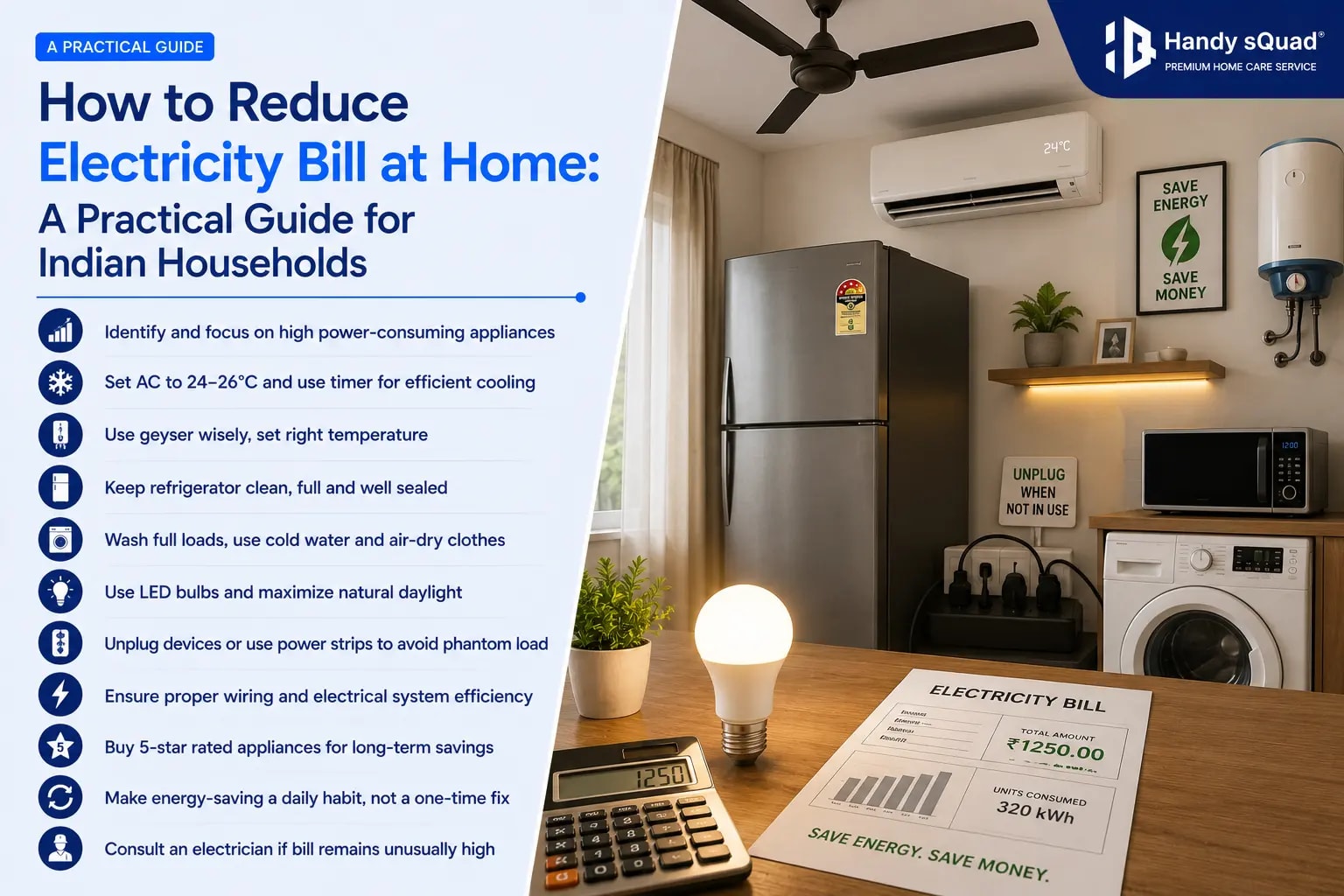
Before anything else, it helps just knowing where your electricity actually goes. In most Indian homes, it's ACs, water heaters, fridges, and washing machines eating up the bulk of it, far more than lights or fans ever will. Matters because a lot of people pour their energy-saving effort into flicking off one bulb here, one switch there, while their AC quietly runs at an inefficient setting for hours in the background. Sort the big stuff first, and the small habits become a nice bonus rather than your whole strategy.
Get Your AC Usage Right
Since your AC's probably the single biggest draw on the bill, small tweaks here punch well above their weight.
Somewhere around 24-26°C instead of cranking it to the lowest setting. Colder doesn't cool the room meaningfully faster; it just makes the compressor grind harder and longer for basically nothing. Use the timer if your AC has one, instead of letting it run full blast all night, since most rooms stay comfortably cool for hours after the compressor's already done the heavy lifting.
Keep the filter clean too. A dusty filter and the unit's working harder just to push air through, quietly driving up consumption over weeks without you ever noticing. And if your AC's genuinely old, a decade or more, it's worth comparing what a newer 5-star unit would actually save you over time—older units are often nowhere near as efficient as what's available now, even once you account for replacement cost.
Rethink the Water Heater
Geysers are another quiet contributor, mostly because a lot of households leave them running far longer than actually needed or set the temperature higher than necessary in the first place.
Most instant or storage geysers don't need to stay on constantly. Switch it on shortly before you actually need hot water, rather than letting it run all day just for convenience. Household showers around the same time daily? An instant geyser might genuinely work out more efficiently than a storage type, since it heats on demand instead of keeping a whole tank hot around the clock.
Turning the thermostat down slightly helps too—most people run their geyser hotter than they actually need for a comfortable shower, and that alone eases how hard the heater has to work.
Refrigerator Habits That Genuinely Matter
Your fridge runs every single hour of every single day. So even small inefficiencies pile up significantly across a year.
Don't leave the door hanging open longer than necessary, and try not to shove hot food straight in, since that forces the compressor into overtime, bringing the temperature back down. Check the door seal now and then too—if it's loose or worn, cool air's constantly leaking out, with the fridge compensating by running almost nonstop.
Keep it reasonably full rather than half-empty, since a fuller fridge holds cold more efficiently. Don't cram it though; air still needs to circulate properly inside. And the condenser coils, usually tucked at the back or bottom, deserve a clean every few months — dust buildup here just makes the whole unit work harder than it should.
Washing Machine and Laundry Habits
Full loads, not several half-loads, since each cycle burns roughly the same electricity and water regardless of how full the drum actually is. Cold or warm settings over hot, wherever you can manage it, since heating water for laundry is genuinely one of the more energy-hungry parts of the whole cycle. And air-dry when possible, rather than leaning on a dryer, though most Indian households don't use those much anyway; still worth a mention if you do.
Lighting: Small Changes, Real Savings Over Time
LED bulbs pull noticeably less power than older CFL or incandescent ones, and if you haven't switched your whole home over yet, this is genuinely one of the easier upgrades around. Cost difference has dropped a lot in recent years too, so it pays for itself fairly quickly.
Beyond just the bulb type, actual habits matter as well. Decent daylight in your home cuts down on artificial lighting needs a fair bit during the day, and motion sensors or timers in spaces you barely use, like a storeroom or an outdoor porch light, stop lights from running for hours when nobody's even around.
Watch Out for Phantom Load
This is the power your appliances quietly draw even when switched off but still plugged in—chargers, TVs, set-top boxes, microwave displays, all pulling a small but continuous trickle just sitting there. Seems negligible one device at a time. But across a household with a dozen-plus things constantly plugged in, it adds up to a real chunk of your monthly bill without you ever clocking it.
A power strip with an actual physical switch, and remembering to flip it off when things aren't in use, is a simple habit that genuinely helps here.
Check Your Home's Electrical Efficiency
Beyond appliance habits, your home's actual wiring and electrical setup plays a part too, one a lot of people overlook completely. Loose connections, old wiring, or an improperly earthed system—any of this can make appliances draw more power than they should or run less efficiently than their rating suggests. Bill's been climbing steadily with no clear tie to your actual appliance usage? Worth getting the wiring checked rather than assuming it's purely a usage issue.
A reliable electrician in trivandrum can inspect your home's electrical system, spot any inefficiencies or faults quietly inflating your bill, and fix issues that go well beyond what appliance habits alone can address.
Consider Appliance Efficiency Ratings Too
When buying new appliances, check the BEE star rating rather than going purely by price or brand name. A 5-star appliance typically pulls noticeably less electricity than a 3-star of the same capacity, and while it costs a bit more upfront, that gap usually gets recovered within a couple of years through lower running costs, especially for stuff running long hours daily: your fridge or your AC.
Make It a Habit, Not a One-Time Fix
Households that see genuine, lasting drops in their bill are usually the ones treating this as a daily habit rather than a one-off adjustment. Checking your AC filter monthly, staying mindful of geyser use, unplugging what you're not using — all of this becomes second nature after a few weeks and just keeps paying off month after month without any real ongoing effort.
When It's Worth Calling a Professional
Genuinely addressed your usage habits, and the bill still feels disproportionately high for your actual consumption? Time to get the electrical system properly inspected rather than keep guessing. Faulty wiring, an aging or inefficient panel, or sometimes even a meter issue—any of these can be behind a bill that just doesn't match your actual usage.
Handy sQuad's electricians handle electrical issues across homes in Trivandrum, from routine inspections to pinpointing exactly what's driving your consumption up, so you're not stuck guessing month after month where the money's actually going.
Final Thoughts
Cutting your electricity bill rarely comes down to one dramatic change. It's a mix of using your biggest consumers, AC, geyser, and fridge more sensibly; trimming phantom load; picking efficient appliances when you're due for a replacement anyway; and making sure your home's wiring isn't quietly working against you the whole time. None of it demands major sacrifice or real discomfort, just a bit more awareness around habits that have probably gone on autopilot over the years.
Start with the big consumers, build a few simple habits around them, and get the wiring checked if something still isn't adding up. Give it a few months, and the difference on your bill becomes genuinely noticeable.
Frequently Asked Questions
1. How can I reduce my electricity bill at home?
You can reduce your electricity bill by using energy-efficient appliances, switching off devices when not in use, using LED lighting, optimizing AC usage, and avoiding unnecessary standby power consumption.
2. How can I reduce my current bill at home in India?
To reduce your current bill at home in India, monitor your monthly unit consumption, use energy-efficient appliances, limit high-power appliances, and maintain ACs, refrigerators, and other electrical equipment regularly.
3. How can I minimise or decrease my electricity bill?
You can minimise your electricity bill by reducing unnecessary electricity usage, choosing appliances with better energy efficiency, using natural light where possible, and setting air conditioners to an efficient temperature.
4. What can you do to reduce your electricity bill and unit consumption?
To reduce electricity bills and unit consumption, identify high-energy-consuming appliances, avoid leaving appliances running unnecessarily, use energy-efficient equipment, and ensure electrical systems and appliances are properly maintained.