It starts small. A damp patch, or the counter feeling a bit clammy near the rim, and you assume it's the dishcloth. Maybe a tiny puddle, and you blame the kids or yourself for splashing about. You mop up. Next morning, there it is again—same corner.
My neighbour in Thampanoor lived with exactly this for two months. "It's just water from washing vessels," she kept saying, and honestly I'd have said the same. Then the cabinet door underneath stopped closing. The board had swollen. What would've been a small fix turned into replacing a chunk of the counter, and she was not thrilled about the bill.
So no, I wouldn't wait this one out.
How to Find Out Where Your Kitchen Sink Is Really Leaking From
Before you reach for any sealant, do a bit of detective work. It takes ten minutes. I'd dry the whole thing with an old towel (underneath too, if you can squeeze a hand in there), turn the tap on, and then just stand there watching. Sounds silly, but it works. Water showing up while the tap's running? Look at the joint where the counter meets the sink, or the base of the tap. Only turns up once the basin's full? Now I get suspicious about the basin seal or the overflow. Occasionally it's neither, and the drain pipe underneath is the real troublemaker, with the rim just being where the water decides to pop out.
Oh, and a strip of dry tissue along the edge. Looks daft. Shows you precisely where the damp is starting.
Common Reasons a Kitchen Sink Leaks Around the Edges
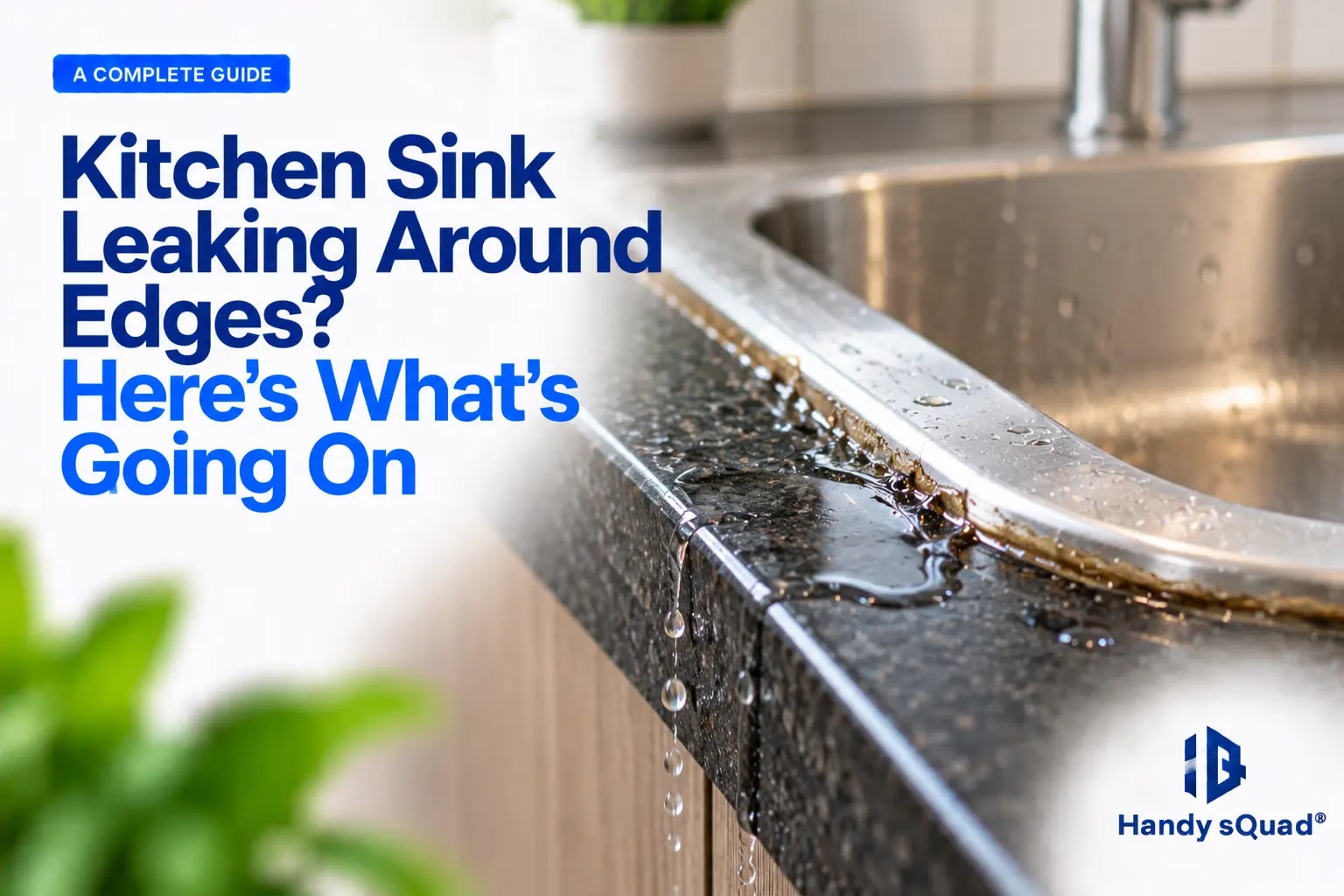
Old sealant. It gets blamed most often and usually deserves it. That thin silicone line between sink and counter has been quietly holding water back since the day it was fitted, and after four or five years it's had enough. It cracks at the corners, shrinks away from the steel, and goes black along the bottom where mould has moved in. And with the damp air we get here for half the year, it gives up even sooner. See a gap, or is one corner lifting like a stale sticker? That's probably it.
Loose clips. Drop-in sinks are held down from underneath by little metal clips. Years of heavy pots and general banging loosen them. Press down on the edge; if the sink moves or creaks, that's your answer, and it's a five-minute job with a screwdriver from below.
A worn gasket. A lot of sinks have a rubber or foam strip tucked under the rim, and over the years it goes flat and hard, a bit like an old slipper sole. Older sinks, mostly.
A swollen countertop. If the counter has a wood or composite core and water's been getting in for a while, it puffs up around the cutout. The sink stops sitting flat, and then resealing alone won't hold. Here's the thing though: by this point the sealant isn't really the problem anymore.
A hairline crack or a loose tap. I'd put this last on the list, but it does happen. A loose tap lets water creep down its body, a tiny crack lets it seep through, and either way the drip lands near the edge, and you end up blaming the sealant. Takes a torch and some squinting to catch.
How to Reseal a Leaking Kitchen Sink Yourself
If it's plainly the sealant, yes, and it's not a hard job. Just patient.
I've seen people finish this in an hour, and I've seen people botch it, and the difference is nearly always the drying. Scrape out the old silicone first, every last bit, gently, because steel scratches. A rag with a little rubbing alcohol cleans the gap. Then wait. Longer than you'd like. Damp surface, no grip—that's just how silicone is, and honestly it's why half the resealed sinks I hear about are dripping again a month later. Once it's properly dry, squeeze out a fresh line of kitchen silicone, drag a wet fingertip along it (it'll be messy, don't fight that), and leave the sink alone for a day. One evening of washing up in the bathroom is a small price.
Tighten the clips before you seal, not after. And no, new silicone doesn't go over old silicone, and bathroom sealant isn't the same as the kitchen kind. People do both, constantly.
Signs You Need a Plumber for a Leaking Sink
Some leaks aren't worth fighting. Resealed once, and it's weeping again? Stop. Is the countertop soft or puffy when you press it? Stop. Cabinet smells like a damp cupboard from 2009? Definitely stop. And if you've stared at the thing for twenty minutes and still can't tell where the water's coming from, that's not a failure on your part. Some leaks are just hard to trace.
The nasty thing about hidden leaks is how polite they are. They don't announce themselves. Usually when you finally see water on top, the bottom of the cabinet has been sitting in it for weeks. The board's going soft down there, the pipe fittings are picking up rust, and you've no idea. Nobody budgets for that.
If you'd rather not play detective, HandySquad has people for exactly this. Whether you need dependable plumbers Trivandrum to reseal a sink, tighten clips, swap a tired rim seal, or trace a leak back through the pipes—they'll look for what's really causing it. Not just the drip you can see.
Why a Slow Sink Leak Gets More Expensive the Longer You Wait
Kitchens here stay damp. A closed cabinet under a sink might as well be a cupboard full of wet towels, and mould loves that. Give it two months and the board swells, the smell arrives, and part of the counter needs replacing, which costs way more than one visit would have.
And if you're already typing "plumbers near me" into your phone because there's water on the floor, you're not overreacting. Look up plumbers near me in week one, and it's usually a small job. Wait until week six, and it isn't.
Simple Habits That Help Prevent Sink Edge Leaks
I wipe sink edges dry after a big wash-up, mostly out of habit now. Press a thumb along the silicone now and then, and if it's crumbly or peeling, that's your sign. Damp under the cabinet? Sort it this week. "Sometime soon" is exactly how my neighbour got a new counter.
Save the number of a reliable plumber in Trivandrum in your phone before something breaks. At 9 pm with water on the floor, you won't want to be scrolling through random listings.
The Short Version: What to Do About a Leaking Sink Edge
A leaking sink edge isn't a crisis on day one, and I don't want to scare anyone. But it won't fix itself either. Figure out where the water's really coming from, reseal if that's clearly it, and if the leak keeps returning or the wood starts to look tired, call someone in.
Thanks for reading