Picture an April afternoon with the sun beating down on the roof. Your AC has been running for three hours, and the room is... okay. Not cold, just less miserable than outside. You drop the temperature to 18 and wait. Nothing changes.
Most people blame the gas or start pricing a new unit. But the real problem is often the AC cooling coil, a part you’ve probably never seen and one that causes more cooling complaints than people realise.
What Is a Cooling Coil?
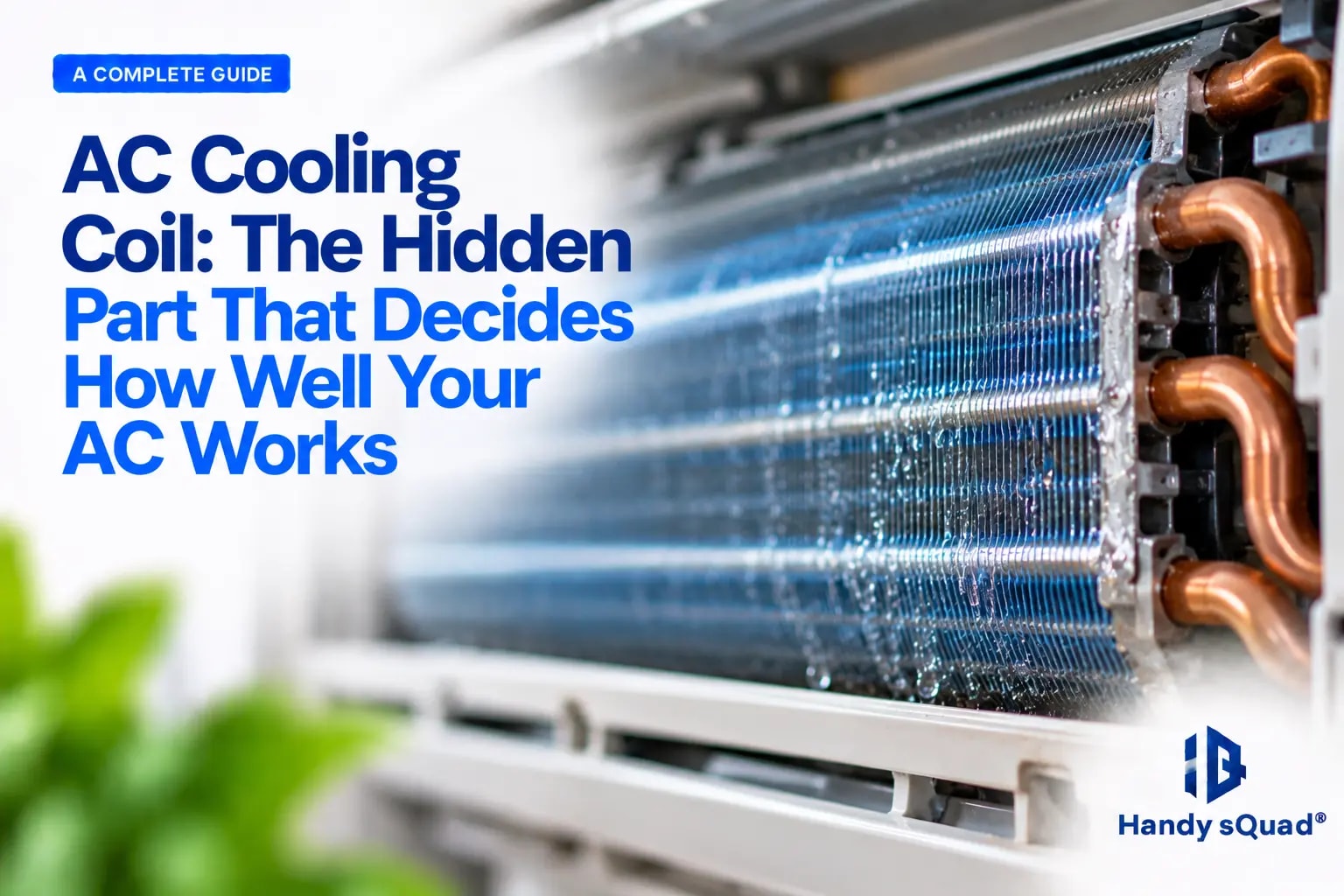
It’s a set of thin copper or aluminium tubes bent back and forth, with tiny metal fins packed along them. Refrigerant runs through the tubes while air flows over the outside. Heat jumps from one to the other.
That’s really all air conditioning is. Your AC doesn’t create cold. It pulls heat out of your room and dumps it outside, and the coils do that work.
There are two sets, and they do opposite jobs.
Indoor Evaporator Coils
Open the front panel of your split AC, and you’ll see it: a zigzag of fins behind the filter. That’s one of the indoor evaporator coils. It runs cold, so when your room air gets sucked across it, the heat goes into the refrigerant, and the air that blows back out feels much cooler. Moisture gets pulled out along the way. Hence the drain pipe, and the puddle you sometimes find under it.
Outdoor Condenser Coils
Now step out to the balcony or terrace, where the noisy box lives. Inside it are the outdoor condenser coils, and their job is the reverse. The refrigerant comes in hot, loaded with heat from your bedroom, and the coils let it escape into the open air. After that, the refrigerant cools and goes back inside, and the loop repeats.
One coil collects heat, the other throws it out. Clog either of them and the whole thing slows down.
Why Coils Get Dirty So Fast
Think about what the indoor coil faces. It’s cold and slightly wet all day, which makes it a magnet for anything in the air: dust, pet hair, and the oily haze from your kitchen if the AC is near an open plan. Your filter catches most of it, but not all, and the leftovers settle in as a grey film that can turn slimy.
Add Trivandrum’s humidity, and you get mould. It’s why plenty of ACs smell like a damp towel once the monsoon ends.
The outdoor unit has it rougher. It sits in the open, so it collects road dust, dry leaves, bird droppings, and cobwebs, plus salt if you live closer to the sea. Salt is the quiet troublemaker, because it eats into metal bit by bit, and nobody notices until the coil starts leaking gas.
Once a coil is coated, it can’t hand off heat well. The compressor keeps running to compensate, and that’s where the real damage begins.
How to Tell Your Coil Needs Cleaning
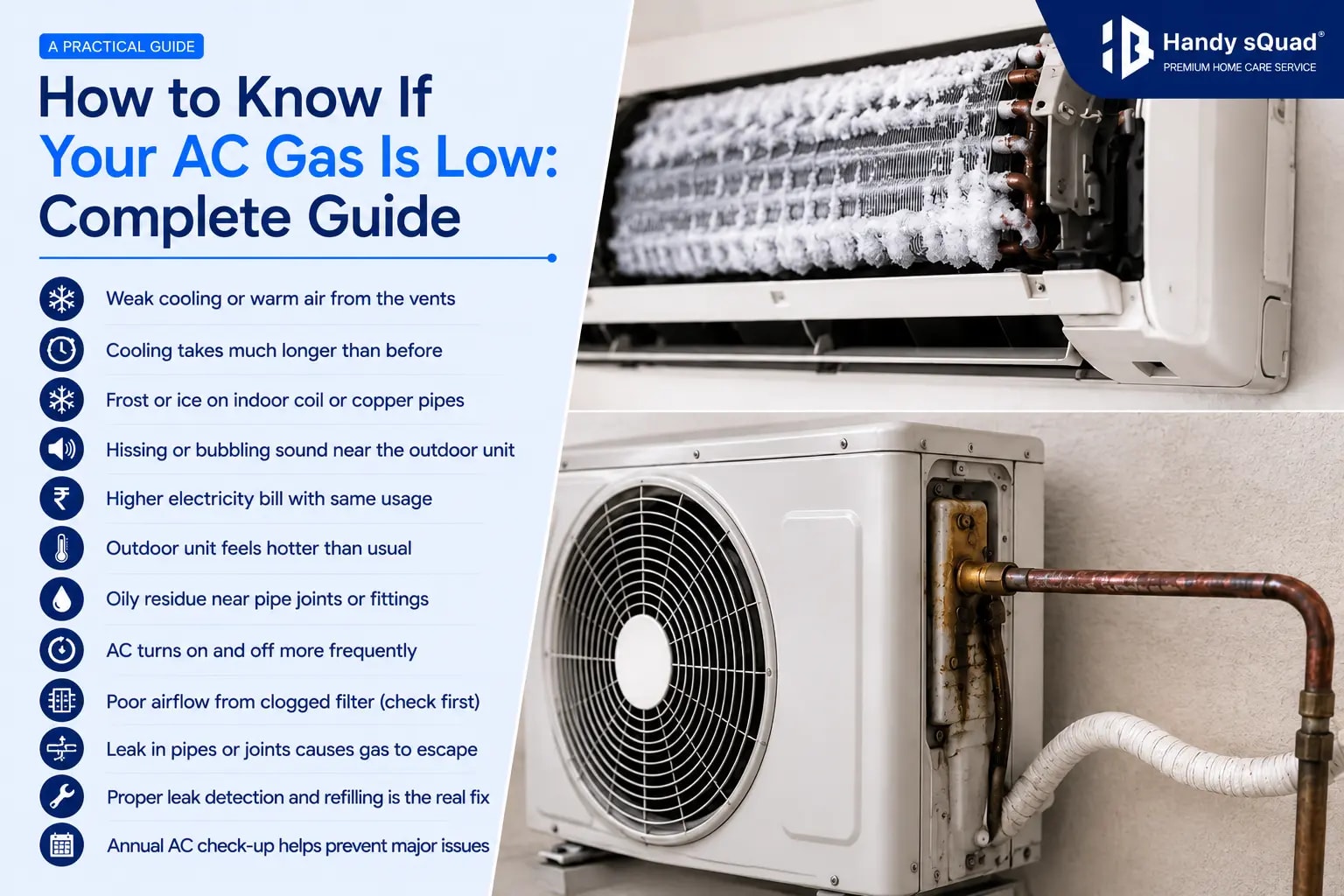
Your AC usually drops hints before it gives up. Cooling feels weaker, even though the unit never stops. The electricity bill is higher, and you can’t explain why. A sour smell hits you when the AC switches on. Water drips from the indoor unit.
Then there’s the odd one: ice on the pipe or on the coil. People assume the AC must be working extra well, but it’s the opposite. Airflow is blocked, the coil gets too cold, and moisture freezes on it.
Any one of these could be a small thing. Spot two or three together, and the coils are the first place I’d look.
What Happens If You Wait?
It’s tempting to say, “It’s still cooling a little; let it be.” The trouble is that a dirty coil quietly costs you every single month in power you didn’t need to use. The compressor, the priciest part in the AC, ages faster under that strain. And mould on the coil ends up in the air you breathe, which matters if someone at home has allergies or a cough that never quite goes away.
A coil cleaning is cheap. A new compressor isn’t. That’s the whole argument.
Can You Clean It Yourself?
Some of it, yes. Rinse the filter every two or three weeks, wipe down the front, and pick leaves out from around the outdoor box. Easy wins.
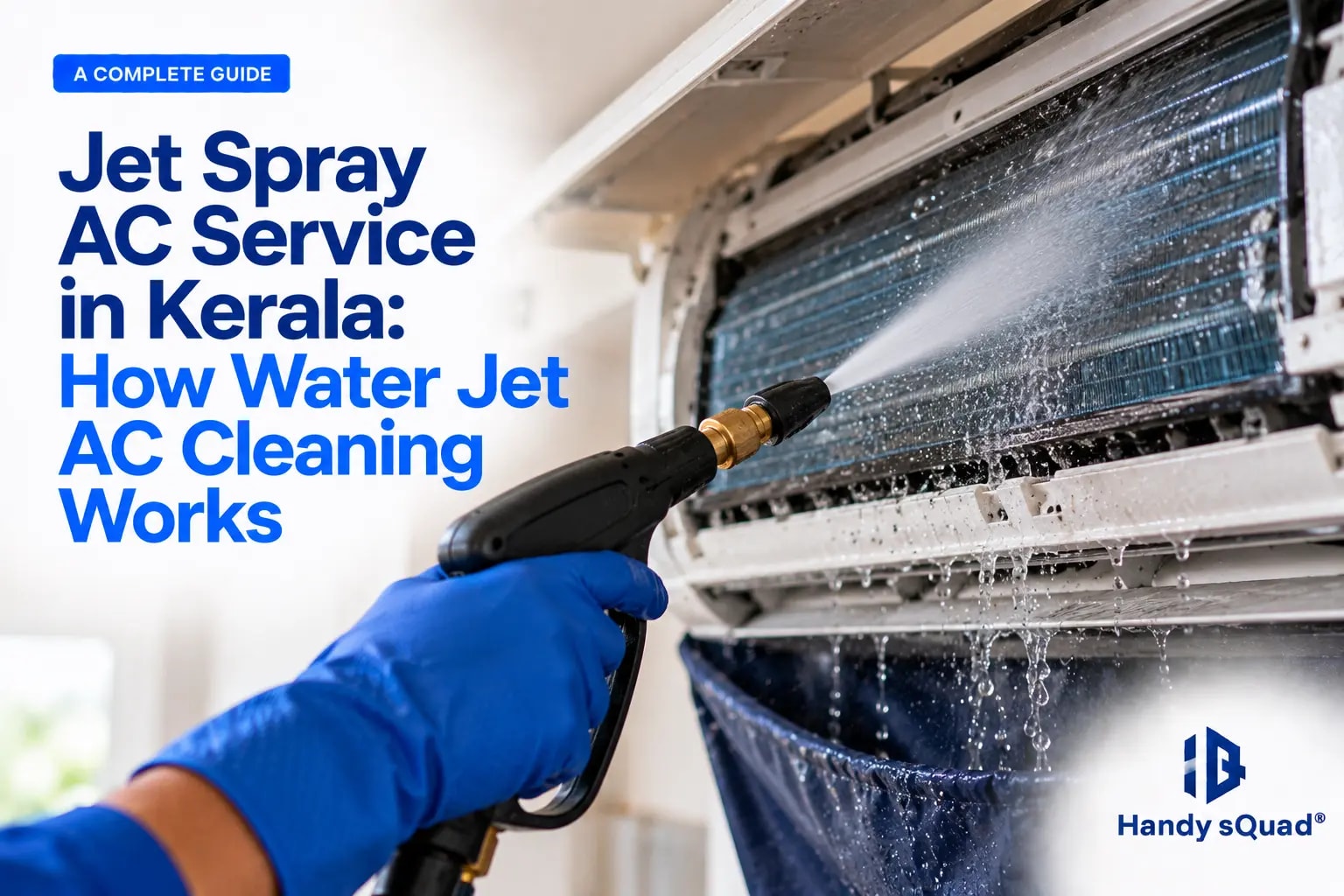
The coil itself is another story. Those fins are paper-thin, and one clumsy swipe flattens a row of them, and flattened fins block air just as badly as dirt. Too much water pressure can reach the electrical parts. The wrong chemical can eat the metal. And you can’t even get to the evaporator without opening the unit, which most people shouldn’t be doing on a Sunday with a screwdriver.
Leave that bit to someone who does it daily.
What a Proper Service Looks Like
A good technician doesn’t just spray water and leave. They’ll switch off the power, cover the electrical parts, clean the filters, and apply a coil-safe solution to the evaporator. After rinsing at controlled pressure, they clean out the drain pan and drain line so you don’t get leaks later. Then they move outside, wash the condenser, and straighten any bent fins. Finally, they run the AC and check that it’s actually cooling and that the gas pressure is right.
If you’re in Kerala’s capital, HandySquad is worth a look for ac coil cleaning trivandrum work. They cover both the indoor and outdoor coils, and booking is simple, so you don’t have to chase anyone for a time slot.
How Often Should You Do It?
It depends on how hard the AC works. A few hours a day? Once a year is fine. Running from morning till night, which is normal in this climate? Go for every six months. And if there’s a construction site nearby, a busy road outside, the sea within a few kilometres, or a dog that sheds all over the place, you’ll want to do it sooner than that.
Timing matters too. Book before summer starts. Wait for the first heatwave, and everyone calls at once, which means a few sweaty nights while you wait for a slot.
Small Habits That Help Between Services
Nothing here is hard. Wash the filter, and don’t skip it when you’re busy. Keep a bit of open space around the outdoor unit so air can actually move through it. If you cover that unit during the off-season, buy a proper cover, because a bedsheet traps moisture and does more harm than good.
One more trick that hardly anyone uses: after you switch the AC off, put it on fan mode for ten minutes or so. The indoor coil dries out, and mould has a much harder time taking hold.
The Bottom Line
Nobody sees the AC cooling coil, but your whole AC depends on it. When the indoor evaporator coils and outdoor condenser coils are clean, the AC cools faster, uses less power, and lasts years longer. When they’re not, you feel it in your comfort and your wallet.
So if it’s been a while, don’t wait for the next hot spell. Book a proper ac cleaning trivandrum visit with HandySquad and let the coils get the attention they’ve been missing.