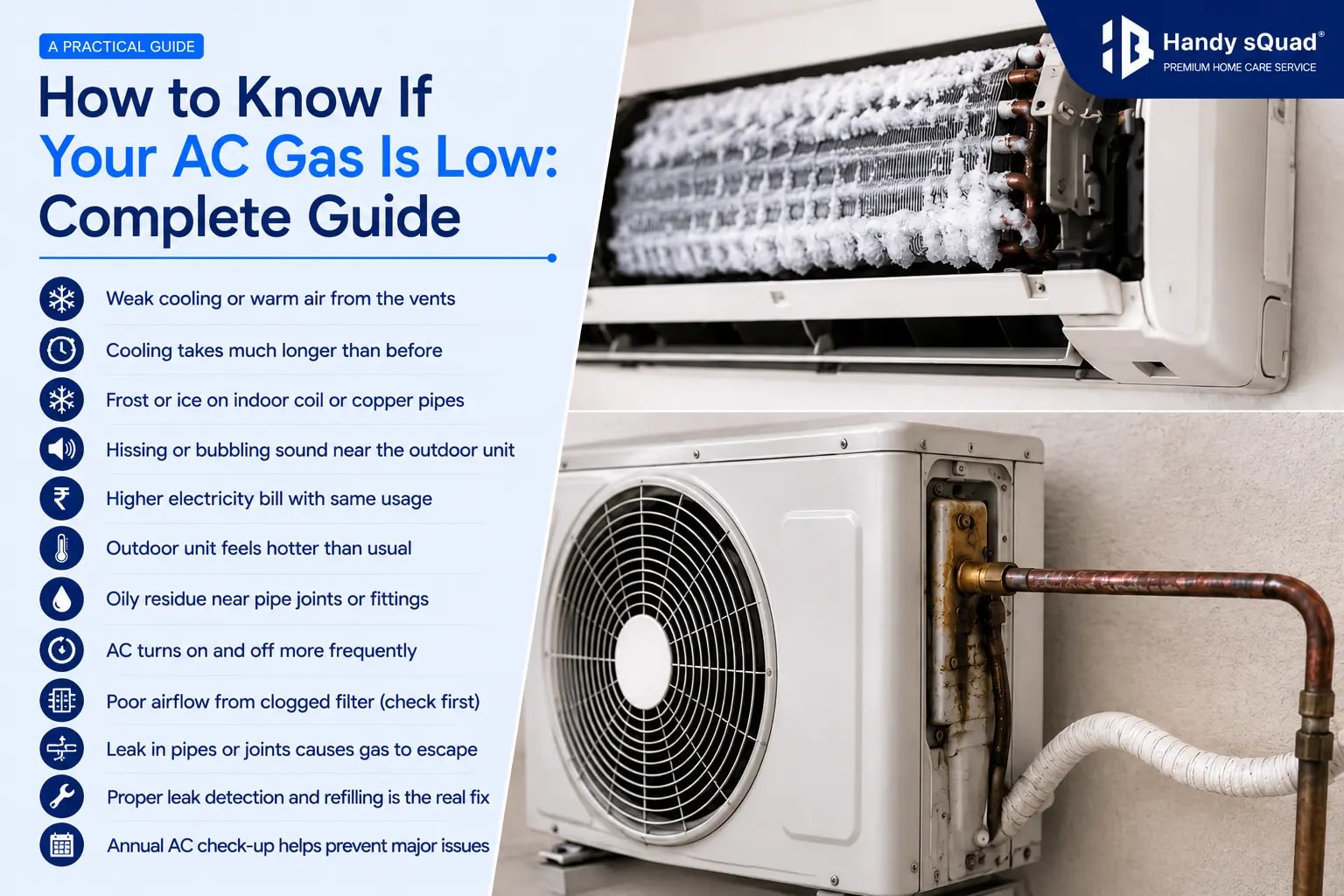
A friend of mine called me last month, half-annoyed and half-worried, saying her AC had basically stopped cooling overnight. She thought the unit was dying. Turned out it was just low on gas—a leak near one of the pipe joints, nothing dramatic, but the kind of thing that's easy to miss until your room stops feeling cool.
That's actually how most people find out about this problem. Not through some warning light or beeping sound, just a slow, quiet drop in how well the AC works, until one day you notice it's just not doing its job anymore.
A lot of people think ACs need a gas refill every year or so, sort of like changing engine oil. But that's not really how it works. If your unit is sealed properly and installed correctly, the refrigerant inside shouldn't go anywhere. So if the gas level actually drops, there's a leak somewhere, full stop. And that's really the thing to fix—not just the symptom.
What "AC Gas" Means
The technical name is refrigerant, and it's the fluid running through the copper coils inside your AC. It picks up heat from your room and carries it outside, which is the whole basis of how cooling works. Under normal conditions, it just keeps circulating in a closed loop—nothing gets burned, and nothing evaporates away on its own.
So when someone says the gas is "low," what's really happening is that some of it has escaped through a crack, a loose joint, or a weak seal somewhere along the pipe. Small distinction, but it matters, because it changes what actually needs fixing. You don't want someone just topping up the tank without figuring out where it's leaking from—you'll just be back here again in a couple months.
Symptoms of Low Gas in Your AC: The Signs to Watch For
There isn't one single symptom that screams "low gas." It's more a combination of small things.
The most obvious one, usually, is that the room just doesn't feel cool anymore even though the unit is running fine on the surface—fan spinning, compressor kicking in, everything sounds normal. It's just... not cold. And along with that, cooling takes way longer than it used to. If your bedroom used to chill down in ten minutes and now it's pushing forty-five without really getting there, something's clearly off.
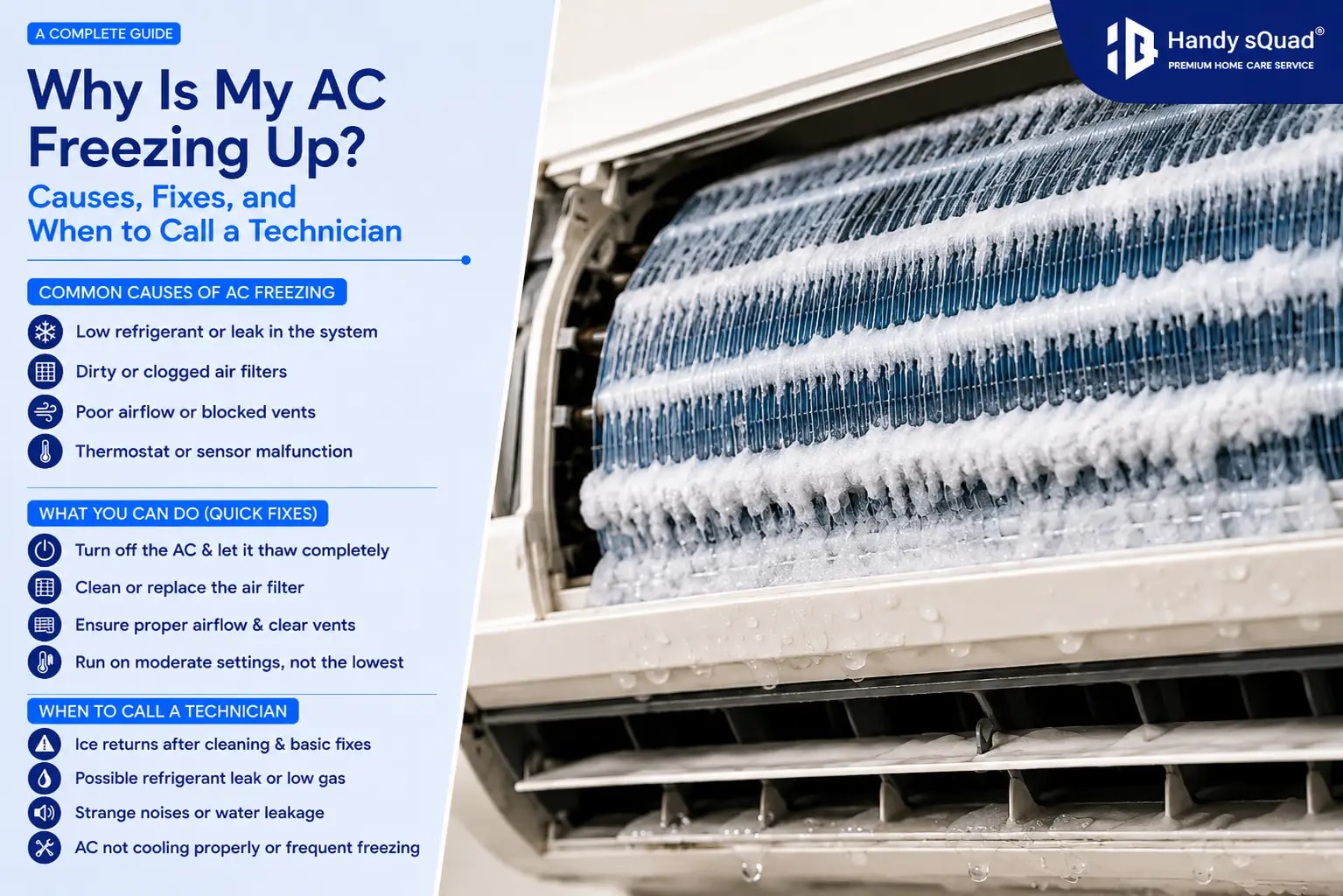
Then there's frost. Pop open the front panel of the indoor unit and check the coil or the copper pipe behind it. If you see ice building up—not just a bit of condensation, actual frost—that's a pretty strong clue. Low pressure in the pipes causes the remaining refrigerant to expand more than it should, dropping the coil temperature low enough that moisture in the air literally freezes onto it.
Sound is another giveaway, though a subtler one. Stand near the outdoor unit sometime and just listen for a minute. A hissing near the pipe joints, or occasionally a faint bubbling noise, often points straight to where the gas is escaping.
And then, of course, there's the bill. Less gas means the compressor has to strain harder and run longer to hit the same temperature, and that shows up on your electricity bill pretty quickly. If nothing about your usage has changed but your bill has, low refrigerant is worth suspecting.
One more thing worth checking—touch the outdoor unit (carefully, it can get warm) after it's been running a while. If it feels unusually hot, or you spot any oily residue near the pipe fittings, that's often a visible trace of where refrigerant has been leaking out, since a small amount of compressor oil tends to escape along with it.
What Happens If AC Gas Is Low and You Ignore It
People sometimes brush this off—"eh, the room's a little warm, not a big deal. "Fair enough, for a week or two. Drag it out much longer than that, and you're not dealing with a minor annoyance anymore.
Here's why. The compressor's designed to run at a specific pressure, no more, no less, and forcing it to work outside that range for weeks or months puts real strain on it, strain that eventually adds up to failure. And a compressor isn't a cheap part to replace either; we're talking more than half the cost of a whole new unit in a lot of cases. There's a nasty feedback loop underneath all this too: less gas means frost builds on the coil, frost blocks airflow, blocked airflow makes cooling worse, worse cooling causes more strain, and round it goes again. All the while your bill's climbing and the room's getting warmer, which is honestly the worst combination going.
Bottom line, if the gas stays low and nobody deals with it, you're not looking at some future quick fix. You're looking at a compressor wearing itself down bit by bit, bills that keep creeping up in the meantime, and eventually a repair cost that makes fixing the original leak look like pocket change in comparison.
What Is the Minimum or Normal AC Gas Level?
No single number covers every AC here; unfortunately, it really comes down to which refrigerant your unit runs on and what shows up on a technician's pressure gauge, in either PSI or bar, depending on who's reading it.
Rough numbers, for context: older R22 units tend to sit around 65-70 PSI on the low side when everything's working normally. Newer R32 and R410A systems, which is basically what every split AC sold in India these days runs on, sit noticeably higher, often somewhere between 110 and 135 PSI. If a gauge reading comes back well under what's normal for that specific refrigerant, that's the "low gas" a technician's talking about, and it means there's a leak somewhere, not that the unit's simply due for a top-up.
Got a specific number thrown at you by a technician, something like 4.1 or 4.2 bar, and you're stuck wondering if that's actually low? Honestly, there's no way to say for sure without more context; it hinges on the refrigerant type, what the outdoor temperature was during testing, and exactly where along the system that reading got taken. Not really something you can judge from one number in isolation; this is squarely a "let the technician interpret it against your actual unit" situation.
How to Check If AC Gas Is Low Before Calling a Technician
You won't be able to fix a refrigerant leak without proper gauges and training—that part really does need a professional. But there are a handful of things you can check on your own first, just to get a sense of what's going on.
Let the AC run for about fifteen minutes and hold your hand near the vent. Barely cool air, or air that's not much different from room temperature, leans toward a gas problem. Open up the indoor unit and look for frost on the coil or pipes. Stand by the outdoor unit and listen for hissing. And before jumping to conclusions, check your air filter too—a clogged filter causes weak airflow and poor cooling in a very similar way, minus the gas issue entirely, and it's a much simpler, cheaper fix.
It also helps to think back on when the unit was last installed or serviced. If it's acting up soon after either, there's a decent chance a joint wasn't sealed the first time properly.
If you've run through all this and things still aren't adding up, that's your cue. Refrigerant work needs certification in most places anyway, so this isn't really a DIY situation, especially with the online refill kits people sometimes try—steer clear of those.
Why Just Refilling the Gas Doesn't Really Solve Anything
Here's where a lot of people go wrong. They call someone in, get a quick refill, the AC cools nicely for a few weeks, and they figure that's that. Except the leak was never actually found or fixed—it just got papered over with more gas. So a month or two later, the same problem creeps back in.
Over time, that cycle ends up costing more than just repairing the first time properly would have. And in between refills, the AC keeps running inefficiently, with the compressor absorbing most of the strain.
A technician who actually knows the job will run a proper leak test first, track down exactly where the gas is escaping—usually a pipe joint, a flare fitting, or somewhere along the coil—seal that up, and only then recharge the system with the right amount of refrigerant. That's the version of the fix that actually holds.
When You Should Just Call Someone
If your cooling has clearly weakened over the past few weeks, if there's frost anywhere on the unit, if you're hearing hissing near the pipes, if your electricity bill has jumped without a change in usage, or if the AC is switching on and off more often than it used to—any one of these is reason enough to get it looked at properly.
If you're based in Trivandrum, HandysQuad offers trusted ac service in trivandrum with technicians trained to actually find leaks, not just paper over them, along with refrigerant recharging and general AC upkeep. If you're looking for an AC gas refill near you, it's worth getting the leak diagnosed properly first, rather than paying for a top-up that won't last. Getting it looked at early tends to save both money and your compressor.
The Bottom Line
Low refrigerant rarely comes out of nowhere. It usually gives off small hints first—weaker cooling, frost where there shouldn't be any, odd sounds, and a bill that keeps creeping up. Catch those early, fix the actual leak rather than just topping up the gas, and your AC will run properly for years instead of limping along and breaking down right when you need it most.
Even if everything seems fine right now, it's worth getting a yearly check anyway. A small leak caught early is a minor fix. Left alone for a summer or two, it usually isn't.
Frequently Asked Questions
How do you know if your AC gas is low?
Weak or barely cool air from the vents is usually the first clue, followed by the room just taking forever to cool down compared to before. Beyond that, keep an eye out for frost on the indoor coil or copper pipes, a hissing sound near the pipe joints, and an electricity bill that's crept up without you actually using the AC any more than usual.
What happens if AC gas is low?
Cooling drops off and takes longer than it should, the compressor's put under strain it wasn't built for, frost starts building on the coil and chokes off airflow, and your electricity bill keeps rising while comfort keeps falling. Drag this out for months, and you're looking at possible compressor failure, which ranks among the costliest AC repairs around.
What are the symptoms of low gas in a split AC specifically?
Pretty much the same list as any other AC type: weak cooling, frost on the indoor coil, hissing near the outdoor pipe connections, and cooling that takes noticeably longer. One thing worth checking specifically on a split unit, though, is the connecting pipe between the indoor and outdoor sections, since that's a spot leaks show up fairly often given the units are physically separate.
What is considered a low or minimum AC gas level?
Depends entirely on the refrigerant. Older R22 units generally sit around 65-70 PSI on the low side, while R32 and R410A, which is what most newer split ACs use, typically run higher, often somewhere between 110 and 135 PSI. Anything sitting well under the expected range for your specific refrigerant is what counts as "low" to a technician, and it's really something to check against an actual gauge reading rather than guess at from a general number.
How do you check if AC gas is low without calling a technician?
A few things you can try yourself: feel the air at the vent after the AC's been running fifteen minutes or so, check the indoor coil and pipes for frost, and listen near the outdoor unit for any hissing. None of this confirms an exact gas level, but it's enough to tell you whether it's worth bringing in someone with a proper pressure gauge.
How do you know that AC gas is low versus the unit just needing a general service?
Start simple: clean the filter and clear the vents first. Cooling still not back to normal, and you're spotting frost, hissing, or a bill that's climbed for no obvious reason? That's leaning toward a refrigerant problem rather than something a basic service would fix. A technician can settle it either way with a quick gauge reading.
Thanks for reading