Start shopping for an air conditioner, and "1 ton AC" comes up almost immediately on every listing, every salesperson's pitch. Sounds like jargon nobody outside an electronics shop should have to care about. Truth is, once you get past the name, it's a fairly easy number to wrap your head around, and it's worth actually understanding before you buy, because getting this wrong plays out in one of two annoying ways later: a room that just won't cool down properly or a unit that ends up straining to do a job it was never really sized for, running your electricity bill up in the process.
What follows covers what "1 ton" actually means, whether it makes sense for your room specifically, the things that quietly affect how well it cools, what it costs to run month to month, how to keep it in shape, and the general stuff worth knowing whether you're buying fresh or just trying to get more life out of what you've already got.
So What Does "1 Ton" Even Mean?
Nothing to do with weight, despite what the name suggests. It's a measure of cooling capacity, basically how much heat the AC can pull out of a room in an hour. One ton works out to roughly 12,000 BTU of heat removed per hour, BTU being short for British Thermal Units.
In plain terms, a "1-ton AC" is telling you how strong the cooling is. Go up in tonnage, and you get more cooling power, suited to bigger or hotter spaces. A 1-ton unit sits toward the smaller end of things, generally meant for compact to medium-sized rooms.
Does a 1-Ton AC Actually Suit Your Room?
This is really the question worth spending time on, and floor area alone doesn't answer it.
Room size is where you start, sure. For Indian conditions, a 1 ton unit generally handles rooms up to around 120-140 square feet comfortably. Go meaningfully past that, and you're better off looking at 1.5 ton instead; otherwise, the cooling just won't keep up.
Then there's ceiling height, which catches people off guard more than it should. For a 9-10 foot ceiling, the usual sizing rules hold up fine. Go taller than that though, and you're cooling more air volume overall, so the same floor area might actually need a touch more capacity than the basic chart tells you.
The sun's another factor people forget about entirely. A west-facing room that gets hammered by afternoon sun, or one with a lot of glass, is simply going to heat up faster and hold onto that heat longer than a shaded room the same size. A room that's technically within "1 ton range" on paper might still perform better with something a size up if it's dealing with heavy sun.
How many people are in the room, and what else is running, matters as well. A quiet bedroom with one or two people is nothing like a home office with a desktop, a monitor, and other electronics going all day.
And then there's the climate you're actually living in. Hotter, more humid regions of India tend to do better sizing a little more generously rather than cutting it exactly to the minimum spec.
If your room ticks most boxes on the smaller, cooler end, 1 ton's usually a sensible, budget-friendly pick. Sitting right on the border? Worth having someone actually look at the room rather than taking a guess.
Split or Window: Both Come in 1 Ton
Both formats exist at 1 ton capacity, and honestly the decision here usually comes down to space, looks, and budget more than raw cooling ability.
Split ACs are what most newer Indian homes go with these days. Quieter and generally more efficient, and they don't need a window cutout, so they'll fit pretty much any room regardless of where windows happen to be. The trade-off's cost; they're pricier upfront and need a professional to install properly.
Window ACs cost less and go in more easily since the whole unit sits in a single window or wall opening. A bit noisier and less flexible on placement, but for anyone wanting something straightforward without a big budget, a 1 ton window unit still does the job well.
Star Ratings and What They Mean for Your Bill
India rates ACs on a BEE star system, 1 through 5, and it's a decent shorthand for how efficient a unit actually is. A 5-star 1 ton AC costs more to buy but uses noticeably less electricity over its life compared to a 3-star model at the exact same tonnage.
Say you're running a 1 ton unit for 6-8 hours daily through peak summer; a 3-star model could tack on roughly ₹1,500-2,000 to what you pay each month. A 5-star model can bring that down meaningfully, 20-30% in a lot of cases, though it depends on how much you're actually using it and what your local electricity rates look like. If you're running the AC heavily through the year, that extra spend on a higher star rating tends to pay for itself within a couple of years just through lower bills.
Inverter or Non-Inverter?
This one's worth knowing too, since it changes how the unit actually behaves day to day. An inverter AC keeps adjusting its compressor speed to match what the room needs at that moment, rather than just switching fully on, then fully off, on repeat, the way older non-inverter units do. Practically, that means less power drawn, less noise, and a room that stays at a steadier temperature instead of swinging warm to cold repeatedly.
Non-inverter units are the cheaper buy upfront, no argument there. But over months of heavy daily use, they burn through more electricity than an inverter model doing the same job. If your household's running the AC for several hours most days, an inverter 1 ton unit tends to come out ahead eventually, even with that bigger price tag at the start.
Read our other blog: Inverter AC vs Non-Inverter AC: The Truth Nobody Explains Properly
Installation Matters More Than the Unit Itself Sometimes
Even a great 1 ton AC won't perform properly if it's installed badly. Wrong refrigerant charging, poorly sealed connections on either the indoor or outdoor unit, or an outdoor unit stuck somewhere with blocked airflow- any of these drag cooling efficiency down and push electricity use up.
There's a longer-term angle too. Loose connections or bad piping work can lead to refrigerant leaks down the road, and that's not just weaker cooling; it usually means repair bills that could've been avoided entirely with a proper install the first time round.
Keeping a 1 Ton AC Running Properly
Filters are the easiest thing to neglect and the first thing you should actually check. A dust-clogged filter chokes airflow, and the AC ends up working harder just to push out less cool air. Wiping or replacing it monthly through the hottest months makes a genuinely noticeable difference.
Book a service before the heat actually arrives, not after you've already been struggling through a few uncomfortable weeks. A pre-summer check tends to catch low refrigerant, coils that need cleaning, or small niggling faults, well before you're depending on the unit every single day.
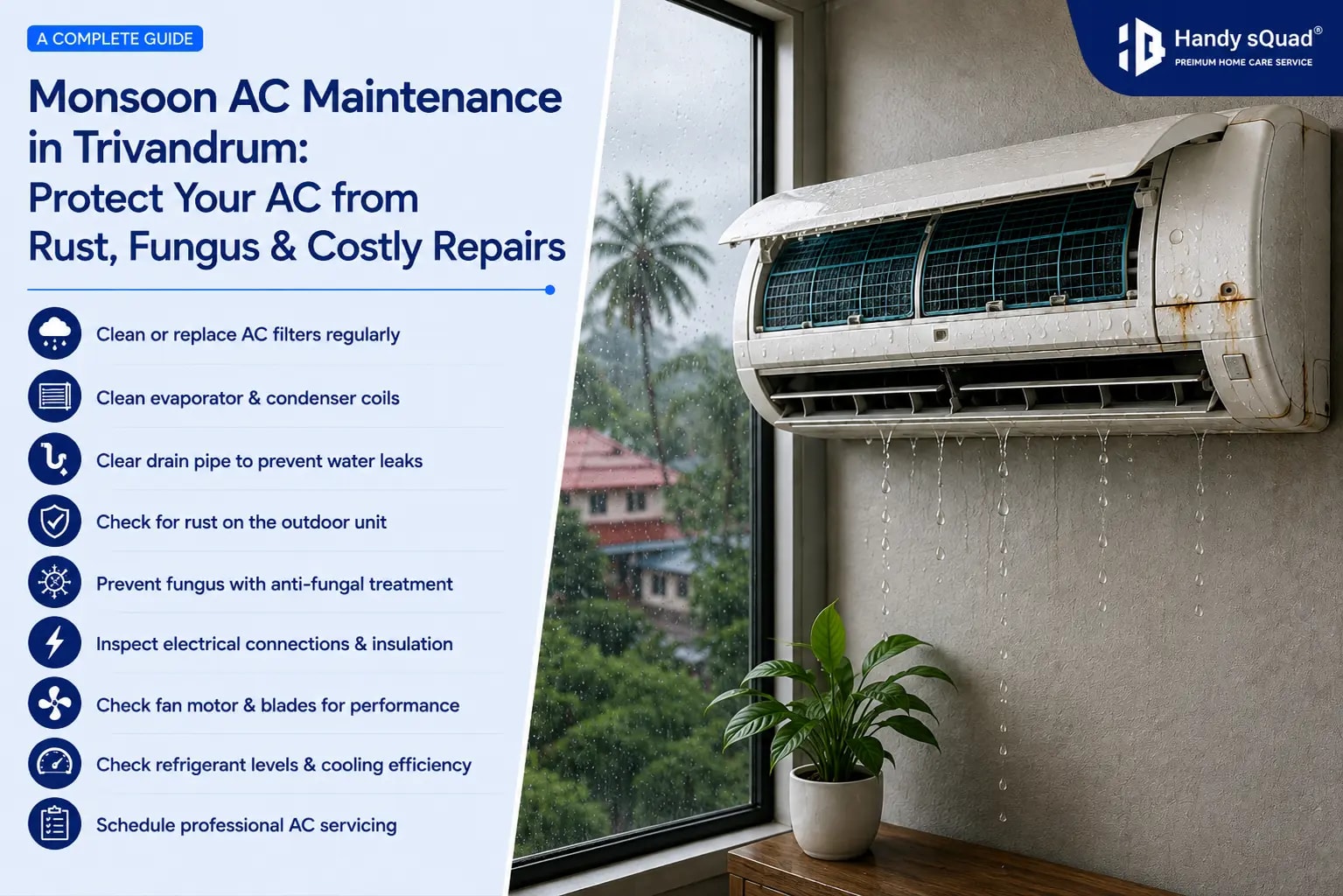
Don't forget the outdoor unit either; it needs breathing room. Leaves, dust, or anything else piled up around it stops proper heat release, and that translates straight into weaker cooling on your side of the wall.
Strange sounds or dropping cooling performance—don't ignore these. They're usually early warnings: a refrigerant leak, a part on its way out, or sometimes a wiring issue, and dealing with it early costs a fraction of what a major repair down the line would.
Coils need a proper clean too, every so often, and it's easy to forget since you can't see them the way you can a filter. Grime builds up on them gradually, and that alone drags cooling efficiency down even if the filter's been kept spotless the whole time.
Problems Worth Watching Out For
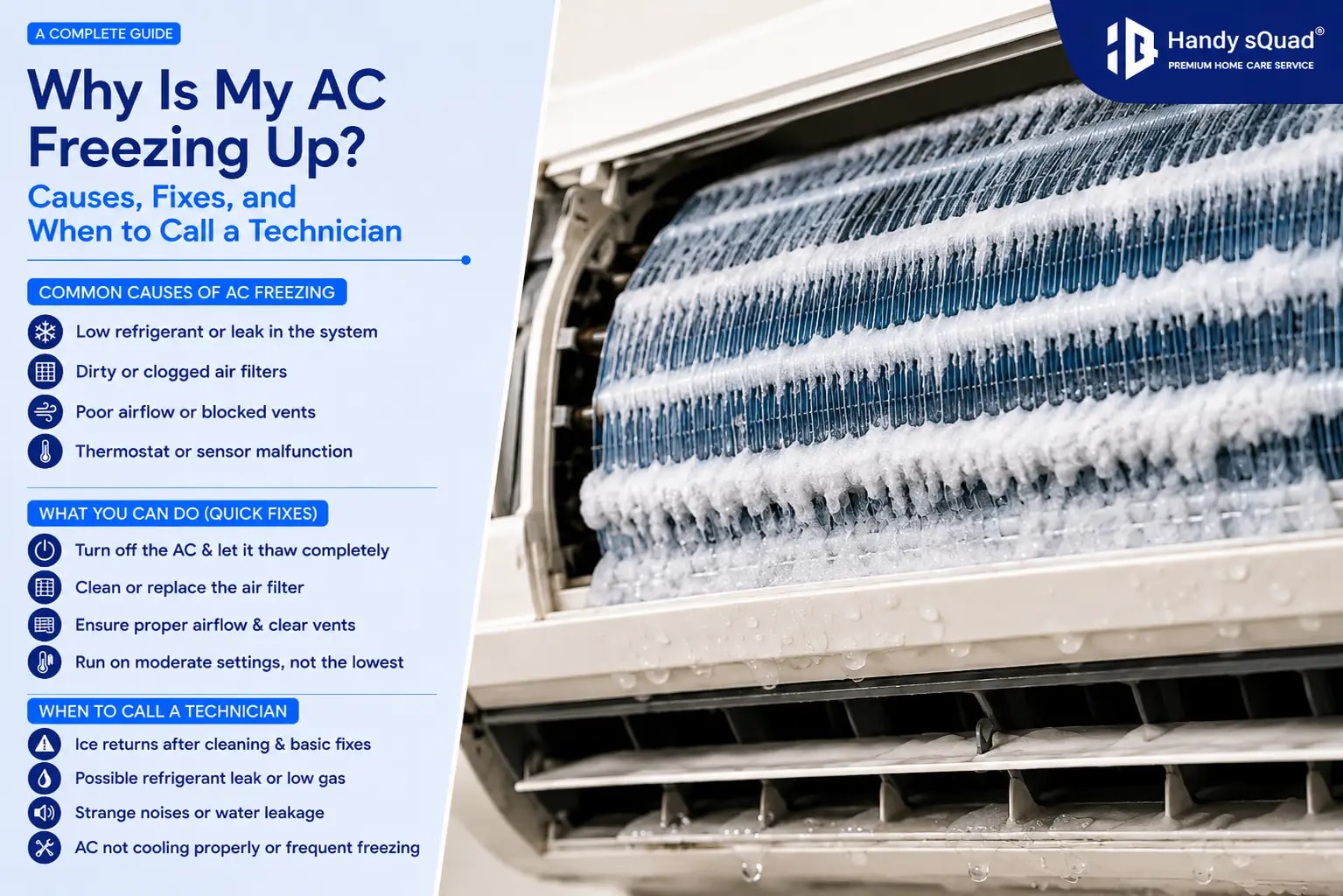
If the AC's running non-stop but the room's still not cooling properly, that's usually one of three things: refrigerant running low, a filter that needs cleaning, or a compressor that's struggling to keep up. Water dripping from the indoor unit—nine times out of ten, that's just a blocked drainage pipe. Odd sounds—rattling, buzzing, and grinding—generally point to a loose or failing part that needs attention sooner rather than later. And an AC that keeps cutting off and restarting rapidly could be an electrical issue or a faulty thermostat sensor.
None of these is DIY territory. A professional check usually pins down the actual cause fast, before a small fix turns into a big, expensive one.
Get Reliable AC Service in Trivandrum
Whether you're installing a new 1 ton unit, dealing with cooling that's just not what it used to be, or it's genuinely been a while since anyone's serviced the AC, this is one of those jobs better left to people who do it regularly. Handy sQuad handles the full range of AC work for homes across Trivandrum, including installation, repairs, and ongoing maintenance.
Setting up a new unit? Proper AC service in trivandrum gets the installation right from day one, correct refrigerant levels, and secure connections—the kind of setup that keeps running efficiently for years rather than causing problems six months in. If cooling's dropped off or the unit's making noises it shouldn't, dependable AC repair trivandrum homeowners actually trust will find the real cause instead of just patching over symptoms.
And right before summer properly kicks in, a thorough ac cleaning service trivandrum from Handy sQuad clears built-up dust and grime out of filters and coils, bringing cooling performance back and keeping your electricity bill from quietly creeping up.
Frequently Asked Questions
How many square feet does a 1 ton AC cover?
Roughly 120-140 square feet, assuming you've got a normal ceiling height and the room isn't taking a beating from direct sun. Push past that, or add a taller ceiling or heavy sunlight into the mix, and a 1.5 ton unit is probably the smarter pick.
Is a 1 ton AC enough for a bedroom?
Most of the time, yes. An average Indian bedroom, nothing oversized, no wall of windows, no electronics running round the clock, and cools just fine on 1 ton. If yours is bigger than usual or bakes in afternoon sun, get a professional opinion before assuming 1 ton will cut it.
What's the actual difference between a 1 ton and 1.5 ton AC?
It comes down to how much heat each can pull out per hour. 1.5 ton simply does more of that, which is why it suits larger rooms, like 140-180 square feet and beyond. Stick a 1 ton unit in a room that really calls for 1.5, and you'll notice it: weaker cooling and a bill that climbs faster than it should.
How much electricity does a 1 ton AC use per hour?
That's not a fixed number; it shifts based on star rating and whether you've got an inverter model or not. A 5-star inverter unit sips noticeably less power than a 3-star non-inverter doing the same job, and over a full day, that gap adds up. Your best bet for an actual figure is checking the energy label on the specific unit you're looking at.
How often should a 1 ton AC actually be serviced?
Once before summer kicks off is the bare minimum for most households. Running it hard through the whole year changes that, though; every 4-6 months is more sensible then, so you're catching things like a dirty filter or dropping refrigerant before they snowball into an actual repair bill.
Final Thoughts
For most compact to medium-sized rooms in Indian homes, a 1 ton AC does the job well, but tonnage alone isn't the whole story. Sizing, star rating, and how well it's installed all carry real weight too. Get any of those wrong, and it tends to surface later on, in weaker cooling, bills that creep up, or repairs that a bit of care upfront would've avoided entirely. For a New purchase or an old unit you're just trying to keep going, a little professional guidance early tends to save a fair bit of hassle down the line.
Thanks for reading